

 Français
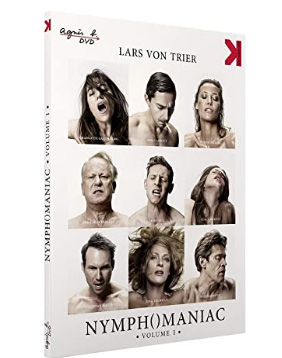
Nymphomaniac: Volume I
Synopsis
Nymphomaniac: Volume I is a provocative, intellectual, and boundary-pushing drama written and directed by controversial Danish auteur Lars von Trier. The story begins on a cold winter night when a kind, reclusive middle-aged bachelor named Seligman finds an injured, beaten woman named Joe collapsed in a dark alley. Taking her into his warm apartment, Seligman listens as Joe embarks on an exhaustive, multi-chapter confession detailing the entire chronology of her hypersexual life from childhood to maturity. Using eccentric metaphors ranging from fly-fishing to mathematics, Joe examines her insatiable desires and emotional numbness. The film blends dark humor, philosophy, and explicit drama.
The Making of the Film
Director Lars von Trier conceived the epic, two-part project as a philosophical exploration of human sexuality, guilt, and intellectual obsession following his ban from the Cannes Film Festival. Von Trier utilized a mix of dramatic narrative, documentary essays, scientific trivia, and explicit adult sequences to construct Joe's unconventional life story. The production gathered an international star-studded ensemble cast, including Charlotte Gainsbourg, Stellan Skarsgård, and Uma Thurman. The film was famously split into two volumes for theatrical release due to its monumental five-hour runtime.
Critical Reception
Professional critics offered deeply polarized reviews upon release, dividing audiences between those who hailed it as a brilliant, witty philosophical masterwork and those who dismissed it as pretentious provocation. Reviewers praised Charlotte Gainsbourg and Stellan Skarsgård for their fearless, intellectually charged performances and the surprising deadpan humor woven throughout the dialogue. Some critics criticized the explicit sexual content and heavy-handed metaphorical tangents, yet acknowledged von Trier's undeniable auteur vision. It sparked global artistic debate.
Audiences experienced intense curiosity and mixed reactions, driving strong specialized art-house box office numbers and widespread online discussion. Viewers fascinated by Lars von Trier's provocative style appreciated the intellectual sparring between Joe and Seligman. Casual moviegoers seeking conventional narrative structure found the long philosophical detours challenging. Its reputation as a daring art-house event remains secure.
The film earned numerous nominations and wins at international European film festivals and guilds, celebrated for its bold editing, sound design, and acting performances.
Behind-the-Scenes Stories
Director Lars von Trier drew inspiration from philosophical treatises, mathematics, fly-fishing manuals, and classic literature to structure Joe's eclectic confessions. Coordinating the complex interplay between explicit adult body doubles and the main actors required innovative digital compositing and meticulous planning. During the filming of the intellectual apartment dialogue scenes, Stellan Skarsgård and Charlotte Gainsbourg maintained a brilliant, playful comedic rhythm. Before final casting was locked in, various international actors were considered for the core roles.
Themes Explored
Sexuality, Guilt, Philosophy, Mathematics, Isolation, Confession
Ending Explained
Volume I concludes with Joe reaching a painful turning point in her youth where her emotional detachment reaches its peak, setting up the darker second half of her confession.
Meaning of the Title
The title directly uses the clinical psychological term for compulsive sexual desire, framing the entire narrative around the protagonist's self-analyzed condition.
Shame, Antichrist, Melancholia, Blue is the Warmest Color