

 Français
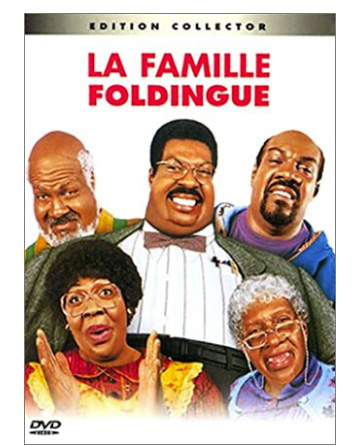
Nutty Professor II: The Klumps
Synopsis
A brilliant professor who struggles with his weight is on the verge of marrying his devoted colleague when his obnoxious alter ego threatens to resurface. The arrogant alter ego possesses a dangerous chemical formula that threatens to unleash permanent chaos and steal the professor's genius. To save his career, his upcoming wedding, and his sanity, the professor must find a way to eliminate his alternate personality. This chaotic sequel features Eddie Murphy playing nearly the entire eccentric family in uproarious prosthetic roles.
The Making of the Film
The concept for Nutty Professor II: The Klumps was born from the massive commercial success of the 1996 original film and the studio's desire to further showcase Eddie Murphy's unprecedented mastery of multi-character comedic performance. Director Peter Segal and the production team wanted to push the boundaries of special effects technology to allow Murphy to interact seamlessly with multiple distinct characters on screen simultaneously. The storyline was inspired by classic monster tropes like Dr. Jekyll and Mr. Hyde, re-imagined through the lens of modern slapstick and family dysfunction. The creative team aimed to elevate the scale of the comedy by expanding the screen time and antics of the wildly popular Klump family.
Critical Reception
Professional critics gave generally negative reviews to Nutty Professor II: The Klumps, criticizing its heavy reliance on gross-out humor, flat pacing, and recycled gags from the first movie. Reviewers acknowledged Eddie Murphy's incredible technical versatility and makeup achievements by Rick Baker, but felt the script lacked the charm and heart of the original. Despite the critical panning, the public embraced the film enthusiastically, driving it to a strong financial performance at the box office. Audiences loved seeing the chaotic antics of the extended Klump family and the over-the-top comedic energy of Murphy's multiple performances. The film received recognition primarily for its groundbreaking prosthetic makeup effects rather than traditional narrative awards.
Filming Anecdotes
Director Peter Segal drew inspiration from classic physical comedy legends like Jerry Lewis—who starred in the original 1963 version—and traditional vaudeville double acts. Production was physically grueling for Eddie Murphy, who had to spend up to several hours each day enduring extensive prosthetic makeup application to play multiple members of the Klump family. During the filming of the famous dinner table sequence, Murphy had to act out conversations with himself while staring at tennis balls on sticks, requiring immense concentration and comedic timing. Before Peter Segal signed on to direct, several other filmmakers were considered, but Murphy personally selected Segal to helm the sequel due to their strong creative rapport.
Main Themes
The film explores themes of self-acceptance, body image, and the danger of trying to chemically alter oneself to gain social approval. It also highlights the chaotic yet unconditional love of family support, contrasting the professor's professional struggles with the grounding nature of his eccentric relatives. Through comedy, it touches upon identity, ego, and inner conflict.
Ending Explanation
The conclusion resolves the scientific crisis when the professor successfully traps and neutralizes his arrogant alter ego during a final laboratory showdown, extracting the rogue DNA formula once and for all. With the threat eliminated, his intellect stabilized, and his loving fiancée by his side, the wedding proceeds without further interruption. The film ends on a joyful, celebratory note with the entire Klump family singing and dancing together at the reception.
Title Significance
The title directly references the continuation of the franchise and shifts the spotlight squarely onto the eccentric, chaotic Klump family members who dominate the humor of the sequel. It highlights both the continuation of the original professor's journey and the expanded role of his outrageous relatives.
NULL
NULL
The Nutty Professor, Big Momma's House, Mrs. Doubtfire, Dr. Dolittle