

 Français
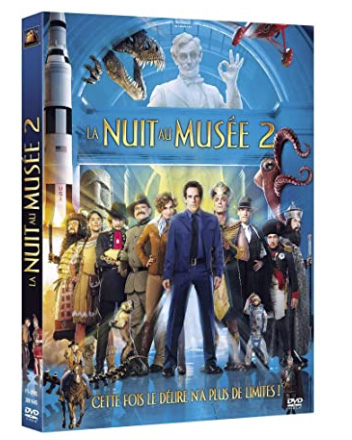
Night at the Museum: Battle of the Smithsonian
Synopsis
Larry Daley, a former night watchman turned successful inventor, learns that his historical museum friends are being retired to the Smithsonian Institution archives due to modernization. When the magical Tablet of Ahkmenrah is accidentally shipped to Washington, D.C., it awakens the massive collection of artifacts, including the tyrannical Pharaoh Kahmunrah. Teaming up with Amelia Earhart and his historical comrades, Larry must sneak into the world's largest museum complex to save his friends from eternal darkness.
The Making of the Film
- Following the massive global box office success of the original 2006 film, 20th Century Fox quickly greenlit a sequel set within the vast exhibition halls of the Smithsonian Institution. Director Shawn Levy and writers Robert Ben Garant and Thomas Lennon wanted to expand the magical premise by introducing legendary historical figures and world-famous museum artifacts. Inspiration was drawn from the sheer scale of Washington D.C.'s museum network and the desire to blend educational history with fast-paced slapstick comedy. The studio financed the production with an expanded budget to incorporate extensive digital visual effects.
Critical Reception
Professional critics gave the film mixed reviews, praising its energetic pacing, charming performances by Ben Stiller and Amy Adams, and impressive visual effects. Many reviews highlighted Amy Adams' standout portrayal of Amelia Earhart as a major comedic and romantic highlight. Reviewers noted that while the plot relied heavily on standard family comedy tropes, the sheer variety of historical characters kept audiences entertained. Overall, it was received as a fun and imaginative family sequel.
Public reception was enthusiastic, with families flocking to theaters worldwide to enjoy the chaotic museum adventures and colorful historical cameos. Audiences praised the introduction of iconic figures like Abraham Lincoln, General Custer, and Ivan the Terrible. Word of mouth helped propel the movie to a very successful global box office run. Spectators frequently cited the clever interactions between historical exhibits and modern technology as entertaining highlights.
The film earned several nominations at family entertainment awards, including Kids' Choice Awards recognition for favorite movie and actors. The visual effects team received industry praise for seamlessly bringing museum statues, paintings, and giant aerospace artifacts to life. Its commercial success solidified the franchise as a modern family favorite.
Filming Anecdotes
The director drew inspiration from classic fantasy adventure films, historical biographies, and museum exhibitions that celebrate world culture and science. He wanted the visual style to contrast the sleek, brightly lit marble halls of the Smithsonian with the chaotic nocturnal energy of living artifacts. Cinematic influences ranged from Indiana Jones adventure serials to classic Hollywood screwball comedies. These artistic choices helped establish an accessible, grand-scale aesthetic suitable for family audiences.
Production presented unique logistical challenges, as filming inside the actual Smithsonian Institution buildings in Washington, D.C., was heavily restricted. The production crew had to construct massive, highly detailed replicas of the Air and Space Museum, National Gallery of Art, and Archives on soundstages in Vancouver. Ben Stiller and Amy Adams performed numerous physical comedy routines alongside digital green-screen doubles and mechanical props. Crew members often recalled the bustling, fast-paced set as a joyful playground for comedic improvisation.
One particularly memorable sequence involved characters jumping in and out of famous historical photographs and paintings, interacting with black-and-white art styles. This sequence required meticulous digital compositing and precise physical choreography to make the transition between 2D art and 3D space look seamless. The actors had to maintain perfect comedic timing while reacting to blank green screens. Crew members frequently noted that this specific scene showcased the creative technical ambition of the production.
The initial casting process sought charismatic comedic actors who could share the screen with historical icons and digital special effects. Ben Stiller returned as Larry Daley, anchoring the chaotic comedy with his signature exasperated charm. Amy Adams was cast as Amelia Earhart, bringing sparkling wit and adventurous spirit to the ensemble. Hank Azaria joined as the villainous Kahmunrah, delivering a hilarious comedic performance that grounded the fantasy threat.
Themes Explored
- Embracing change and moving forward in professional and personal life.
- History coming alive to inspire curiosity and wonder in new generations.
- Teamwork, loyalty, and protecting friends against formidable odds.
- The value of preserving cultural heritage and education through entertainment.
Ending Explained
The climax features Larry Daley and his historical allies defeating Pharaoh Kahmunrah and closing the underworld gateway inside the Smithsonian Air and Space Museum. In the aftermath, Larry arranges for the magical tablet to stay securely in New York while anonymously donating millions to fund the museum's nighttime exhibits. A final heartwarming scene shows Larry encountering a woman who looks remarkably like Amelia Earhart on a rainy New York street, sparking a romantic new beginning. The film concludes on a magical, comforting note of renewed purpose.
Title Significance
The title explicitly highlights the sequel's shift in location to the iconic Smithsonian Institution while signaling an escalation in conflict with the battle for the magical tablet.
Original Soundtrack
- The soundtrack features an uplifting orchestral score composed by Alan Silvestri, blending heroic brass themes with whimsical fantasy melodies that underscored the magical museum chaos. The music enhanced the sense of wonder during magical artifact awakenings and provided energetic momentum for action sequences. Critics praised the score for capturing the grand, cinematic spirit of a family adventure epic.
Similar Films
- Night at the Museum (2006)
- Night at the Museum: Secret of the Tomb (2014)
- Jumanji: Welcome to the Jungle (2017)
- Paddington (2014)
- Nightbooks (2021)