

 Français
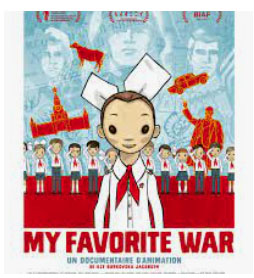
My Favorite War
Synopsis
Growing up behind the Iron Curtain in Soviet-occupied Latvia during the Cold War, a young girl named Ilze navigates a childhood shaped by intense state propaganda, military drills, and ideological conformity. While the state demands absolute loyalty and glorifies war, Ilze secretly questions the regime as she discovers banned books, Western music, and hidden family truths. Through a unique blend of animation, childhood memories, and historical archives, she chronicles her personal escape from totalitarian indoctrination. Ultimately, this deeply personal animated documentary is a triumphant ode to freedom, individuality, and historical memory.
The Making of the Film
Director and animator Ilze Burkovska Jacobsen conceived the deeply personal animated feature to document her own childhood coming-of-age under Soviet occupation. The project was conceived as an innovative animated documentary blending hand-drawn artistry, cutout collage animation, and historical archival footage. Jacobsen drew inspiration from her childhood diaries, family photographs, and the psychological trauma of state censorship. The production prioritized artistic visual storytelling to make abstract political oppression emotionally accessible to global audiences.
Critical Reception
Critics offered widespread critical acclaim upon release, praising its artistic originality, emotional honesty, and historical importance. Reviewers lauded Ilze Burkovska Jacobsen for crafting a deeply personal animated memoir that doubled as a universal warning against totalitarian propaganda. The film was celebrated for using animation to visualize childhood memories and political oppression with unique creative flair. It established itself instantly as a towering triumph of independent animated documentary cinema.
Audiences were deeply moved by the charming animation style, poignant narration, and the harrowing real-life history of Soviet indoctrination in the Baltics. Viewers at international film festivals commended the brave storytelling and the insightful commentary on freedom versus state control. It became a critical darling worldwide, resonating strongly with history enthusiasts and animation lovers alike. Many praised its courage in preserving personal history against oppressive political erasure.
My Favorite War won the prestigious Cristal for a Feature Film at the Annecy International Animation Film Festival, the highest honor in global animation. Its acclaim centered primarily on Ilze Burkovska Jacobsen's visionary direction, writing, and unique animation design. The film also received numerous accolades at international documentary showcases. These prestigious accolades cemented its legacy as a landmark achievement in adult animated documentary cinema.
Behind-the-Scenes Stories
Ilze Burkovska Jacobsen was heavily inspired by the urgent need to record her personal memories of growing up in a society where history was constantly rewritten by state censors. She wanted to show how children are systematically targeted by military and political propaganda during the Cold War. The visual style utilized a striking mix of hand-drawn 2D animation, archival photographs, and tactile collage elements to evoke Soviet-era textures. The director also narrated the film herself to maintain absolute emotional intimacy.
Crafting a feature-length animated documentary as an independent European co-production required years of meticulous artistic labor from the animation studio. The team combed through vast historical archives in Latvia and Russia to collect authentic propaganda posters, newsreels, and military footage. Ilze Burkovska Jacobsen worked closely with animators to ensure the child's perspective remained innocent yet increasingly aware of adult hypocrisy. Despite modest indie funding, the technical crew successfully delivered a visually stunning artistic masterpiece.
During the recording of the voiceover narration, Ilze Burkovska Jacobsen brought profound emotional vulnerability to her personal recollections of Soviet schooling and family resistance. The sound design team integrated authentic radio broadcasts and military marching tunes to recreate the oppressive acoustic environment of 1970s Latvia. Crew members reported feeling deeply affected by the historical parallels uncovered during production. The profound dedication of the artistic team gave the documentary its unforgettable soul.
Casting directors and producers focused on authentic narration and artistic collaboration rather than traditional star casting, bringing in local voice talent and historical contributors to shape the narrative voice. Ilze Burkovska Jacobsen served as the primary narrator, guiding viewers through her childhood journey with honesty and reflection. The supporting voice ensemble added vital generational perspective to the memoir.
Themes Explored
The film heavily explores totalitarian indoctrination, state censorship, and the psychological impact of growing up behind the Iron Curtain. It examines the courage required to question authority and maintain individual freedom of thought. Another core motif is the power of memory, art, and historical truth against propaganda. It also touches upon childhood innocence, family secrets, and political liberation.
Ending Explained
The film concludes with Ilze finally breaking free from the ideological shackles of Soviet indoctrination as the Cold War collapses and Latvia regains its national independence. Reflecting on her painful childhood journey, she emphasizes that the fight for freedom and critical thinking is an ongoing generational duty. The final uplifting shots show modern democratic landscapes paired with personal archival photographs. This poetic finish celebrates the ultimate triumph of individual liberty over state tyranny.
Meaning of the Title
The title refers ironically to the absurd state-sponsored militarism and Cold War propaganda that framed war and ideological conflict as glorious daily necessities for children. It highlights the Orwellian inversion of reality practiced by totalitarian regimes. The provocative phrasing sets a reflective, satirical tone for the animated memoir. It encapsulates the bizarre political atmosphere of growing up under Soviet occupation.
Similar films include Persepolis, Waltz with Bashir, Flee, and Another Day of Life, which feature animated documentaries, personal memoirs, and historical trauma.