

 Français
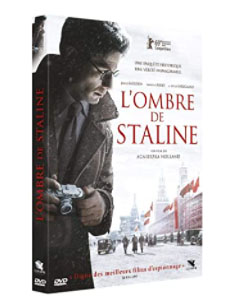
Mr. Jones
Synopsis
In 1933, young Welsh journalist Gareth Jones travels to Moscow hoping to interview Stalin. His investigation leads him to Soviet Ukraine, where he witnesses a hidden famine that is starving millions. Back in the West, he struggles to be believed, as powerful voices work to silence the truth. The film follows his determination to expose one of the great crimes of the twentieth century.
The Making of the Film
Mr. Jones is directed by the Polish filmmaker Agnieszka Holland and written by Andrea Chalupa. Chalupa discovered the story of Gareth Jones while researching her own family history and Ukraine's past. She became convinced that his courage deserved to be known to a wider audience. The film is based on the real journalist's trip to the Soviet Union in 1933, where he documented the Holodomor, the man-made famine in Ukraine. It also touches on the influence of the writer George Orwell, who is shown writing Animal Farm. Holland, who has often made films about historical injustice, saw the story as a warning about propaganda. The production was shot in several countries, including Poland and Ukraine, to recreate the atmosphere of the period. The film premiered at the Berlin International Film Festival in 2019.
Critical Reception
Critics praised the film's ambition and its powerful depiction of the famine, with the Ukrainian sequences often described as haunting. James Norton's performance as Jones was widely appreciated for its quiet determination. Some reviewers found the structure uneven, particularly in its scenes set in Moscow. Overall, the reviews were mixed to positive, with many agreeing on the importance of the subject.
Audiences responded with strong emotion, particularly in Ukraine and Poland, where the history is deeply personal for many. Viewers often said the film introduced them to a story they had never heard before. It also prompted renewed discussion of how journalists can be pressured by political powers.
The film competed for the Golden Bear at the Berlin festival and won the Golden Lions at the Gdynia Film Festival in Poland. These honours helped it find an international audience despite its serious subject.
Behind-the-Scenes Stories
Holland explained that she was drawn to Jones because he refused to look away from the truth, even when it cost him dearly. She also wanted to show how easily authority can manipulate the press. The film uses a muted, bleak colour palette that grows colder as Jones moves deeper into Ukraine.
Filming in winter conditions was physically demanding for the cast and crew, who often worked in freezing temperatures. The team had to recreate Soviet-era locations carefully, using a mix of real sites and sets. The authentic cold added to the film's sense of hardship.
A key moment in the film shows Jones walking through a snowy Ukrainian village, discovering how severe the famine has become. The scene is deliberately restrained, allowing the silence to carry its horror.
Themes Explored
The film explores truth versus propaganda, and the cost of speaking out. It shows how powerful interests can shape what the world is told. The moral responsibility of journalists is a central question, particularly in the contrast between Jones and the celebrated correspondent Walter Duranty. Human suffering under totalitarian rule is depicted with great seriousness. At its heart, the film is a tribute to those who risk everything to tell the truth.
Ending Explained
After Jones publishes his reports, his work is eventually recognised, and the famine is acknowledged by some in the West. The film then shows Orwell writing Animal Farm, suggesting that Jones's experience helped to inspire literature about tyranny. A closing note reveals that Jones was killed in 1935, on the eve of his thirtieth birthday, while reporting in Asia. The ending leaves the viewer with the sense that his legacy outlived the powers that tried to bury him.
Meaning of the Title
The title Mr. Jones reflects the way the main character is addressed throughout the film, a simple and modest form of respect. It also evokes Farmer Jones, the human owner in Orwell's Animal Farm. The connection links Gareth Jones's real-life experience to the allegory that followed. The title therefore works on both a historical and a literary level.
Similar Films
If you were moved by Mr. Jones, you could watch Bitter Harvest, which also deals with the famine in Ukraine. The Death of Stalin is a darker comedy about the Soviet leadership. Spotlight shows journalists uncovering a hidden scandal. The Killing Fields is another powerful story of a reporter witnessing mass tragedy. For a recent look at official lies, the miniseries Chernobyl is an excellent companion.