

 Français
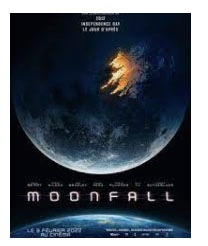
Moonfall
Synopsis
This explosive, mind-bending sci-fi disaster blockbuster disaster film follows a mysterious cosmic anomaly that knocks the Moon out of its orbit and sends it hurtling on a direct, apocalyptic collision course with Earth. With only weeks before total global extinction, a disgraced former NASA astronaut convinced of a hidden conspiracy, a quirky conspiracy theorist who predicted the shift, and the current NASA director embark on a desperate, high-stakes space shuttle mission to land on the Moon and discover its true, artificial nature. As global tidal waves and gravity anomalies destroy cities below, the crew fights to save humanity. It is a gloriously unhinged, colossal spectacle.
The Making of the Film
The project originated from veteran disaster-film director Roland Emmerich's lifelong fascination with alternate celestial theories and artificial megastructures in space, co-writing the screenplay with Harald Kloser and Spenser Cohen. Emmerich sought to combine his signature massive-scale destruction set pieces with high-concept hard science-fiction mythology regarding the true origin of the Moon. Inspiration was drawn from ancient astronaut theories, classic space exploration history, and blockbuster disaster traditions. The creative team aimed to produce a colossal, unapologetic crowd-pleaser.
Critical Reception
Critics offered predominantly negative reviews, panning the film's absurdly convoluted scientific plot, cheesy dialogue, and excessive CGI destruction, though some acknowledged its campy entertainment value. Reviewers noted that while Emmerich delivered the expected cataclysmic tidal waves and falling skyscrapers with professional polish, the sci-fi twist involving artificial megastructures crossed firmly into preposterous territory. Halle Berry and Patrick Wilson received moderate praise for trying to ground the silly material with serious acting commitment. Despite critical drubbing, it found an audience among fans of guilty-pleasure disaster movies.
Audience reception was mixed, drawing moderate box office returns and heavy streaming viewership as fans of disaster cinema embraced its sheer, unapologetic absurdity. Viewers on public platforms praised the massive global destruction scenes, fast-paced action, and John Bradley's lovable conspiracy theorist character. Fans of Roland Emmerich celebrated his return to pure cataclysmic blockbuster filmmaking. Word-of-mouth sustained solid home video popularity.
Awards season brought no major mainstream nominations, though the film received occasional recognition at technical showcase events for its massive visual effects destruction sequences. Critics' associations acknowledged the scale of the digital lunar impacts. While it did not alter the landscape of cinema, it maintained a solid fan base among disaster movie enthusiasts.
Behind-the-Scenes Stories
The director drew visual inspiration from classic NASA space missions, astronomical disaster simulations, and massive CGI destruction palettes to establish a colossal visual style. Every set, from the flooded city streets of Los Angeles to the interior of the retrofitted space shuttle, was designed to reflect global panic. The production team collaborated with digital VFX studios to render realistic lunar collisions and gravity-defying tidal waves. These artistic choices created an over-the-top sci-fi world.
Production presented intense technical hurdles, particularly in coordinating massive green-screen soundstage shoots and complex spacecraft interior simulations during pandemic-era production restrictions. Halle Berry and Patrick Wilson performed extensive harness and wire work to simulate zero-gravity space combat and lunar landings. Shooting on location in Montreal required careful weather coordination. Furthermore, maintaining strict secrecy around the bizarre artificial-moon plot twist prevented early leaks.
During the filming of the zero-gravity shuttle interior sequences, the actors executed complex physical tumbling stunts using specialized gimbal rigs. To maintain high energy, Roland Emmerich utilized rapid-fire editing during destruction montages. The crew utilized vibrant digital lighting to accentuate the cosmic blockbuster scale. This collaborative environment resulted in standout action moments.
Casting was anchored by securing Oscar-winner Halle Berry and charismatic actor Patrick Wilson as the heroic astronauts, alongside Game of Thrones fan-favorite John Bradley as the nervous conspiracy theorist. Supporting roles were filled with talented actors including Michael Peña and Donald Sutherland. This star-studded casting strategy provided the necessary anchor for the absurd sci-fi premise.
Themes Explored
The narrative deeply explores themes of global extinction, scientific conspiracy, and human survival against impossible odds. It examines fathers and children reuniting during apocalypse, technological hubris, and ancient alien origins of mankind. Additionally, it highlights bravery, sacrifice, and trusting unconventional thinkers. Ultimately, the film reflects on unity, courage, and protecting our planetary home.
Ending Explained
Brian sacrifices his life by manually activating an electromagnetic pulse inside the artificial Moon's core to destroy the parasitic swarm threatening humanity, while the Moon successfully readjusts into a safe orbit around Earth. Back on Earth, humanity begins rebuilding its civilization while KC observes that the Moon has been safely stabilized. The triumphant story concludes with a celebration of human resilience and cosmic awakening.
Meaning of the Title
The title directly references the terrifying premise of the Moon falling out of orbit and crashing toward Earth.
Similar Films
Films sharing similar apocalyptic disaster and global destruction themes include 2012 (2009), The Day After Tomorrow (2004), and Armageddon (1998).