

 Français
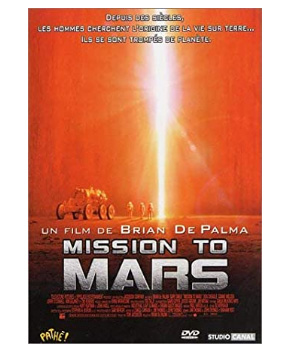
Mission to Mars
Synopsis
When a mysterious and ancient structure is discovered on the surface of Mars, an initial rescue and investigation mission is launched into the void of space. Upon arrival, the crew encounters a catastrophic anomaly that decimates their team and leaves the survivors facing unprecedented mysteries about the origins of life. As they venture deeper into the alien artifact, they uncover a profound cosmic secret that connects humanity to the stars. It is a visually striking and philosophical journey into interstellar destiny and extraterrestrial creation.
The Making of the Film
The project originated from a studio desire to capitalize on renewed public interest in Martian exploration following successful robotic probes at the turn of the century. The director sought to blend hard science fiction elements with a grand, metaphysical exploration of human origins and panspermia. Inspiration was drawn from classic science fiction literature, evolutionary biology theories, and early speculative concepts of Martian geography. The creative team aimed to deliver a visually opulent cinematic experience that bridged the gap between scientific reality and cosmic wonder.
Critical Reception
Critics delivered a mixed response, praising the film's breathtaking visual effects, ambitious scope, and majestic musical score while critiquing its predictable plot twists and philosophical earnestness. Reviewers noted that while individual set pieces—such as the zero-gravity molecular repair scene—were remarkably inventive, the overarching narrative felt somewhat derivative of earlier sci-fi classics. Some praised the director's visual flair and atmospheric world-building, whereas others found the final act's metaphysical revelations overly sentimental. Despite the polarized reviews, the technical artistry consistently earned widespread admiration.
General audiences were similarly divided, with many viewers captivated by the stunning alien aesthetics and grand sense of cosmic scale. Fans of speculative fiction appreciated the film's optimistic portrayal of human evolution and interstellar destiny, contrasting with darker dystopian sci-fi trends. However, casual moviegoers sometimes struggled with the shift from a gritty survival thriller to a high-concept philosophical fable. Over time, the film developed a dedicated cult following who praised its unique atmosphere and emotional resonance.
Awards recognition primarily highlighted the film's technical prowess, earning nominations for its stunning visual effects artistry and imaginative art direction. Special effects guilds lauded the seamless integration of digital environments with practical sets to depict the Martian landscape. The musical score also received critical acclaim for elevating the emotional gravity of the space sequences. These accolades reinforced the production's status as a notable visual milestone in turn-of-the-millennium science fiction cinema.
Behind-the-Scenes Stories
The director drew inspiration from classic landscape paintings and astronomical photography to establish the vivid, ethereal color palette of the Martian terrain. Every visual frame was meticulously planned using detailed storyboards to evoke a sense of awe and majestic isolation. The production team collaborated closely with former astronauts and scientists to design plausible spacecraft interiors and futuristic habitation modules. These artistic choices were designed to immerse the audience in a believable yet wondrous future era of space travel.
Production presented immense logistical hurdles, particularly in executing complex wire-work and digital compositing for the extensive zero-gravity sequences. Constructing massive gimbal-mounted spacecraft sets required engineering precision to ensure actor safety during high-angle simulated movements. The special effects crew spent months rendering the intricate particle systems and fluid dynamics required for the alien artifact interactions. Additionally, shooting in remote desert locations to replicate the red planet's surface exposed the crew to harsh weather conditions and physical fatigue.
One of the most challenging sequences involved a catastrophic hull breach in deep space, requiring actors to perform precise physical choreography while suspended on invisible wires. To achieve realistic reactions, the director utilized wind machines and dynamic lighting cues to simulate sudden explosive decompression. The cast underwent rigorous stunt training to master the slow, floating movements characteristic of weightlessness in a vacuum. This dedication resulted in a tense, visually arresting sequence that remains a standout highlight of the film.
Casting focused on selecting a mature, charismatic ensemble capable of projecting deep professional camaraderie and intellectual curiosity. The lead actors participated in briefing sessions with real space experts to understand the mindset of long-duration spacefarers. Supporting roles were filled with versatile performers who could anchor the high-concept science fiction elements in grounded, emotional human interactions. This collaborative casting approach created a believable team dynamic that anchored the fantastical narrative.
Themes Explored
The film thoroughly explores the themes of human origins, evolutionary destiny, and the scientific pursuit of extraterrestrial intelligence. It examines the bridge between science and spirituality, suggesting that cosmic creation might follow a deliberate, intelligent design. Additionally, it touches upon sacrifice, loyalty, and the profound yearning to understand our place in the universe. Ultimately, the narrative posits that humanity's ultimate future lies not on Earth, but among the stars.
Ending Explained
The conclusion reveals that an ancient Martian civilization seeded life on Earth billions of years ago as part of a grand cosmic cycle. One astronaut chooses to stay behind with the alien intelligence, transcending human physical form to explore the mysteries of the universe. The final sequence symbolizes humanity coming of age and taking its rightful place in a vast, interconnected galactic community.
Meaning of the Title
The title explicitly denotes the literal voyage undertaken by the characters to reach the red planet and unlock its cosmic secrets.
Original Soundtrack
The majestic musical score by Ennio Morricone received widespread critical acclaim for its soaring orchestral themes and ethereal choral arrangements, perfectly capturing the infinite mystery of deep space.
Similar Films
Films sharing thematic and visual similarities include Contact (1997), Interstellar (2014), and The Martian (2015).