

 Français
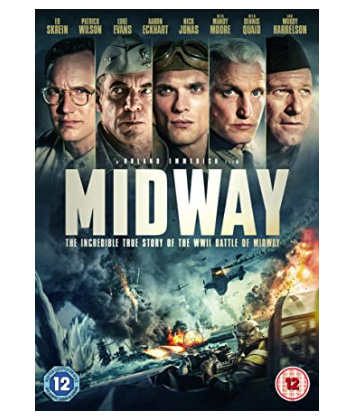
Midway
Synopsis
Midway recounts the events surrounding the Battle of Midway, one of the decisive naval confrontations of the Second World War. After the attack on Pearl Harbor, American military leaders attempt to anticipate Japan's next move in the Pacific. Intelligence officers and naval aviators work under enormous pressure to locate the Japanese fleet and prepare a counterattack. The film follows several American servicemen as they face the dangers of aerial combat and help turn the course of the war.
The Making of the Film
Midway was conceived as a large-scale historical war film about one of the most important naval battles of the Second World War. Director Roland Emmerich wanted to revisit the events of June 1942 and present them through the experiences of American and Japanese military personnel. The project was inspired by historical accounts of the Battle of Midway rather than a single literary source. The screenplay was written by Wes Tooke, who used documented military operations and personal stories to construct the narrative. The production aimed to provide a more detailed account of the intelligence work that helped the American forces anticipate the Japanese attack. Ed Skrein, Patrick Wilson, Luke Evans and Woody Harrelson were among the actors selected for the main roles. Japanese characters were also given a significant presence, allowing the film to show aspects of the conflict from both sides. The production relied heavily on digital effects to recreate aircraft carriers, naval battles and aerial combat. Its central objective was to pay tribute to the servicemen whose actions influenced the outcome of the Pacific War.
Critical Reception
Professional Reviews: Critics generally recognised the scale of the production and the effort to recreate major naval engagements. The aerial combat sequences and visual effects were often considered the film's strongest elements. Some reviewers criticised the screenplay for relying on conventional war-film dialogue and simplified character development. Others appreciated its focus on military intelligence and the strategic importance of the battle.
Audience Reception: Viewers interested in military history and Second World War films were among the production's main audiences. The large-scale battle scenes and familiar historical subject attracted attention. Some audiences appreciated the film's patriotic tone, while others found its characterisation less compelling than its action sequences. Its theatrical performance was affected by competition and the costs associated with a major war production.
Awards: Midway received limited recognition from major international film-awards organisations. Its visual effects and sound design attracted some technical attention, but it did not become a major awards contender. The film's historical subject and action sequences were more central to its public profile than its awards record. It remains one of Roland Emmerich's major historical action productions.
Behind-the-Scenes Facts
Director's Inspirations: Roland Emmerich had long been interested in the Second World War and the decisive role of the Battle of Midway in the Pacific theatre. He wanted to create a film that combined personal stories with a clear account of the military strategy behind the battle. The director also sought to give Japanese commanders and servicemen a more substantial presence than in some earlier American war films. Historical consultation was important to the production's approach.
Production Challenges: Recreating the scale of a major naval battle required extensive digital effects and detailed research into aircraft carriers, military aircraft and naval operations. The production used a mixture of practical sets, computer-generated environments and historical references. The filmmakers also had to represent complex military movements in a way that remained understandable to a general audience. Coordinating the large ensemble cast and the numerous battle sequences added further logistical challenges.
A Particular Scene: The aerial attacks on Japanese carriers form the visual centrepiece of the film. These sequences required digital recreation of aircraft formations, anti-aircraft fire and the enormous scale of naval vessels. The production aimed to communicate both the speed of the attacks and the danger faced by pilots. The scenes also illustrate how individual decisions could influence the outcome of a much larger military operation.
Themes Explored
Courage is a central theme of Midway, expressed through the actions of pilots and sailors facing overwhelming danger. The film also examines the importance of intelligence, showing how information and strategic planning can influence the outcome of a battle. Sacrifice is presented through the experiences of servicemen who risk their lives for their comrades and their country. Leadership becomes important when commanders must make decisions with incomplete information and enormous consequences. The story also explores the human cost of war, including the physical danger and emotional pressure experienced by those involved. Cooperation between different military branches demonstrates the importance of collective action. The inclusion of Japanese perspectives introduces questions about duty, loyalty and the complexity of historical conflict. Technological innovation and military strategy are also presented as decisive factors. Ultimately, the film portrays Midway as a turning point shaped by courage, preparation and sacrifice.
Ending Explained
The final battle shows how American forces use intelligence and coordinated air attacks to strike the Japanese fleet. The destruction of several Japanese aircraft carriers represents a decisive shift in the balance of power in the Pacific. The film emphasises the importance of the intelligence work that allowed American commanders to anticipate the enemy's movements. Individual pilots and sailors make extraordinary sacrifices during the operation, highlighting the human cost behind the strategic victory. The conclusion does not suggest that the wider war has ended, but it presents Midway as a crucial turning point. The surviving characters return to a world permanently changed by their experiences. Their actions become part of a larger historical story about the Pacific campaign. The ending pays tribute to those who fought while recognising that victory was achieved through both preparation and courage. It closes by placing the battle within the broader history of the Second World War.
Meaning of the Title
The title Midway refers to the Battle of Midway, fought in June 1942 near the Midway Atoll in the central Pacific Ocean. The geographical name became associated with one of the most important naval victories of the United States during the Second World War. The battle marked a turning point in the Pacific theatre because it severely weakened Japan's carrier fleet. By using the name of the location as the title, the film immediately identifies its historical subject. It also gives the story a sense of scale beyond the individual characters. The word Midway evokes the strategic importance of the Pacific islands and the vast distances involved in naval warfare. It is a concise title that reflects both the geographical setting and the historical significance of the events. The film uses the battle's name as a tribute to the people who took part in it. The title therefore represents a decisive moment in military history.
Similar Films
- Tora! Tora! Tora! (1970), a historical account of the attack on Pearl Harbor.
- Pearl Harbor (2001), a war drama about the Japanese attack on the American naval base.
- The Battle of Britain (1969), a large-scale film about a decisive Second World War campaign.
- Greyhound (2020), a naval war film set during the Battle of the Atlantic.