

 Français
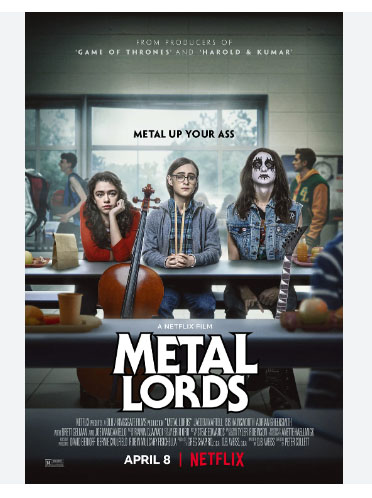
Metal Lords
Synopsis
Hunter and Kevin are two high school misfits with a singular passion: heavy metal music. While Hunter is an aggressive, uncompromising metal purist obsessed with forming a band to conquer the upcoming Battle of the Bands, Kevin is a reluctant drummer swept along for the ride. Seeking a bass player, they recruit Emily, an intensely talented cellist dealing with severe emotional volatility and anger issues. As internal ego clashes, romantic tension, and high school social pressures mount, the trio must find their true voice. Ultimately, they discover that heavy metal is about more than just noise—it is about raw, authentic self-expression.
The Making of the Film
Written by Game of Thrones co-creator D.B. Weiss and directed by Peter Sollett, the project was born from Weiss's lifelong passion for heavy metal music and his own teenage experiences playing in garage bands. The filmmakers wanted to capture the specific, obsessive subculture of teenage metalheads with affectionate authenticity rather than cheap mockery. Tom Morello of Rage Against the Machine served as the executive music producer, helping craft original tracks and mentoring the young actors. Principal photography took place in Portland, Oregon, utilizing local high schools and indie concert venues to establish an authentic rock atmosphere. The production focused heavily on genuine instrumental training so the young cast could play their music live on camera.
Critical Reception
Critical Reception
Critics praised the film for its affectionate, humorous portrayal of teenage subcultures, sharp comedic writing, and stellar performances from its young lead cast. Reviewers highlighted how the script avoided cynical teen movie tropes, offering instead a heartfelt and nuanced exploration of adolescent mental health and friendship. Tom Morello's musical contributions and the authentic heavy metal soundtrack received widespread acclaim from music and film critics alike. Many commentators lauded the refreshing chemistry among the three lead actors.
Audiences responded warmly to the charming underdog story and energetic musical performances, finding it to be a delightful hidden gem on streaming platforms. Fans of heavy metal music particularly appreciated the deep-cut band references, insider jokes, and respectful nods to thrash and death metal history. Viewers commended the nuanced depiction of mental health struggles and anger management through the lens of aggressive music. The uplifting finale resonated strongly with viewers looking for feel-good coming-of-age entertainment.
While it did not compete in major traditional theatrical box office circuits due to its streaming premiere, the picture earned strong praise within youth media award circles. Critics' guilds celebrated its sharp screenplay and authentic depiction of high school alienation. Industry analysts noted its successful niche appeal among rock music fans. It cemented itself as a beloved modern entry in the teen musical comedy canon.
Behind-the-Scenes Stories
D.B. Weiss spent years developing the script, drawing directly from his own teenage years spent agonizing over guitar riffs and trying to fit in with high school peers. He enlisted his friend Tom Morello to ensure the musical details, guitar jargon, and band dynamics were completely accurate to real-world rock culture. The director held extensive music bootcamps for the actors prior to filming to turn them into a cohesive garage band.
Production faced unique hurdles teaching young actors who had never touched instruments before how to convincingly thrash and play complex metal tracks on camera. Jaeden Martell learned basic drumming from scratch, while Adrian Greensmith had to master aggressive guitar solos through rigorous daily practice. Isis Hainsworth spent months mastering the cello with intense emotional fury. Portland weather occasionally forced sudden schedule shifts during outdoor scene setups.
During the filming of a chaotic garage rehearsal scene, the volume was so deafeningly loud that nearby residential neighbors called the police, forcing an impromptu production break that mirrored real garage band lore. The prop department customized several guitars to match Hunter's obsessive obsession with heavy metal iconography. Sound engineers worked tirelessly to blend live instrument recordings with studio tracks for maximum sonic impact.
Casting Adrian Greensmith as the intense metalhead Hunter was a breakthrough moment, bringing ferocious theatrical energy to the screen. Jaeden Martell provided the perfect deadpan, reluctant counterweight as Kevin. Isis Hainsworth rounded out the trio with a magnetic, volatile performance as Emily. The supporting cast featured actual metal musicians in cameo roles to add subcultural street cred.
Themes Explored
Themes Explored
Finding one's identity and finding your tribe during the awkward alienation of high school form the central emotional core of the narrative. The therapeutic power of aggressive music as a healthy outlet for adolescent rage, anxiety, and emotional pain is explored in depth. True friendship versus toxic musical egos are tested as Hunter learns to share the spotlight. Additionally, mental health awareness and breaking the stigma around therapy and anger management are woven seamlessly into the teenage storyline.
Ending Explained
At the Battle of the Bands, SkullFucker—now officially renamed Skullflower with Emily joining on cello—takes the stage and delivers an electrifying, genre-bending performance that shocks the crowd. Rather than chasing pure aggressive noise, they embrace their unique sonic combination and win over the entire student body. Hunter overcomes his exclusionary purism, realizing that music is about connection rather than gatekeeping. The heartwarming finale shows the trio finding genuine acceptance, proving that heavy metal can heal broken teenage souls.
Meaning of the Title
Meaning of the Title
Refers ironically to teenage boys who obsess over heavy metal music supremacy while remaining socially awkward novices.
Similar Films
Similar Films
School of Rock, Almost Famous, Sing Street, Dazed and Confused, Scott Pilgrim vs. the World.