

 Français
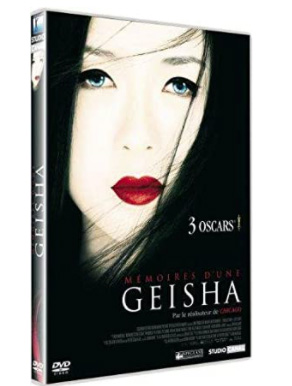
Memoirs of a Geisha
Synopsis
Set in pre-World War II Japan, a poverty-stricken young girl named Chiyo is torn from her family and sold into servitude at a traditional geisha house in Kyoto. Enduring harsh bullying from rival geisha seniors and isolation, her life transforms when she is mentored by the most celebrated geisha of the era, who trains her in the delicate arts of dance, music, and romance under the name Sayuri. As World War II disrupts Japanese society, Sayuri must navigate powerful patrons, political betrayal, and unrequited love to secure her own freedom and destiny. The visually stunning historical drama captures exquisite artistic tradition and romance.
The Making of the Film
Director Rob Marshall adapted the film from Arthur Golden's internationally best-selling historical novel of the same name. The inspiration stemmed from wanting to bring the secretive, visually opulent world of traditional Japanese geisha culture to cinematic life with unprecedented artistic fidelity. The production team invested heavily in lavish period costume design, intricate wooden teahouses, and stunning Kyoto set recreations. The script was meticulously structured to mirror the confessional memoir narrative style of the book.
Critical Reception and Reviews
Professional critics gave mixed reviews, praising the film's breathtaking cinematography, gorgeous costume design, and John Williams's haunting musical score, while criticizing its casting of Chinese actresses in prominent Japanese roles and Hollywood-formula melodrama. Reviewers, however, praised Zhang Ziyi and Michelle Yeoh for their commanding, graceful lead performances. Public reception was warm, turning it into a solid box-office success worldwide. The film won three Academy Awards, including Best Cinematography and Best Costume Design.
Filming Anecdotes
Director Rob Marshall drew visual inspiration from traditional Japanese ukiyo-e paintings, historical geisha photography, and classical Hollywood melodramas. Production took place on expansive soundstages in Los Angeles and California, constructing meticulous Japanese village and teahouse sets since filming in actual historic Kyoto districts was restricted. During the filming of traditional dance sequences, lead actresses underwent months of rigorous geisha fan-dancing and wooden-clog walking boot camps. The cast faced online cultural scrutiny in Asian markets regarding international casting choices.
Themes Explored
The film explores artistic discipline, survival during wartime, unrequited love, mentorship, resilience, and female autonomy.
The emotional climax reveals that the wealthy patron Sayuri loved for decades was the Chairman who first showed her kindness as a child, leading to a touching romantic reunion.
Meaning of the Title
The title refers directly to the biographical memoir format of the protagonist Sayuri recounting her life story as a traditional Japanese geisha.
Original Soundtrack
John Williams composed an extraordinary, Oscar-nominated orchestral score featuring haunting cello solos performed by Yo-Yo Ma and violin solos by Itzhak Perlman.
The film remains celebrated as a visual masterpiece of costume design and musical scoring in 2000s historical cinema.
The Last Emperor, Crouching Tiger, Hidden Dragon, In the Mood for Love