

 Français
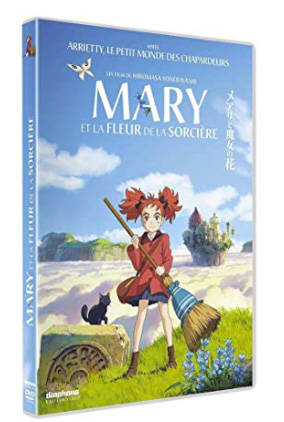
Mary and the Witch's Flower
Synopsis
A clumsy, spirited young girl named Mary Smith is spending a dreary summer with her great-aunt in the countryside, feeling bored and out of place. While chasing a curious pair of stray cats into a misty forest, she discovers a rare, glowing blue flower known as "Fly-by-Night" that only blooms once every seven years. Accidentally crushing the flower releases a burst of ancient magic that transforms her broomstick into a magical flying vehicle, whisking her away above the clouds to Endor College—a secret, prestigious academy of magic run by headmistress Mumblechook and Doctor Dee. However, Mary soon discovers that the school hides dark, dangerous biological experiments using mutated animals. This enchanting animated fantasy celebrates courage and self-discovery.
The Making of the Film
The genesis of Mary and the Witch's Flower came from Studio Ponoc's inaugural feature film, founded by former Studio Ghibli producer Yoshiaki Nishimura and directed by Hiromasa Yonebayashi. Director Yonebayashi adapted the film from Mary Stewart's classic 1971 children's fantasy novel The Little Broomstick, aiming to capture the breathtaking visual wonder and emotional heart of classic Ghibli animation. The production team consisted of many former Ghibli artists who wanted to carry on the hand-drawn animation tradition in a brand-new studio setting. The filmmakers sought to craft a vibrant, magical coming-of-age fable for young audiences.
Critical Reception
Professional critics gave generally positive reviews to Mary and the Witch's Flower, praising its gorgeous hand-drawn animation, vibrant color palette, imaginative magical world-building, and charming heroine. Reviewers noted that while its storytelling occasionally felt derivative of classic Studio Ghibli masterpieces like Kiki's Delivery Service and Spirited Away, its sheer artistic beauty and joyful energy made it a delightful watch. The public response was a solid box office success in Japan and international markets, establishing Studio Ponoc as a worthy successor to Ghibli. Audiences adored the magical flying sequences. The film received numerous animation award nominations.
Filming Anecdotes
Director Hiromasa Yonebayashi drew heavy inspiration from classic British children's literature, traditional hand-drawn watercolor aesthetics, and his years of experience working under Hayao Miyazaki at Studio Ghibli. Production involved months of painstaking hand-drawn animation labor by Studio Ponoc artists, painting intricate magical spells, flying broomstick scenes, and bioluminescent botanical gardens. During the voice recording sessions for the English dub, young actress Ruby Barnhill and veteran Kate Winslet brought incredible warmth and theatrical wickedness to Mary and Madame Mumblechook. Before production began, Yonebayashi personally scouted rural British countryside landscapes for visual inspiration.
Main Themes
The film explores profound themes of self-worth, courage without magical powers, responsibility, anti-hubris in science, and growing up. It highlights how true strength comes from inner character and determination rather than artificial magical enhancements. Furthermore, it champions protecting nature and animals.
Ending Explanation
The climax resolves the magical academy crisis when Mary uses her ingenuity and courage to destroy the corrupted magical laboratory, saving Peter and neutralizing the dangerous mutation experiments. With Endor College's dark magical engine permanently destroyed and the headmistress's schemes foiled, the magical flower loses its power forever. Mary and Peter return safely to their ordinary rural lives on earth, having learned to appreciate who they are without needing magical shortcuts. The film ends on a joyful, optimistic note of self-acceptance and grounded happiness.
Title Significance
The title directly honors the protagonist, Mary, and the magical botanical flower that unlocks her extraordinary fantasy journey.
NULL
NULL
Kiki's Delivery Service, Spirited Away, The Secret World of Arrietty, Ponyo