

 Français
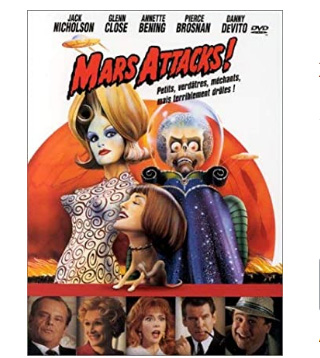
Mars Attacks!
Synopsis
Earth is thrown into mass panic when a massive fleet of Martian flying saucers surrounds the planet. The President of the United States and his administration attempt to welcome the extraterrestrial visitors with open arms and peaceful gestures. However, the Martians quickly reveal their hostile intentions, unleashing a wave of brutal destruction across major world cities using futuristic ray guns. A ragtag group of unlikely human survivors eventually discovers an eccentric, bizarre weakness that can bring down the alien invaders.
The Making of the Film
Tim Burton was inspired to create Mars Attacks! by the nostalgic 1962 Topps trading card series of the same name, which featured lurid and shocking sci-fi illustrations of alien invasions. Jonathan Gems wrote the initial screenplay drafts, originally imagining a massive, multi-studio epic featuring stop-motion animation reminiscent of classic Ray Harryhausen films. Although computer-generated imagery ultimately took over, Burton deliberately maintained a campy, deliberately artificial aesthetic to honor 1950s B-movie sci-fi tropes. The project served as a darkly humorous antidote to the overly serious alien invasion blockbusters of the era.
Critical Reception
Professional critics offered mixed reviews upon release, with some praising its subversive satirical humor, stellar ensemble cast, and visual creativity, while others found the chaotic tone uneven and cynical. Many reviewers appreciated how it mocked political ineptitude and media sensationalism during a global crisis.
Audience reception was initially lukewarm at the box office, partly due to competition from other holiday releases, but the film has since evolved into a beloved cult classic.
The film earned Saturn Award nominations and won acclaim among fantasy fans for its unique artistic direction, quirky costume design, and unforgettable alien sound effects.
Behind-the-Scenes Stories
Tim Burton drew heavy inspiration from classic 1950s atomic-age science fiction cinema, pulp magazines, and old-school monster creature features. His visual direction emphasized bright, garish primary colors and retro-futuristic gadget designs.
Production faced unique hurdles when blending traditional stop-motion animation with live-action footage, requiring meticulous coordination between visual effects teams and actors reacting to invisible creatures.
During the chaotic White House destruction sequence, the pyrotechnics crew accidentally triggered a slightly larger blast than planned, leaving genuine shock on the actors' faces.
Warren Beatty was initially considered to play the role of President Dale before Jack Nicholson enthusiastically took on the dual roles of the President and Art Land.
Themes Explored
Political incompetence, media sensationalism, Cold War paranoia satire, human hubris in the face of the unknown, and the absurdity of science fiction tropes.
Ending Explained
Humanity is saved when a teenager plays Slim Whitman's yodeling song "Indian Love Call," which causes the Martians' brains to violently explode due to a unique biological vulnerability to high-pitched frequencies.
Meaning of the Title
Meaning of the Title
The title directly references the classic 1962 trading card series that inspired the film, signaling an explosive, pulp-style extraterrestrial invasion.
Danny Elfman composed a wonderfully eccentric, theremin-heavy orchestral score that perfectly captures the retro sci-fi B-movie atmosphere.
Independence Day, Ed Wood, The Faculty, Men in Black