

 Français
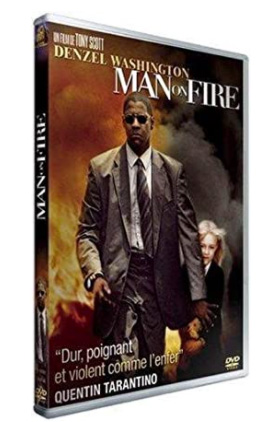
Man on Fire
Synopsis
John Creasy, a burned-out former CIA operative drowning in guilt and alcohol, takes a job as bodyguard to a young girl in Mexico City, where kidnappings are an everyday threat. Against his expectations, he forms a deep bond with his nine-year-old charge, Pita. When she is abducted during an ambush, Creasy is left for dead and vows to take revenge. He then launches a relentless hunt for the men responsible, tearing through the criminal underworld of the city.
The Making of the Film
Man on Fire is based on the 1980 novel by A. J. Quinnell, which had already been adapted into a 1987 film. Tony Scott directed the new version from a screenplay by Brian Helgeland, relocating the story to Mexico City. The film reunited Scott with Denzel Washington, with whom he had already worked on "Crimson Tide". Dakota Fanning, then around ten years old, played the young girl, while Christopher Walken, Radha Mitchell and Marc Anthony rounded out the cast. Scott used a highly stylized visual approach, with saturated colors, jump cuts and shifting film speeds. The film was released in 2004.
Reviews and Reception
Summary of Professional Reviews
Critics gave the film a mixed reception. Many praised the performances of Washington and Fanning and the emotional weight of their bond. At the same time, reviewers often criticized the aggressive editing and the extreme violence of the second half. Some considered the film an intense and effective thriller, while others found it excessive and overlong.
Audience Reception
The film was a commercial success, earning roughly 130 million dollars worldwide. Audiences were gripped by the contrast between its tender first half and its brutal revenge story. Over time, it has built a strong reputation as one of Denzel Washington's best action performances. It is often cited as a defining example of Tony Scott's visual style.
Filming Anecdotes
Director's Inspirations
Scott wanted the visuals to reflect the character's fractured state of mind, which is why he experimented with fast cuts, scratched film and unusual color grading. He also wanted to convey the tension and chaos of daily life in Mexico City. The result is a film that feels immersive and sometimes overwhelming.
Production Challenges
The production shot on location in Mexico City, a challenging environment with heavy traffic and security concerns. The filmmakers had to coordinate large crowds, complicated car sequences and the safety of a very young actress. Scott also used multiple cameras and a lot of improvised framing, which added complexity to the editing process.
Themes Explored
The film is a story about redemption, loss and the destructive power of revenge. Creasy is a man who has given up on himself until the love of a child awakens his humanity. The corruption of Mexico City's institutions, from police to criminal gangs, forms a bleak backdrop. Faith appears in quiet but meaningful moments, as the character struggles with guilt and the possibility of forgiveness. The story also reflects on the cost of violence, even when it is carried out for a righteous cause. Ultimately, it is about what a person is willing to sacrifice for someone he loves.
Ending Explained
In the final act, Creasy exchanges himself for Pita to save her life, knowing that he is severely wounded. After Pita is returned safely to her mother, Creasy dies, having finally found a purpose and a form of redemption. His death is presented not as a defeat but as an act of love. The ending gives the film its emotional power and closes the arc of a man who started the story with no desire to live.
Meaning of the Title
The title refers to the burning intensity of the main character once his rage and purpose are ignited. It evokes a man consumed by fire, both literally in the violence he unleashes and figuratively in the passion that drives him. The phrase also hints at the idea that he is destined to burn out.
Similar Films
- Léon: The Professional (1994): a hardened killer protects a young girl.
- Taken (2008): a father uses his skills to rescue his kidnapped daughter.
- Training Day (2001): another Denzel Washington thriller with a morally complex lead.
- The Equalizer (2014): a former operative takes vengeance on criminals.