

 Français
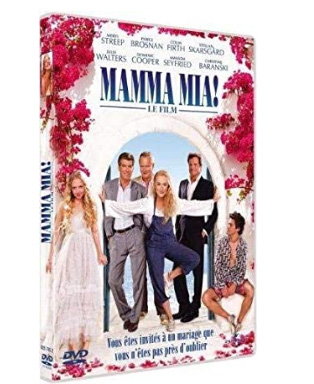
Mamma Mia!
Synopsis
On a sunny Greek island, Sophie is about to marry the man she loves and secretly invites three men from her mother's past, one of whom might be her father. Donna, a former singer who now runs a small hotel, is stunned when the three arrive. As the wedding approaches, old feelings resurface and secrets come to light. The story is told through the songs of ABBA.
The Making of the Film
Mamma Mia! began as a stage musical created by producer Judy Craymer, who dreamed of building a show around the songs of ABBA. Playwright Catherine Johnson wrote the story, which premiered in London in 1999 and became a global phenomenon. The film adaptation was directed by Phyllida Lloyd, who had also staged the original production. Meryl Streep was cast as Donna, which surprised many people, since she was not known for musical roles. The film was shot on the Greek islands of Skopelos and Skiathos, which gave it a sun-drenched, postcard-like atmosphere. Interior scenes were filmed in studio, with a set built to recreate the island's whitewashed buildings. The film was released in 2008 and brought together stars such as Pierce Brosnan, Colin Firth and Stellan Skarsgård. ABBA's Benny Andersson and Björn Ulvaeus were closely involved in the production.
Critical Reception
Summary of professional reviews
Critics were divided. Many enjoyed the film's energy and Meryl Streep's commitment, while others found the direction clumsy and the singing uneven. Some reviewers criticized the vocal performances of the male leads, though others found them endearing. Overall, the film was seen as a feel-good entertainment that did not need to be taken too seriously.
Public reception
Audiences adored the film, which earned more than 600 million dollars worldwide, making it one of the most successful musicals ever. Viewers returned to the cinema for sing-along screenings, and the film became a regular television favorite.
Awards received
Meryl Streep received a Golden Globe nomination for Best Actress in a Musical or Comedy. The film itself was nominated for Best Motion Picture in the same category.
Behind-the-Scenes Stories
Director's inspirations
Phyllida Lloyd came from the theater, and she wanted the film to keep the exuberance of a stage show. She encouraged her actors to sing and dance with joy rather than perfection.
Production difficulties
Filming on Greek islands meant dealing with weather, heat and tricky logistics. The cast also had to learn complex choreography and record vocals, which was a challenge for actors who were not trained singers.
Anecdote about a particular scene
The number Dancing Queen, in which a group of women run through the island's streets and jetty, was filmed with real enthusiasm and became the heart of the movie. The scene is widely remembered as the film's emotional high point.
Themes Explored
At its core, the film is a celebration of motherhood, friendship and the freedom to choose your own path. It plays with the idea that a family does not have to follow a traditional shape. Donna's independence and resilience make her a strong, memorable heroine. The story also explores the past and the way it can return unexpectedly. Humor, romance and nostalgia hold everything together. The island setting adds a sense of escape and possibility.
Ending Explained
At the wedding, Sophie decides not to marry Sky right away, choosing instead to travel and discover the world. Donna and Sam, one of the possible fathers, rediscover their love and get married. The question of Sophie's father is left open, because the three men agree to be a family together. The film ends with a joyful musical finale that reflects its feel-good spirit.
Meaning of the Title
Mamma Mia is the title of a famous 1975 ABBA song, and it is also an Italian expression of surprise. It fits the story perfectly, since Donna's reaction to the arrival of the three men is exactly that. The title also signals the film's playful tone and its central link with ABBA's music.
Original Soundtrack
The soundtrack is built entirely on ABBA's hits, including Dancing Queen, Super Trouper, The Winner Takes It All and Mamma Mia. The cast performed the songs themselves, and the album was a huge commercial success. It topped the charts in several countries, including the United Kingdom.
Similar Films
Mamma Mia! Here We Go Again is the direct sequel. For other musical comedies, try Grease, Moulin Rouge! and Hairspray. If you enjoy a romantic holiday setting, Under the Tuscan Sun and Shirley Valentine are good companions.