

 Français
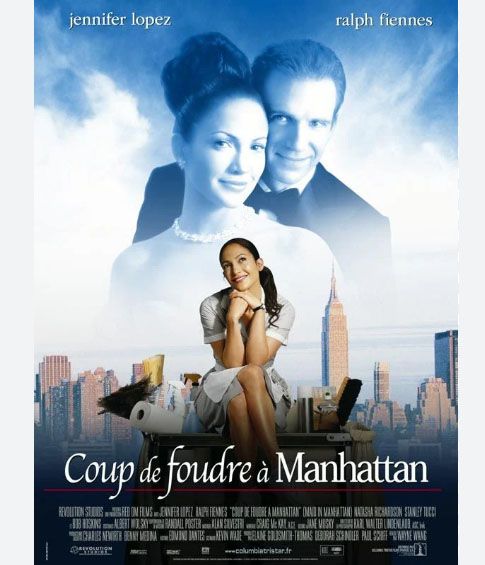
Maid in Manhattan
Synopsis
Marisa Ventura is a hardworking single mother who works as a maid at one of New York's most luxurious hotels. While tidying a suite, she tries on an expensive dress and is mistaken by a handsome politician for a wealthy guest. The two spend a magical evening together, and he becomes determined to find the mysterious woman he met. As the lie grows harder to maintain, Marisa must decide how far she is willing to go to follow her heart.
The Making of the Film
Maid in Manhattan is a romantic comedy directed by Wayne Wang and written by Kevin Wade, based on a story credited to Edmond Dantès, a pseudonym used by John Hughes. The film is a modern take on the Cinderella story, set in the world of luxury hotels in New York City. Jennifer Lopez played the lead role, with Ralph Fiennes as the politician and Natasha Richardson, Stanley Tucci and Bob Hoskins in supporting roles. The film was shot on location in New York, which gave it an authentic sense of place. It was released in December 2002.
Critical Reception
Summary of Professional Reviews
Critics gave the film a mixed to negative reception. Many found its story formulaic and its class politics unconvincing. Others praised the charm of Jennifer Lopez and the surprising chemistry with Ralph Fiennes. The supporting cast, particularly Bob Hoskins and Stanley Tucci, was often highlighted.
Audience Reception
The film was a box-office success, earning more than 150 million dollars worldwide. Audiences were drawn by its romantic fairy-tale premise and Lopez's star power. It has remained a popular choice for fans of romantic comedies. Many viewers remember it as one of the signature romantic films of the early 2000s.
Themes Explored
The film is a fairy tale about class, ambition and the courage to cross social boundaries. It follows a woman who is judged by her job rather than her abilities. Love is portrayed as a force that can ignore status, though only after a series of misunderstandings. The story also explores motherhood, as Marisa wants her son to grow up with dignity and opportunity. Honesty and identity are central, since her deception threatens her happiness. Ultimately, it celebrates self-respect and the right to dream.
Ending Explained
When her deception is exposed, Marisa is fired from the hotel and returns to her ordinary life. The politician refuses to give up and publicly defends her, while she finds the courage to speak up for herself. They reconcile, and Marisa is later promoted to a management position. The ending delivers the classic fairy-tale resolution in which love and merit are rewarded.
Meaning of the Title
The title is a play on the phrase "made in Manhattan", a label that suggests quality and local pride. By changing "made" to "maid", it points to the heroine's job and her New York roots. The pun sums up the film's mix of romance and city life.
Similar Films
- Pretty Woman (1990): a classic romantic comedy about a woman who crosses social lines.
- Sabrina (1995): a modern fairy tale about class and romance.
- Notting Hill (1999): a story about love between an ordinary person and a star.
- The Wedding Planner (2001): another Jennifer Lopez romantic comedy.