

 Français
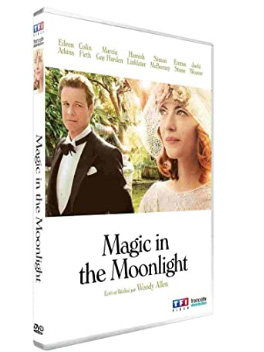
Magic in the Moonlight
Synopsis
Set in the 1920s on the French Riviera, Stanley Crawford is a cynical, world-famous British stage magician known for exposing fraudulent spiritualists and mediums. His lifelong friend brings him on a mission to debunk Sophie Baker, a young American clairvoyant dazzling a wealthy family on the Riviera. However, as Stanley spends time observing Sophie, his rigid skepticism is challenged when he fails to find any trickery, and he unexpectedly finds himself falling in love.
The Making of the Film
Woody Allen wrote and directed this romantic comedy as a lighthearted exploration of illusion, skepticism, faith, and romance against the glittering backdrop of the 1920s French Riviera. Allen wanted to contrast the hard-boiled rationalism of a master magician with the mystical yearnings of the human heart.
Critical Reception
Critics were moderately favorable, praising the gorgeous cinematography of the French Riviera, the sparkling 1920s costume design, and the palpable chemistry between Colin Firth and Emma Stone. Some reviewers felt the narrative was familiar territory for Allen, but appreciated its gentle charm.
Audiences enjoyed the romantic escapism, witty banter, and picturesque period setting.
The film received multiple nominations from regional film critic associations and festival galas for its visual design and performances.
Filming Anecdotes
Woody Allen drew inspiration from classic 1920s European leisure culture, classic stage magic history, and sparkling romantic comedies of the golden era of cinema.
Production took place entirely on location across picturesque coastal towns of the French Riviera, presenting the crew with lovely scenery alongside high logistical coordination demands during peak tourist seasons.
During the stargazing sequence, Colin Firth and Emma Stone had to deliver lengthy romantic dialogue while working around sudden shifts in coastal wind patterns that disrupted lighting silk umbrellas.
Emma Stone was cast after Allen saw her work in previous comedic dramas, noting her ability to balance sharp comedic timing with authentic emotional vulnerability.
Major Themes
Skepticism versus faith, the comforting illusion of romance, rationalism meeting mysticism, and the transformative power of love.
Explanation of the Ending
Stanley discovers that Sophie's apparent clairvoyance was an elaborate trick orchestrated by his friend to humble him, but realizing how much he truly loves her, he accepts life's mysteries and proposes marriage.
Title Significance
The title refers both to the romantic atmosphere of the French Riviera nights and to the metaphorical illusion of love and magic that captivates the pragmatic protagonist.
Midnight in Paris, Roman Holiday, Café Society, Vicky Cristina Barcelona