

 Français
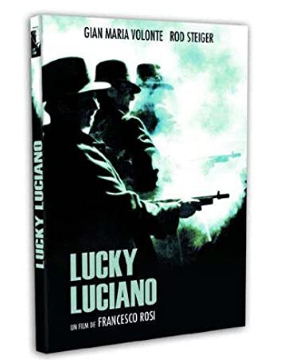
Lucky Luciano
Synopsis
This gritty historical crime drama chronicles the final years and rise to power of Salvatore "Lucky" Luciano, the legendary Sicilian-American mobster who revolutionized organized crime. Set primarily in post-WWII Italy following his controversial deportation from the United States, the film follows his quiet reintegration into international narcotics trafficking. Operating under the watchful eye of American and Italian law enforcement, Luciano orchestrates a massive global heroin syndicate. It is a meticulous, documentary-style biographical portrait of criminal enterprise and geopolitical intrigue.
The Making of the Film
The project originated from director Francesco Rosi's fascination with the hidden political mechanisms of organized crime, corruption, and international drug trafficking. Filmmakers sought to strip away romanticized Hollywood gangster tropes in favor of an austere, semi-documentary investigation into Luciano's twilight years. Inspiration was drawn from real investigative journalism, police archives, and historical accounts of post-war Sicilian politics. The creative team aimed to expose how organized crime intersected with intelligence agencies and government corruption.
Critical Reception
Critics offered strong, favorable reviews, praising the film's rigorous historical authenticity, documentary-style realism, and Gian Maria Volonté's stellar lead performance. Reviewers noted that Rosi avoided glamorizing the criminal lifestyle, instead presenting a cold, clinical examination of bureaucratic corruption and drug networks. The meticulous recreation of post-war Italy and the atmospheric cinematography received universal acclaim. While its deliberate pacing demanded patience, cinephiles lauded its intellectual rigor and political bravery.
Audience reception was appreciative among fans of European crime cinema and political thrillers, though its arthouse pacing limited mainstream box office returns. Viewers commended the film for its uncompromising commitment to historical detail and its fascinating look at international geopolitics. Film scholars frequently cited it as a masterclass in realistic crime filmmaking. It earned a respected legacy among connoisseurs of Italian cinema.
Awards season brought notable recognition at international film festivals, honoring Rosi's sharp directorial vision and Volonté's magnetic acting. Critics' associations praised the production for its bold political stance and uncompromising examination of the global drug trade. The film also received accolades for its authentic period art direction and costume design. These accolades cemented its status as a high-water mark in political crime drama.
Behind-the-Scenes Stories
The director drew visual inspiration from classic Italian neorealism and investigative photojournalism to establish a raw, authentic aesthetic. Every location, from gritty dockside Naples to sun-baked Sicilian towns, was chosen to reflect the socio-economic realities of post-war Italy. The production team collaborated with law enforcement experts and journalists to ensure that the drug-smuggling operations and police procedures mirrored actual historical records. These artistic choices created a chillingly realistic portrait of organized crime.
Production presented unique logistical hurdles, particularly in navigating sensitive political themes and securing filming permits across real Italian historical sites. The crew worked under tight coordination with local authorities to recreate period-accurate street scenes without disturbing public infrastructure. Shooting documentary-style crowd sequences required meticulous planning from the assistant directors. Furthermore, maintaining strict historical accuracy across multiple international languages required expert translation supervision.
During the filming of the interrogation and surveillance sequences, the director utilized distant, objective camera angles to mirror the feeling of a police dossier come to life. To capture absolute authenticity, the lead actor studied hours of archival footage and police interviews regarding Luciano's mannerisms. The crew utilized natural daylight and unpolished textures to avoid any Hollywood artifice. This immersive approach resulted in a chillingly plausible character study.
Casting focused on securing legendary European dramatic talent capable of projecting quiet menace and intellectual authority. The lead actor was chosen for his ability to convey immense complexity without relying on overt mobster clichés. Supporting roles were filled with real-life non-professional actors and seasoned Italian character actors, adding gritty realism to the background. This thoughtful casting process grounded the political thriller in historical truth.
Themes Explored
The narrative deeply explores themes of institutional corruption, geopolitical manipulation, and the cozy relationship between organized crime and state power. It examines the consequences of post-war immigration, deportation, and the global expansion of the drug trade. Additionally, it highlights the bureaucratic futility of law enforcement under political compromise. Ultimately, the film reflects on power, decay, and the invisible webs governing society.
Ending Explained
The narrative concludes with Luciano dying of a sudden heart attack at Naples airport in 1962 just as he is about to board a flight carrying a massive heroin shipment, evading final arrest. Law enforcement agents examine his lifeless body, realizing that while the man is gone, the sprawling international criminal network he built remains fully operational. This sobering resolution emphasizes the enduring, systemic nature of organized crime.
Meaning of the Title
The title directly references the notorious nickname and historical identity of Salvatore Luciano, the architect of modern organized crime.
Similar Films
Films sharing similar gritty crime history and political corruption themes include The Mattei Affair (1972), Salvatore Giuliano (1962), and The Godfather Part II (1974).