

 Français
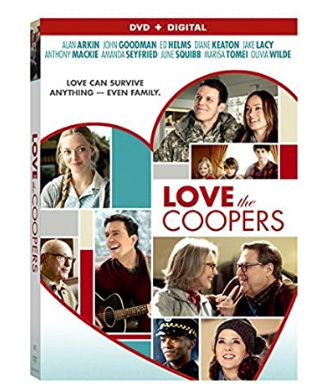
Love the Coopers
Synopsis
On Christmas Eve, the Cooper family gathers for their annual reunion, each member carrying secrets, resentments and hopes. Charlotte and Sam, the parents, have decided to separate after forty years but want to keep up appearances for one last happy holiday. Their children, grandchildren and relatives arrive with their own problems, from job loss to loneliness and heartbreak. As the evening unfolds and a series of misadventures brings everyone closer, the family discovers what truly matters during the holidays.
The Making of the Film
Love the Coopers, released in some countries as Christmas with the Coopers, is a holiday ensemble comedy-drama directed by Jessie Nelson. The screenplay was written by Steven Rogers, who had previously written Kate and Leopold and Hope Floats. The idea was to create a modern Christmas classic in the tradition of films like Love Actually, in which several storylines intertwine over a single holiday. Nelson, who had made I Am Sam, wanted to portray a family in all its messy and heartwarming complexity. The film is narrated by the family's dog, Rags, who is voiced by Steve Martin, adding a wry and affectionate point of view. The project assembled a large cast of well-known actors, which made it a major ensemble piece. It was designed as a gentle and relatable story about the pressures and joys of the Christmas season. The film was released in November 2015, in time for the holiday period.
Reviews and reception
Professional critics' summary
Critics were generally harsh, finding the film sentimental, scattered and filled with holiday cliches. Many noted that the cast was impressive but that the script did not give them enough distinct material. Some reviewers praised the warmth of a few performances, especially those of Alan Arkin and Olivia Wilde. Others criticised the tonal shifts, which moved clumsily from comedy to drama.
Audience reception
The film earned a modest amount at the box office and did not match the success of other holiday ensemble movies. Audiences were divided, with some enjoying its warmth and others finding it too predictable. Over time, it has found a place as a seasonal film on television and streaming, where viewers seek out comforting holiday stories. It remains a minor but sincere entry in the genre.
Filming anecdotes
Director's inspirations
Jessie Nelson was inspired by her own experiences of family holidays, with their mix of warmth, conflict and absurdity. She wanted to show that no family is perfect and that love can survive even in difficult situations. The narration by the dog was meant to add humour and a different perspective to the story. Nelson also drew on classic holiday movies in order to give the film a nostalgic feel.
Production difficulties
Bringing together such a large ensemble cast required complex scheduling, since many of the actors had commitments elsewhere. The film was shot in and around Pittsburgh, using a mix of houses, restaurants and a hospital. The production had to cover many storylines and make sure that each one received enough attention. The Christmas decorations and the winter setting also required careful design.
Originally planned casting
Diane Keaton and John Goodman played Charlotte and Sam, the parents, with Ed Helms, Olivia Wilde, Amanda Seyfried and Anthony Mackie as members of the extended family. Alan Arkin played the patriarch, and June Squibb, Marisa Tomei and Jake Lacy also appeared. Steve Martin voiced the dog and narrated the film.
Themes explored
The film explores the tension between expectations and reality during the holiday season. It shows that the perfect Christmas is a myth and that families are made of imperfect people. Another theme is the fear of loneliness, which affects several characters, from the elderly to the young. The story also looks at long marriages and the way love can change over time. It touches on forgiveness and the importance of reconciling with those closest to us. The film shows how small acts of kindness can bring people together. It also examines generational differences, as grandparents, parents and children see the world differently. Overall, it celebrates the importance of family, even when it is far from perfect.
Ending explained
As the day goes on, the various storylines come together at a hospital on Christmas Eve, after an accident involving the family's dog. The characters, who have been avoiding each other and their problems, are forced to face the truth. Secrets are revealed, and old wounds are healed in the middle of the chaos. The family realises that the importance of being together outweighs their disagreements. Several of the relationships are repaired or take new directions, and the film ends on a note of hope. The conclusion confirms that Christmas is less about perfection than about love and forgiveness.
Meaning of the title
The title Love the Coopers is both an invitation and a statement. It tells the audience to love this family despite their flaws, much as the family members must learn to love one another. The use of the verb in the imperative gives the title a warm and persuasive tone. The surname Cooper represents an everyday American family, which makes the story easy to relate to. The title also hints at the way the dog narrator speaks to the viewer, encouraging affection for the characters. In some markets, the film was released as Christmas with the Coopers to highlight the holiday setting. Both titles stress the idea of belonging and acceptance.
Original Soundtrack
Nick Urata composed the score, which has a gentle, whimsical style and fits the holiday atmosphere. The film also features a selection of Christmas songs, from classic carols to modern pop arrangements. The music accompanies the various storylines and gives the film a festive sparkle.
Similar Films
Love Actually is the most famous holiday ensemble film. The Family Stone and Home for the Holidays also look at family gatherings at Christmas. Four Christmases and Christmas with the Kranks are comedies about holiday obligations. Valentine's Day and New Year's Eve share a similar interlocking structure.