

 Français
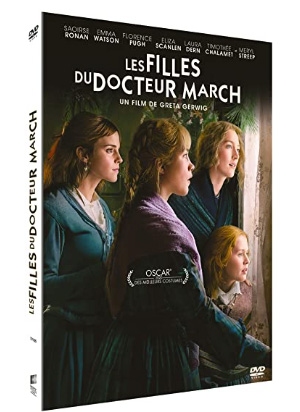
Little Women
Synopsis
In nineteenth-century Massachusetts, the four March sisters grow up together while navigating the challenges of family life, love and social expectations. Jo dreams of becoming a writer, Meg seeks happiness in domestic life, Amy hopes to develop her artistic talents, and Beth brings warmth and kindness to the family. As they move into adulthood, each sister must make difficult choices about her future. Through memories and present-day events, the story explores their changing relationships and the enduring strength of family bonds.
The Making of the Film
Greta Gerwig's Little Women is an adaptation of Louisa May Alcott's celebrated 1868 novel, a work that has inspired numerous stage and screen versions. Gerwig had been familiar with the book for many years and was particularly interested in its portrayal of women seeking independence in a society that offered them limited choices. Rather than simply retelling the story chronologically, she developed a structure that moves between the sisters' childhood and adult lives. This approach highlights how memory influences the way people understand their past. Gerwig also wanted to emphasise Alcott's own experiences as a writer and the economic realities behind the creation of the novel. Saoirse Ronan was cast as Jo March, while Emma Watson, Florence Pugh and Eliza Scanlen played her sisters. The production brought together a prominent ensemble cast, including Laura Dern, Meryl Streep and Timothée Chalamet. The film combines period detail with a contemporary sensitivity toward female ambition, creativity and financial independence. It ultimately offers a personal interpretation of a literary classic rather than a strictly conventional adaptation.
Critical Reception
Professional Reviews: Critics widely praised Greta Gerwig's direction and the film's fresh approach to a familiar literary work. The non-linear narrative was particularly appreciated for connecting the sisters' childhood memories with their adult experiences. Florence Pugh received especially strong reviews for her portrayal of Amy, while Saoirse Ronan was praised for her energetic interpretation of Jo. The costumes, production design, cinematography and emotional depth were also widely admired.
Audience Reception: The film was warmly received by audiences, particularly viewers familiar with Alcott's novel and earlier adaptations. Many appreciated its emphasis on sisterhood, ambition and the difficulties women faced in nineteenth-century society. The performances and the chemistry between the four actresses were frequently highlighted. Its combination of literary nostalgia and contemporary themes helped it attract a broad international audience.
Awards: Little Women received six Academy Award nominations, including Best Picture, Best Actress for Saoirse Ronan and Best Supporting Actress for Florence Pugh. Jacqueline Durran won the Oscar for Best Costume Design. The film also received nominations from the Golden Globes, BAFTA and several critics' organisations. Its awards recognition confirmed its position as one of the most acclaimed literary adaptations of 2019.
Behind-the-Scenes Facts
Director's Inspirations: Greta Gerwig wanted to explore the relationship between Louisa May Alcott's life and the fictional experiences of the March sisters. She was particularly interested in the economic independence of women and the difficulties faced by female writers in the nineteenth century. The director also sought to give Amy a more complex personality than she sometimes receives in traditional adaptations. Her approach emphasised the idea that each sister has a different understanding of happiness and personal fulfilment.
Production Challenges: Recreating nineteenth-century New England required detailed work on costumes, architecture and period interiors. The production also needed to distinguish between two different periods in the sisters' lives without confusing the audience. The non-linear structure required careful coordination between the actors, costume department and editing team. The filmmakers also worked to maintain a consistent visual atmosphere while presenting different stages of the characters' development.
A Particular Scene: The final scenes involving Jo and the publication of her novel deliberately play with the boundary between fiction and autobiography. Gerwig uses the character's professional negotiations to reflect the real publishing experiences of Louisa May Alcott. This approach gives the conclusion a personal dimension beyond the romantic storyline. It also reinforces the film's interest in the relationship between artistic creation and financial independence.
Casting: Saoirse Ronan and Timothée Chalamet had previously worked with Greta Gerwig on Lady Bird. Their established creative relationship helped shape the chemistry between Jo and Laurie. Florence Pugh was selected to portray Amy at different stages of her life, with the production using her performance to communicate the character's emotional development. Meryl Streep and Laura Dern brought considerable experience to the supporting roles of Aunt March and Marmee.
Themes Explored
Sisterhood is the central theme of Little Women, showing how family relationships can remain powerful despite disagreements and changing circumstances. The four sisters represent different approaches to happiness, ambition and personal fulfilment. Female independence is another major concern, particularly through Jo's determination to become a writer and earn her own living. The film examines the economic limitations imposed on women in the nineteenth century and the compromises often required by marriage. Creativity and artistic ambition are explored through the different talents of Jo and Amy. Love is presented in several forms, including romantic affection, friendship and unconditional family support. The story also reflects on memory, showing how childhood experiences influence adult identity. Social class and financial security shape many of the characters' decisions. Ultimately, the film celebrates women's freedom to define their own lives while recognising the emotional importance of family.
Ending Explained
The ending brings together Jo's personal ambitions and the question of how her story should be told. After years of struggling to establish herself as a writer, she negotiates the publication of her novel and insists on retaining control over important aspects of the work. The film deliberately blurs the distinction between Jo's fictional romantic conclusion and the real-life publishing history of Louisa May Alcott. The apparent resolution involving Professor Bhaer can therefore be interpreted both as a narrative choice and as a reflection of the commercial expectations placed on female authors. Jo's success is not presented simply as a romantic achievement but as the result of her determination to become financially independent. The final images of the printed book underline the importance of artistic ownership. The other sisters also find different forms of happiness, demonstrating that there is no single model for a fulfilling life. The conclusion celebrates the power of storytelling and the possibility of shaping one's own future. It also pays tribute to Alcott's achievement in creating a novel that continues to speak to new generations.
Meaning of the Title
The title Little Women comes directly from Louisa May Alcott's novel, first published in two volumes in 1868 and 1869. It refers to the four March sisters as they grow from childhood into adulthood. The word Little reflects their youth and their position within a family that is not wealthy or socially powerful. Women identifies the central subject of the story: the experiences, ambitions and relationships of four young women. The title may sound simple, but it encompasses a wide range of emotional and social questions. It also reflects the historical period in which women had fewer opportunities to pursue independent careers. As the sisters mature, the meaning of the title evolves from a description of their childhood into a portrait of their development as individuals. The name connects the film to a major work of American literature and its enduring cultural influence. It ultimately celebrates the complexity of women's lives and the importance of their individual choices.
Similar Films
- Little Women (1994), a previous adaptation of Louisa May Alcott's novel.
- Pride & Prejudice (2005), a period drama exploring love, class and women's independence.
- Lady Bird (2017), another Greta Gerwig film about family relationships and female identity.
- Emma. (2020), a literary adaptation centred on women, relationships and social expectations.