

 Français
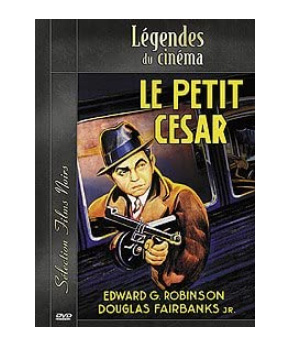
Little Caesar
Synopsis
Rico Bandello is a small-time crook who leaves a dead-end town for Chicago, determined to become somebody. He joins a powerful gang, climbs the ranks through violence and ambition, and takes the nickname "Little Caesar". His rise brings him into conflict with his own bosses and with his old friend Joe, who wants to leave the criminal life and become a dancer. As Rico's ego grows, so do the dangers closing in on him.
The Making of the Film
Little Caesar is based on the 1929 novel by W.R. Burnett, which drew on the world of real Chicago gangsters of the Prohibition era. Mervyn LeRoy directed the film for Warner Bros., and the screenplay was adapted by Francis Edward Faragoh and Robert N. Lee. Edward G. Robinson played Rico, in a performance that made him a star, while Douglas Fairbanks Jr. played his friend Joe. The film arrived at the start of the 1930s, when audiences were fascinated by crime stories rooted in the headlines. It was released in early 1931 and helped to define the gangster genre.
Critical Reception
Summary of Professional Reviews
Critics greeted the film with enthusiasm, praising its fast pace, hard-edged style and Edward G. Robinson's ferocious performance. Many noted that it portrayed its criminal hero as a believable and fascinating figure rather than a simple villain. Over the decades, it has been regarded as one of the founding works of the gangster film. Its influence on later crime movies is widely acknowledged.
Audience Reception
The film was a big success with audiences and helped to launch a wave of gangster pictures. Viewers were drawn to Robinson's magnetic screen presence and to the story of a man rising and falling in the underworld. It continues to be screened in retrospectives of classic Hollywood cinema. Many fans of crime films consider it essential viewing.
Awards Received
The film received an Academy Award nomination for Best Adaptation for Francis Edward Faragoh. In 2000, it was selected for preservation in the United States National Film Registry. These recognitions reflect its lasting importance in American film history.
Themes Explored
The film is a cautionary tale about ambition and the cost of power. It follows the rise of a man who believes that he can take whatever he wants, only to find that his success makes him vulnerable. Loyalty and friendship are tested, particularly in the contrast between Rico and his friend Joe. The story also reflects on the American dream in a distorted form, as success is pursued through crime. Pride proves to be Rico's fatal flaw. At its core, it is a tragedy about a man who cannot stop climbing.
Ending Explained
After his gang falls apart, Rico goes into hiding and loses his confidence. When he is tricked into revealing his location, the police track him down and he is shot dead behind a billboard. The film closes on his stunned disbelief that such an end could come to a man who had risen so high. The ending reinforces the moral message that crime does not pay, a requirement of the era, while giving the character a tragic dignity.
Meaning of the Title
"Little Caesar" is the nickname of the main character, Rico Bandello. The name echoes the Roman emperor, suggesting both his grand ambitions and his craving for absolute power. The word "little" adds a note of irony, hinting at how small he really is behind the pretension.
Similar Films
- The Public Enemy (1931): another classic Warner Bros. gangster film.
- Scarface (1932): a violent portrait of a rising criminal.
- Angels with Dirty Faces (1938): a gangster drama about loyalty and redemption.
- White Heat (1949): a later classic about an unstable criminal.