

 Français
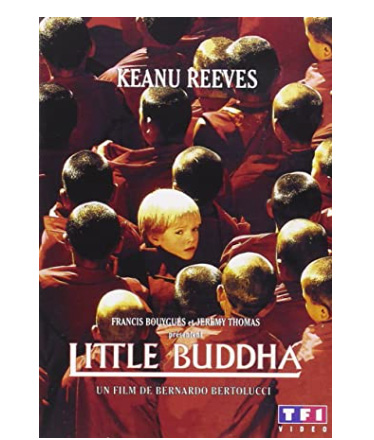
Little Buddha
Synopsis
A group of Tibetan Buddhist monks led by Lama Norbu travel from Bhutan to Seattle in search of the reincarnation of their revered teacher, Lama Dorje. Their search leads them to Jesse Conrad, an ordinary young American boy whose parents, Dean and Lisa, are initially stunned and skeptical of the monks' claims. As Jesse becomes fascinated by the monastic lifestyle and travels back with the monks to Bhutan, his father learns the extraordinary story of Prince Siddhartha. Through an ancient manuscript, the film unfolds the mesmerizing tale of Siddhartha's journey from a life of royal luxury to his ultimate awakening as the Buddha. The two narrative threads intertwine to explore spiritual rebirth, karma, and the eternal nature of consciousness.
The Making of the Film
Director Bernardo Bertolucci was inspired to create the film out of a deep personal fascination with Eastern philosophy, Buddhism, and the historical life of Prince Siddhartha. Following his success with historical epics like The Last Emperor, Bertolucci wanted to craft a visually poetic exploration of spiritual awakening that bridged contemporary Western life with ancient oriental tradition. The project was conceived as a grand visual meditation on faith, reincarnation, and the universal human quest for inner peace.
Critical reception and review
Professional critics praised the film for its breathtaking cinematography, stunning production design, and the majestic recreation of ancient India under Vittorio Storaro's masterful lens. Reviewers commended Keanu Reeves for his sincere and dignified portrayal of Prince Siddhartha, capturing the serene grace of the historical figure. However, some critics felt that the contemporary American framing story felt overly didactic and detached compared to the rich historical narrative. Audiences appreciated the film's tranquil pacing, spiritual depth, and visual splendor, making it a revered art-house favorite of the 1990s. Viewers seeking a contemplative cinematic experience found the exploration of Buddhist principles deeply moving and educational. The film achieved respectable international box office success, resonating strongly with audiences interested in world cinema and philosophy. It earned recognition at various international film festivals, notably for its exquisite cinematography, costume design, and musical score composed by Ryuichi Sakamoto.
Filming anecdotes
Director Bernardo Bertolucci drew inspiration from traditional Buddhist iconography, ancient Indian art, and classical historical epics to establish the film's distinct visual and spiritual tone. Production spanned across breathtaking locations including Seattle, Kathmandu, and the royal palaces of Bhutan, presenting unique logistical and cultural challenges for the international crew. A particularly demanding sequence depicting Siddhartha's temptation by Mara required meticulous coordination of visual effects, intricate costume design, and meditative physical stillness from Keanu Reeves. Before Keanu Reeves was cast as Siddhartha, several major international actors were considered for the revered historical role.
Themes explored
The film deeply explores the principles of reincarnation, karma, and the continuity of the soul across different lifetimes and cultures. It examines the path of spiritual awakening, contrasting material luxury and worldly attachment with asceticism and ultimate inner liberation. Themes of cross-cultural understanding and empathy are central as an American family learns to embrace Eastern spiritual traditions. Furthermore, it reflects on the universal human suffering and the search for meaning that transcends geographic and temporal boundaries.
Explanation of the ending
Meaning of the title
Kundun, The Last Emperor, Samsara, Seven Years in Tibet