

 Français
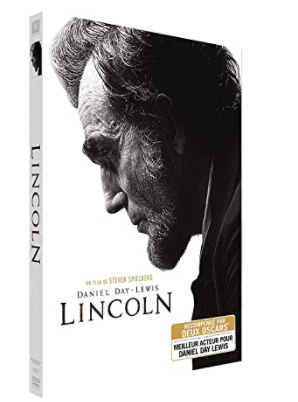
Lincoln
Synopsis
In January 1865, as the American Civil War grinds toward its bloody conclusion, President Abraham Lincoln engages in a fierce political battle to pass the Thirteenth Amendment to abolish slavery. Facing intense opposition from Democrats within Congress and deep divisions within his own cabinet, Lincoln uses political maneuvering, persuasion, and patronage to secure the necessary votes. Working against a ticking clock before peace negotiations end the war, he strives to permanently enshrine human freedom into the Constitution. This masterclass biographical historical drama portrays political leadership at its finest.
The Making of the Film
The concept for Lincoln was developed over more than a decade by director Steven Spielberg, who was inspired by Doris Kearns Goodwin's acclaimed historical biography Team of Rivals: The Political Genius of Abraham Lincoln. Screenwriter Tony Kushner spent years crafting a dense, dialogue-driven script that focused specifically on the final months of Lincoln's life and the intense political struggle to pass the 13th Amendment rather than a cradle-to-grave biopic. Producer Kathleen Kennedy and Spielberg sought to portray Lincoln not as a marble statue, but as a pragmatic, folksy, and cunning politician navigating the messy reality of democracy.
Critical Reception
Professional critics gave universal critical acclaim to Lincoln, praising Daniel Day-Lewis's transcendent, career-defining performance as Abraham Lincoln, Tony Kushner's brilliant screenplay, and Spielberg's masterful direction. Reviewers lauded the film for transforming historical politics into a gripping, suspenseful thriller driven entirely by powerful rhetoric and moral conviction. The public response was exceptionally strong, turning the historical drama into a major commercial blockbuster and awards-season powerhouse. Audiences were mesmerized by the authentic period atmosphere and stellar ensemble cast. The film received twelve Academy Award nominations, winning two: Best Actor for Daniel Day-Lewis and Best Production Design.
Filming Anecdotes
Director Steven Spielberg drew heavy inspiration from historical photographs, presidential documents, and classic 19th-century political history to recreate the authentic texture of Civil War-era Washington. Production took place in Virginia, utilizing meticulously constructed period sets that replicated the White House and Capitol chambers of the 1860s. During the filming of the intense congressional debates, Daniel Day-Lewis famously stayed in character as Abraham Lincoln both on and off set throughout the entire production schedule, speaking in his signature high-pitched presidential voice. Before Daniel Day-Lewis was cast, Liam Neeson was originally attached to play Lincoln for several years before stepping down.
Main Themes
The film explores profound themes of political compromise, moral leadership, freedom, equality, and the heavy human cost of war. It examines how great historical progress often requires navigating morally ambiguous political maneuvering and tactical patience. Additionally, it highlights the enduring power of democratic institutions and constitutional law.
Ending Explanation
The climax resolves the intense legislative struggle when the House of Representatives narrowly passes the Thirteenth Amendment, legally abolishing slavery across the United States and securing Lincoln's defining political victory. Following the celebratory conclusion of the Civil War and the joyful return of peace, the narrative reaches a poignant and tragic coda. President Lincoln departs for Ford's Theatre on that fateful April night, leaving behind a legacy of liberty that forever altered the nation's course. The film ends on a somber, reflective note honoring his immortal sacrifice for human freedom.
Title Significance
The title honors the towering historical figure at the center of the narrative: Abraham Lincoln, whose political genius and moral resolve defined a critical turning point in American history.
The film features a magnificent, understated musical score composed by John Williams that captures the solemn dignity, patriotism, and emotional gravity of the historical era.
NULL
Bridge of Spies, The Post, Darkest Hour, Amistad