

 Français
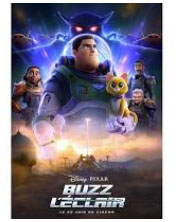
Lightyear
Synopsis
Set in a distant science-fiction galaxy, the definitive origin story of the legendary Space Ranger Buzz Lightyear unfolds as he and his Star Command crew become stranded on a hostile, oxygen-rich exoplanet millions of light-years from Earth due to a navigation computer error. Desperate to correct his mistake and find a way back home for his stranded colony, Buzz embarks on increasingly risky experimental hyperspace test flights, only to discover that every test flight warps time due to relativistic dilation, causing years to pass on the planet while he remains the same age. As decades slip away and a ruthless robotic armada led by the sinister Emperor Zurg invades the colony, an aging Buzz must team up with a quirky group of rookie cadets and a robotic feline companion named Sox to save humanity. The Pixar sci-fi animated film delivers breathtaking interstellar action and poignant emotional depth regarding time.
The Making of the Film
Director Angus MacLane developed the sci-fi animated feature film for Pixar Animation Studios, drawing inspiration from his lifelong love of classic 1970s and 1980s sci-fi cinema like Star Wars and the in-universe cinematic premise that inspired Andy to love the Buzz Lightyear action figure in the original Toy Story franchise. The inspiration stemmed from creating a high-concept, realistic science-fiction action-adventure film starring the iconic Space Ranger rather than a toy comedy. The production team invested heavily in cutting-edge sci-fi set design, realistic lighting rendering tools, and securing Chris Evans to voice Buzz. The script was meticulously structured as an epic sci-fi time-dilation saga.
Critical Reception
Professional critics gave mixed reviews, praising the film's stunning photorealistic sci-fi animation, thrilling spaceship action sequences, and the breakout comedic scene-stealing robot cat Sox voiced by Peter Sohn, while noting its complex time-dilation plot felt mature for traditional family audiences. Reviewers noted that Pixar successfully delivered a visually dazzling cinematic homage to space-opera epics. Public reception was warmly enthusiastic worldwide across theaters and Disney+ streaming platforms, turning it into a solid box-office hit. The film earned technical visual effects award recognition.
Behind-the-Scenes Stories
Director Angus MacLane drew visual inspiration from classic retro-futuristic sci-fi design, industrial machinery, and NASA space exploration archives. Production took place across Pixar animation studios in Emeryville, California, utilizing advanced simulation software to render realistic spaceships, laser blasts, and alien terrain. During the voice recording sessions, Chris Evans brought grounded heroic determination to Buzz, while Peter Sohn improvised hilarious deadpan comedic lines as Sox. The animators studied real aerospace engineering.
Themes Explored
The themes explored include accepting the passage of time, the danger of living in the past, teamwork versus lone-wolf heroism, friendship legacy, and sci-fi space exploration.
Ending Explained Ending Explained The emotional sci-fi climax sees Buzz realizing that trying to fix the past is futile, choosing instead to build a meaningful future alongside his new rookie friends and establishing the modern Space Ranger corps.
Meaning of the TitleMeaning of the Title The title Lightyear refers directly to the iconic space hero's surname and the interstellar distance unit measuring his epic cosmic journeys.
Original Soundtrack Michael Giacchino composed a soaring, majestic orchestral space-opera score featuring booming brass and thrilling synth motifs reminiscent of classic John Williams compositions.
Similar Films Interstellar, Wall-E, Toy Story