

 Français
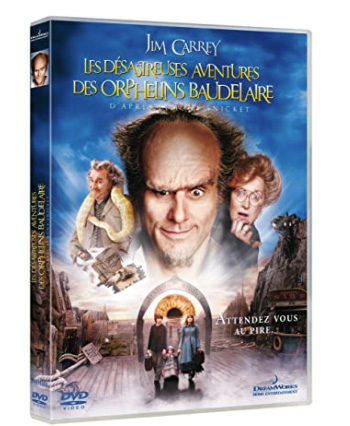
Lemony Snicket's A Series of Unfortunate Events
Synopsis
After a fire destroys their home and kills their parents, the three Baudelaire orphans are sent to live with a distant relative, the sinister Count Olaf. Violet is a gifted inventor, Klaus is a voracious reader and baby Sunny has remarkably sharp teeth. Olaf is only interested in getting his hands on their enormous inheritance and will stop at nothing, including elaborate disguises and murder plots. Moving from one eccentric guardian to the next, the children must rely on their wits and on each other to survive.
The Making of the Film
The film is based on the first three books of the bestselling children's series by Lemony Snicket, the pen name of author Daniel Handler. It adapts "The Bad Beginning", "The Reptile Room" and "The Wide Window" into a single story. Director Brad Silberling took over after Barry Sonnenfeld, originally attached to the project, left during development. The screenplay is credited to Robert Gordon, and the studio built an elaborate, gothic world of crooked houses and timeless costumes. Jim Carrey plays Count Olaf, supported by Emily Browning, Liam Aiken, Meryl Streep, Billy Connolly and Timothy Spall. Jude Law provides the voice of the mysterious narrator, Lemony Snicket himself. The film was released at the end of 2004.
Reviews and Reception
Summary of Professional Reviews
Critics gave the film a generally positive but divided reception. They praised its striking production design, its darkly comic tone and Jim Carrey's theatrical performance as the villain. Some reviewers felt that Carrey's antics threatened to overwhelm the story and that squeezing three books into one film made the plot feel rushed. Even so, the film was widely admired for its imagination and visual originality.
Audience Reception
The film was a solid commercial success, earning over 200 million dollars worldwide. Young audiences and fans of the books enjoyed its gloomy humor and its unusual, storybook atmosphere. Some readers of the series felt that it only scratched the surface of the novels. Over the years, it has retained a loyal following for its distinctive look.
Awards Received
The film won the Academy Award for Best Makeup, thanks to the transformation of Jim Carrey into Count Olaf. It was also nominated for Oscars for Best Art Direction and Best Costume Design. Thomas Newman's score received an Academy Award nomination as well. These nominations reflect the strength of the film's craftsmanship.
Filming Anecdotes
Production Challenges
The production required the construction of enormous sets, including the crooked Lucky Smells Lumbermill and the bizarre houses of the Baudelaires' guardians. Working with a baby actor and a reptile-filled set added further logistical complexity. The filmmakers wanted a stylized, handmade look rather than a realistic one, so most of the world was built physically rather than created on a computer.
Casting Initially Planned
Barry Sonnenfeld, the original director, had developed the project for years before leaving, and his version of the film would have had a different tone. When Silberling took over, he kept Carrey in the role of Olaf. The casting of Meryl Streep and other prestigious names gave the production an unusually distinguished supporting cast for a family film.
Themes Explored
The film is a gothic fable about resilience in the face of misfortune. It shows three children who lose everything yet refuse to give up, relying on their individual talents and their loyalty to one another. Adults in the story are largely portrayed as foolish, selfish or dangerously naive, which gives the film its rebellious tone. Intelligence and curiosity are celebrated as the best weapons against cruelty. The story also deals with grief and the hunt for a sense of home. Behind its dark humor, it is a tale about the strength of family, even when it is made up of siblings alone.
Ending Explained
By the end of the film, the Baudelaires have outwitted Count Olaf, who escapes justice and remains a threat. The children are placed in a new situation, but they now know they can trust their own abilities. The closing narration suggests that their story is far from over, in keeping with the series' melancholy tone. The ending leaves viewers with a bittersweet note: the orphans are safe for now, but fortune remains unreliable.
Meaning of the Title
The title announces from the start that this is not a cheerful story. It describes the string of misfortunes that befalls the Baudelaire children, which the narrator warns the audience about. Using the author's name in the title keeps the narrator's ironic voice at the center of the experience.
Soundtrack
The score was composed by Thomas Newman, whose playful and slightly eerie music fits the film's storybook gloom. Its quirky instrumentation, built around unusual percussion and strings, matches the strange world of the Baudelaires. The score earned an Academy Award nomination.
News
The books were later adapted into a Netflix television series, which ran for three seasons from 2017 to 2019 and stayed closer to the original novels. Barry Sonnenfeld, who had left the film, directed several episodes of the show.
Similar Films
- Edward Scissorhands (1990): a gothic fairy tale with a whimsical look.
- Charlie and the Chocolate Factory (2005): a quirky, dark children's fantasy.
- Coraline (2009): a dark and imaginative story aimed at younger viewers.
- The Addams Family (1991): a comedy that celebrates the macabre.