

 Français
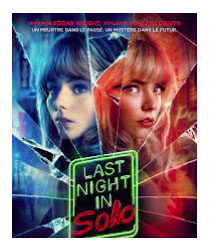
Last Night in Soho
Synopsis
This breathtaking, psychologically haunting supernatural neo-noir psychological horror masterpiece directed by Edgar Wright follows Eloise "Ellie" Turner, a passionate, nostalgic young fashion design student from rural Cornwall who moves to London to attend fashion college. Struggling to fit in with her wealthy urban peers and renting a shabby room in a vintage Soho townhouse run by a stern landlady, Ellie begins having vivid, intensely realistic nighttime dreams where she is mysteriously transported back to 1960s London, inhabiting the glamorous body of Sandie, an ambitious, confident young aspiring singer falling in love with a smooth manager named Jack. However, Ellie soon discovers that the glamorous 1960s Soho nightlife hides a dark, brutal underbelly of prostitution and murder, and the terrifying visions begin bleeding into her waking reality. It is a stunning, hypnotic descent into psychological dread.
The Making of the Film
The project originated from visionary director Edgar Wright's lifelong obsession with 1960s London cinema, British pop music, and psychological thrillers, co-writing the script alongside Academy Award-nominated writer Krysty Wilson-Cairns. Wright sought to craft a visually dazzling supernatural thriller that served as a dark, cautionary critique of romanticizing the past, contrasting the colorful pop-art illusion of swinging sixties London with its gritty criminal exploitation. Inspiration was drawn from classic Italian Giallo films, British ghost stories, and Soho nightlife history. The creative team aimed to produce an uncompromised artistic masterpiece.
Critical Reception
Critics offered generally favorable reviews, praising Edgar Wright's dazzling stylistic direction, Chung-hoon Chung's breathtaking neon-soaked cinematography, and the powerhouse lead performances of Thomasin McKenzie and Anya Taylor-Joy. Reviewers noted that Wright successfully stepped away from his trademark comedy roots to deliver a genuinely terrifying, atmospheric psychological horror film that explored themes of misogyny, trauma, and memory. The seamless mirror-swap dance sequences between McKenzie and Taylor-Joy received universal applause as visual triumphs. It was celebrated as a major artistic achievement.
Audience reception was warm among cinephiles and horror fans, driving strong global box office returns and high streaming viewership. Viewers on public platforms praised the incredible 1960s soundtrack, spooky ghost encounters, and the shocking third-act twist. Fans of Edgar Wright celebrated his versatile directorial range. Word-of-mouth sustained strong long-term prestige popularity.
Awards season brought recognition from various horror film festivals and critic guild ceremonies, honoring the production's costume design, cinematography, and lead acting achievements. Critics' associations acknowledged Wright's visionary stylistic ambition. These accolades cemented its status as a premier modern masterpiece of horror suspense.
Behind-the-Scenes Stories
The director drew visual inspiration from classic 1960s Giallo horror films like Dario Argento's 'Suspiria', vintage British fashion magazines, and neon-lit Soho street photography to establish a hypnotic aesthetic. Every 1960s dance club, underground dressing room, and vintage London townhouse was constructed with meticulous physical detail and captured using innovative practical mirror-reflection tricks rather than digital CGI. The production team collaborated with 1960s music historians and choreographers to ensure that authentic pop tunes and twist dancing looked precise. These artistic choices created an immersive world.
Production presented fascinating logistical and technical hurdles, requiring Thomasin McKenzie and Anya Taylor-Joy to rehearse complex physical choreography so they could seamlessly swap places in mirrors during dream sequences in real-time. Diana Rigg delivered a magnificent, poignant final performance in her legendary career before her passing. Shooting on location in Soho required careful night-shoot coordination. Furthermore, maintaining strict secrecy around the narrative's dark twist demanded obsessive editorial focus.
During the filming of the terrifying ghost-attack sequences in Ellie's bedroom, Thomasin McKenzie executed her frantic panic reactions amidst practical lighting effects with total professional commitment. To maintain authentic tension, Wright utilized sweeping camera tracking shots. The crew utilized vibrant neon blue and red lighting. This rigorous dedication resulted in immortal cinematic moments.
Casting was anchored by securing rising star Thomasin McKenzie as the vulnerable fashion student and Anya Taylor-Joy as the doomed 1960s singer Sandie. Supporting roles featured Matt Smith as the abusive manager Jack, Diana Rigg, and Terence Stamp. This star-studded casting strategy drove massive initial visibility.
Themes Explored
The narrative deeply explores themes of romanticizing the past, misogyny in the entertainment industry, and the lingering trauma of sexual exploitation. It examines mental health, ghosts of memory, and the dark underbelly of urban nightlife. Additionally, it highlights fashion design passion, identity confusion, and protecting the vulnerable. Ultimately, the film reflects on sorrow, justice, and confronting the ghosts of history.
Ending Explained
Ellie finally uncovers the tragic truth that Sandie was never murdered by Jack in the sixties, but rather that Sandie became trapped in prostitution and eventually murdered her abusive pimps out of self-defense before burying them in the townhouse walls and living out her life in disguise as Ellie's stern landlady Ms. Collins, who finally embraces Ellie and chooses to die in the burning townhouse alongside her victims. In the haunting final shot, Ellie smiles brightly as a successful fashion designer while the ghostly image of Sandie watches over her with maternal approval. The satisfying conclusion underscores reconciliation with the past.
Meaning of the Title
The title directly references the physical setting and nightlife district where the supernatural haunting and historical trauma take place ("Last Night in Soho").
Original Soundtrack
The incredible soundtrack featuring classic 1960s British pop hits by artists like Petula Clark, Cilla Black, and Sandie Shaw received widespread acclaim for establishing the film's hypnotic retro atmosphere.
Similar Films
Films sharing similar psychological horror, retro atmosphere, and ghost story themes include Black Swan (2010), Repulsion (1965), and Mulholland Drive (2001).