

 Français
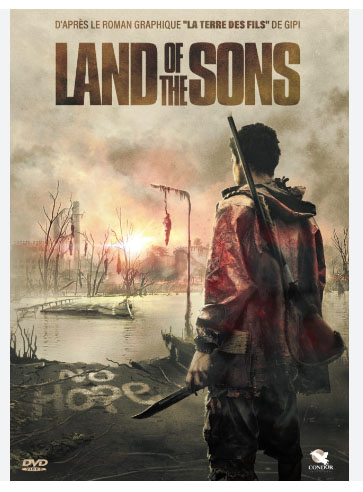
Land of the Sons
Synopsis
In a post-apocalyptic near future where civilization as we know it has completely collapsed and water has become scarce, a father and his teenage son live a feral existence by a desolate lake. The father spends his days writing cryptic entries in a leather-bound diary, obsessed with preserving words in a world that has forgotten how to read. When the father suddenly passes away, the son is left entirely alone in the wilderness. Driven by a desperate need to understand his father's strange writings, the boy embarks on a perilous journey across a hostile, ruined landscape.
The Making of the Film
Directed by Claudio Cupellini and adapted from the acclaimed graphic novel by Gipi, this gritty post-apocalyptic drama was produced to explore the fragile nature of human communication. The filmmakers wanted to create a stark, realistic vision of societal collapse without relying on high-tech science fiction clichés. The script focuses heavily on minimalist dialogue and raw emotional survival. The production utilized remote, desolate Italian landscapes to evoke a timeless, scorched earth aesthetic. Producers aimed to preserve the bleak, illustrative style of the original comic book.
Critical Reception
Critics praised the film for its uncompromising grim realism, haunting atmosphere, and powerful performances from its young lead cast. Reviewers highlighted the unique narrative choice to focus on illiteracy and the struggle for language in a ruined world rather than action-packed survival tropes. The stark cinematography captured the bleak, desolate beauty of the ruined landscape with striking precision. Commentators noted the film's powerful emotional restraint.
Audiences were captivated by the raw emotional intensity and the slow-burn mystery of deciphering the father's diary alongside the protagonist. Viewers noted that the film offered a refreshing, philosophical take on the post-apocalyptic genre, emphasizing human connection over weaponized violence. The bleak yet poignant tone left a lasting impression on festivalgoers. Many praised the stark avoidance of Hollywood action tropes.
At various European film festivals, the picture received awards and nominations for its adapted screenplay, cinematography, and artistic direction. Critics' circles praised its bold refusal to provide easy answers, celebrating its commitment to artistic integrity. It was widely recognized as one of the most distinctive European genre films of its release year. Industry bodies lauded its unique creative vision.
Behind-the-Scenes Stories
Director Claudio Cupellini was deeply moved by Gipi's graphic novel, noting that the struggle to read and write in a dead world served as a powerful metaphor for human evolution. He collaborated closely with the original author to ensure the film adaptation preserved the stark, poetic bleakness of the illustrated panels. The production team scoured remote regions of Italy to find locations that looked completely untouched by modern civilization. Set designers worked hard to remove any trace of modern infrastructure from background shots.
Production faced severe logistical challenges shooting in harsh, remote wetland environments where equipment had to be hauled by hand across muddy terrain. The young lead actor, Paolo Rossi, underwent intensive preparation to portray a character who barely understands spoken language and must learn to communicate through physical instinct. The art department aged every prop meticulously to ensure it looked weathered by decades of neglect and exposure to the elements. Safety crews monitored swamp conditions daily.
During the filming of a pivotal raft sequence on a freezing lake, sudden winds threatened to capsize the camera boat, requiring quick emergency intervention from the safety crew. The actors maintained their intense concentration despite the freezing water temperatures, delivering a powerhouse emotional take on the first try. The costume department crafted garments entirely from animal hides and frayed canvas to emphasize the characters' primitive lifestyle. Makeup artists applied realistic dirt and weathering effects.
Casting the son required finding a fresh, unknown face who could convey complex inner turmoil through facial expressions rather than dialogue. The directors held open auditions across rural Italian schools before discovering their lead. Veteran actor Fabrizio Ferracane was cast as the stern father, bringing immediate gravitas and tragic weight to the opening scenes. Rehearsals focused heavily on non-verbal communication techniques.
Themes Explored
The power of literacy and language as the ultimate defining markers of human civilization forms the central thematic pillar of the story. Survival in a hostile environment is contrasted with the spiritual survival found in understanding words and history. Father-son dynamics are explored through a lens of profound silence, strict discipline, and unspoken love. Additionally, the rebirth of society from the ashes of ignorance highlights the resilience of the human mind. The narrative underscores how knowledge preserves humanity.
Ending Explained
After enduring countless hardships and hostile encounters, the boy finally learns to read his father's diary, unlocking the tragic history of how the world ended. The final pages do not offer a magical salvation, but rather a simple message of human endurance and the importance of remembering the past. Equipped with this newfound knowledge of literacy, the boy joins other surviving youths by the lake, signaling the tentative dawn of a new, educated society. The poignant conclusion emphasizes that words are the most powerful tools humanity possesses for rebuilding.
Meaning of the Title
A literal translation of the Italian La terra dei figli, signifying the bleak inherited world left behind by older generations for their struggling offspring.
Similar Films
The Road, The Book of Eli, Leave No Trace, The Survivalist, It Comes at Night.