

 Français
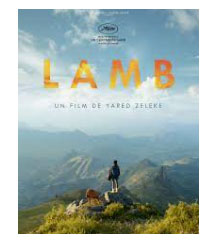
Lamb
Synopsis
This haunting, atmospheric Icelandic folk-horror drama follows Maria and Ingvar, a childless married couple living on a remote, fog-shrouded sheep farm in rural Iceland who spend their harsh days tending to their flock. Their quiet, melancholic routine is shattered on one cold night when one of their ewes gives birth to a mysterious, uncanny newborn hybrid creature that is half-human and half-lamb. Overcome by a deep maternal yearning, Maria and Ingvar decide to adopt the creature and raise it as their own human child, naming her Ada and lavishing her with unconditional love. However, the forces of nature soon return to claim what is rightfully theirs, threatening their fragile domestic bliss. It is a stunning, deeply unsettling modern fable.
The Making of the Film
The project originated from co-writer and director Valdimar Jóhannsson and co-writer Sjón collaborating over a decade to craft a bizarre, deeply atmospheric folk-horror fable rooted in Icelandic folklore and rural isolation. Jóhannsson sought to explore grief, parenthood, and humanity's complex relationship with nature by introducing a surreal magical realist element into a hyper-realistic farming setting. Inspiration was drawn from ancient Norse myths, Icelandic sagas, and minimalist art-house cinema. The creative team aimed to produce an uncompromised artistic masterpiece.
Critical Reception
Critics offered widespread, rapturous acclaim, praising Valdimar Jóhannsson's striking visual direction, the stunning remote Icelandic landscape cinematography, and Noomi Rapace's powerhouse lead performance. Reviewers noted that Jóhannsson successfully blended eerie folk-horror dread with a heartbreaking psychological drama about parental grief and possessive love. Rapace's fiercely protective portrayal of Maria received universal applause at the Cannes Film Festival where it premiered in Un Certain Regard. It was immediately recognized as an independent cinema triumph.
Audience reception was warm among cinephiles and art-house horror enthusiasts, driving strong specialty box office success and finding a passionate cult following on streaming platforms like A24. Viewers on public platforms praised the surreal newborn lamb hybrid, eerie atmosphere, and shocking ending. Fans of elevated horror cinema celebrated its unique slow-burn mythology. Word-of-mouth sustained strong long-term prestige.
Awards season brought major triumph, securing the Prize of Originality at the Cannes Film Festival, alongside multiple European Film Award nominations and international critic wins. Critics' associations praised the film for its stylistic brilliance and narrative originality. These accolades cemented its status as a premier masterpiece of modern folk horror.
Behind-the-Scenes Stories
The director drew visual inspiration from classic Icelandic landscape photography, minimalist art, and folklore paintings to establish a cool, melancholic aesthetic. Every detail of the remote farm, from the foggy sheep pastures to the cozy kitchen hearth, was chosen to reflect isolation and ancient nature. The production team collaborated with animatronic creature designers and real animal handlers to ensure that Ada looked convincing and moving on screen. These artistic choices created an authentic mythic world.
Production presented fascinating logistical and technical hurdles, requiring Noomi Rapace and Hilmir Snær Guðnason to interact daily with a combination of live newborn lambs, puppet stand-ins, and digital visual effects elements in freezing weather conditions. Valdimar Jóhannsson encouraged quiet, understated performances, allowing silence to carry the emotional weight. Furthermore, maintaining strict secrecy around the surreal creature design demanded obsessive editorial focus from the director.
During the filming of the emotional farmyard sequences where Maria protects Ada, Noomi Rapace executed her fierce maternal protective instincts with total professional commitment. To maintain authentic tension, Jóhannsson utilized long, unbroken master shots. The crew utilized natural overcast lighting. This rigorous dedication resulted in immortal cinematic moments.
Casting was anchored by securing acclaimed Swedish star Noomi Rapace in a career-defining lead role that showcased her profound dramatic depth, alongside Icelandic actor Hilmir Snær Guðnason as her husband Ingvar. This targeted casting strategy was the absolute heartbeat of the film's success.
Themes Explored
The narrative deeply explores themes of grief, maternal possessiveness, and humanity's arrogant attempt to possess and control nature. It examines isolation, childlessness, and the fragile boundaries separating human civilization from wild animal instincts. Additionally, it highlights family secrets, rural folklore, and reckoning with natural forces. Ultimately, the film reflects on sorrow, love, and the terrifying cost of defying nature.
Ending Explained
Ingvar is brutally murdered in the fields by a mysterious, humanoid ram creature who represents nature's primordial wrath, leaving a devastated Maria standing alone outside the farmhouse as Ada is taken away back into the wilderness. In the haunting final shot, Maria breaks down in tears in the empty pasture, having lost everything to her own selfish desire to conquer nature. The devastating folk-horror conclusion underscores the inescapable tragedy of defying natural law.
Meaning of the Title
The title directly references the uncanny newborn hybrid creature and the central farm animal that sparks the supernatural drama ("Lamb").
Similar Films
Films sharing similar eerie folk horror, rural isolation, and magical realism themes include The Witch (2015), Midsommar (2019), and Border (2018).