

 Français
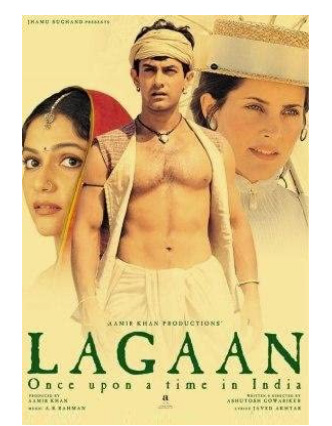
Lagaan: Once Upon a Time in India
Synopsis
In 1893, in a drought-stricken village in British-ruled India, farmers cannot afford to pay the heavy land tax, or *lagaan*, demanded by the colonial authorities. A proud young villager named Bhuvan accepts a bold wager from a arrogant British officer: if the villagers can beat the British in a game of cricket, the tax will be waived for three years. If they lose, they must pay triple. With no experience of the sport and everything to lose, the villagers form an unlikely team.
The Making of the Film
Lagaan was written and directed by Ashutosh Gowariker and produced by Aamir Khan, who also stars as Bhuvan. The idea was to tell a sports story set against the backdrop of colonial India, combining cricket, patriotism and village life. Gowariker created a fictional story inspired by the broader themes of resistance and unity under British rule. The film was shot in the village of Bhuj in Gujarat and mixes drama, romance, music and a long cricket match. It was released in India in 2001 and later reached international audiences.
Reviews and Reception
Summary of Professional Reviews
Critics around the world praised the film's emotional power, its epic scale and its memorable music. Many appreciated its mix of sports drama and social commentary. Its long running time was occasionally noted as a drawback, but most reviewers felt that the final cricket match was immensely satisfying.
Audience Reception
The film was a major hit in India and became a cultural phenomenon, loved for its patriotic spirit and its feel-good storyline. International audiences were charmed by its blend of Bollywood tradition and sports-movie excitement. It is still considered one of the best Indian films of the early 2000s.
Awards Won
Lagaan was nominated for the Academy Award for Best Foreign Language Film. It also won the National Film Award for Best Popular Film and a haul of Filmfare Awards in India. Its success helped bring Bollywood to a wider global audience.
Filming Anecdotes
Director's Inspirations
Ashutosh Gowariker was inspired by the idea of ordinary people uniting against oppression through something as simple as a game. He wanted to show the power of teamwork, hope and determination in the face of injustice.
Production Difficulties
Most of the cast had to learn to play cricket, which required intense training. The production built an entire period village and cricket ground in Bhuj, and filming was demanding because of the heat and the large number of extras. The shoot lasted many months and required careful coordination.
Anecdote About a Particular Scene
The climactic match runs for a large part of the film and is filmed with the energy of a real sports event. The mixed cast of Indian and British actors helped to create a thrilling, high-stakes atmosphere.
Themes Explored
Lagaan is a story of resistance against colonial oppression, told through the lens of a village cricket match. It celebrates unity across caste and religion, as the team includes people from different backgrounds who learn to work together. The film also explores courage and the importance of hope in times of hardship. Love and sacrifice add emotional depth, especially in the triangle between Bhuvan, Gauri and the British woman Elizabeth. Overall, it is a celebration of community and perseverance.
Ending Explained
In the final moments of the match, Bhuvan hits a dramatic last-ball six that secures the villagers' victory. As they celebrate, the long-awaited rain finally arrives, ending the drought and symbolizing renewal. The arrogant British captain is disgraced and transferred away, while the villagers are freed from the oppressive tax. The ending combines triumph with a sense of justice and hope for the future.
Meaning of the Title
Lagaan is a Hindi word meaning "land tax" or "revenue", referring to the burden that the villagers are fighting against. The title immediately sets the stakes of the story and ties the cricket match to a very real hardship. The English subtitle, Once Upon a Time in India, adds a note of fairy-tale legend.
Original Soundtrack
A. R. Rahman's music, with lyrics by Javed Akhtar, is one of the film's greatest assets. Songs such as "Ghanan Ghanan" and "O Rey Chhori" are celebrated for their melodies and emotional resonance. The soundtrack was a huge hit and remains one of the most beloved scores in Bollywood history.
Similar Films
- Chak De! India: an inspiring story about a women's hockey team.
- Dangal: a powerful sports drama about wrestling.
- Slumdog Millionaire: an energetic tale of underdogs in India.
- Hotel Rwanda: a different kind of resistance story with a human focus.