

 Français
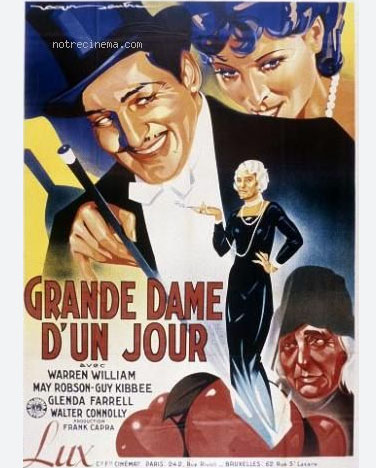
Lady for a Day
Synopsis
Apple Annie is a kindly, impoverished apple vendor living on the streets of New York City who maintains a comforting secret. She regularly writes letters to her beloved daughter Louise in Spain, pretending to be a wealthy high-society matriarch. When Louise announces she is visiting New York with her wealthy fiancé and his aristocratic father, Annie panics. With the help of a local gangster named Dave the Dude and his colorful crew, Annie transforms into high society for a day.
The Making of the Film
Director Frank Capra adapted the story from a short story titled Madame La Gimp by Damon Runyon. Capra wanted to create a heartwarming fairy tale blending gritty urban gangster tropes with sentimental human comedy. Columbia Pictures financed the project, marking an important milestone in Capras early directorial career.
Critical Reception
Critics praised the film upon its initial release for its brilliant blend of gritty gangster comedy and heartwarming sentimentality. Reviewers lauded May Robson for her powerhouse lead performance as Apple Annie and Frank Capras expert direction. It was widely celebrated as one of the finest cinematic achievements of 1933.
Public reception was exceptionally strong, making it a major box-office success for Columbia Pictures and boosting the studios prestige. Audiences fell in love with the whimsical premise of criminals playing kind-hearted benefactors for a good cause. It remains a celebrated classic of pre-Code Hollywood cinema.
The film earned four Academy Award nominations, including Best Picture, Best Director for Frank Capra, and Best Actress for May Robson. Its success proved crucial in establishing Frank Capra as a premier Hollywood filmmaker. It later inspired Capras own 1961 remake, Pocketful of Miracles.
Filming Anecdotes
Director Frank Capra drew inspiration from Damon Runyons colorful New York underworld characters and classic theatrical melodrama. He wanted to create a fairy-tale atmosphere where hardened criminals exhibit unexpected nobility and warmth. His meticulous staging balanced fast-paced comedic dialogue with tender emotional beats.
Production went smoothly, though Capra pushed his cast and crew to maintain high energy throughout tight studio shooting schedules. May Robson underwent extensive makeup and wardrobe transformations to transition from a weathered street vendor to a dignified society lady. The supporting cast of character actors brought incredible authenticity to the Runyonesque street scenes.
A memorable sequence involves the entire New York underworld temporarily halting their criminal activities to play high-society aristocrats at a grand hotel reception. The scene brilliantly contrasts gritty mobsters with polite upper-class etiquette. This humorous juxtaposition remains a highlight of pre-Code cinematic comedy.
The casting process was meticulous since the emotional core of the film rested on the title character. May Robson was chosen for her remarkable ability to convey fierce dignity beneath a battered exterior. Warren William brought suave charm and humor to the role of the gangster boss helping her out.
Themes Explored
The film explores themes of social class illusion, maternal sacrifice, and unexpected redemption through charity. It highlights how kindness can exist in the most unlikely and rough environments. Deception is reframed as an act of profound love to protect a childs happiness.
NULL
Title Significance
The title refers to the central premise of an impoverished street vendor transforming into a wealthy society lady for just one single day. It encapsulates the fairy-tale nature of her elaborate deception to impress her daughter.
NULL
NULL
Similar Films
Other similar films include Pocketful of Miracles, It Happened One Night, and Mr. Deeds Goes to Town.