

 Français
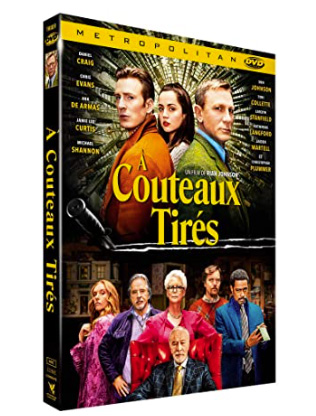
Knives Out
Synopsis
When wealthy crime novelist Harlan Thrombey is found dead after his birthday celebration, the circumstances of his death raise immediate suspicions. Detective Benoit Blanc is hired to investigate and begins questioning the members of the dysfunctional Thrombey family. Each relative appears to have a motive, and their conflicting accounts gradually reveal hidden resentments and secrets. Marta Cabrera, Harlan's devoted nurse, finds herself at the centre of the investigation. As Blanc follows the evidence, the apparent murder mystery becomes a clever game of deception, inheritance and family rivalry.
The Making of the Film
Rian Johnson developed Knives Out as a personal tribute to the classic murder mystery. He had long admired the works of Agatha Christie and the tradition of ensemble whodunits in which a detective must identify a murderer among a group of suspects. Johnson wanted to create an original story that would use familiar genre conventions while introducing a modern social perspective. The screenplay was built around a wealthy family whose members each possess secrets, rivalries and possible motives. The director also drew inspiration from television detective stories, particularly the structure of Columbo, in which the audience may learn important information before the final revelation. Johnson deliberately designed the narrative to change direction several times, moving between mystery, thriller and social satire. The character of Benoit Blanc was conceived as a distinctive detective whose unusual manner contrasts with the family's polished public image. The project attracted an ensemble cast of major actors, allowing each family member to become a potential suspect. Knives Out was also an opportunity for Johnson to demonstrate how traditional detective fiction could address contemporary questions about class, privilege and immigration.
Critical Reception
Professional Reviews
Knives Out received exceptionally strong reviews from professional critics. Many praised Rian Johnson's screenplay for combining the structure of a traditional whodunit with sharp humour and contemporary social commentary. The ensemble cast was widely admired, with particular attention given to Daniel Craig's performance as Benoit Blanc and Ana de Armas' portrayal of Marta. Critics also appreciated the film's elaborate plotting, visual style and ability to surprise viewers without losing narrative clarity. The dialogue and character interactions were frequently cited as major strengths. Some reviewers noted that the film's social satire occasionally becomes deliberately broad, but this did little to diminish its overall reception. It was widely regarded as one of the most entertaining and original mainstream mysteries of 2019.
Audience Reception
Audience response was highly enthusiastic, and the film became a major commercial success. Viewers enjoyed trying to identify the murderer while following the increasingly absurd conflicts within the Thrombey family. The humour, memorable characters and repeated narrative reversals helped generate strong word of mouth. Daniel Craig's unusual detective performance became one of the film's most recognisable elements. The success of the film also demonstrated that an original theatrical murder mystery could attract a large contemporary audience. Its popularity eventually led to further stories featuring Benoit Blanc.
Awards
Knives Out received an Academy Award nomination for Best Original Screenplay. It also earned nominations at the Golden Globes, including recognition for Best Motion Picture – Musical or Comedy and Daniel Craig's performance. The film received numerous nominations from critics' associations and industry organisations. Its screenplay and ensemble cast were particularly recognised during the awards season. The strong critical response and commercial performance made it one of the most prominent original films of 2019.
Behind the Scenes
Director Inspirations
Rian Johnson was strongly influenced by classic detective fiction, particularly the novels of Agatha Christie. He wanted to create a mystery that respected the pleasure of solving a puzzle while finding new ways to manipulate audience expectations. The director also cited the structure of Columbo as an important reference, especially the idea of revealing certain elements early and making the suspense depend on how the truth will emerge. The film combines these influences with a contemporary examination of wealth, inheritance and social hierarchy.
Production and Casting
The production assembled a large ensemble cast, including Daniel Craig, Chris Evans, Ana de Armas, Jamie Lee Curtis, Michael Shannon, Don Johnson, Toni Collette and Christopher Plummer. The actors were encouraged to create distinct personalities for each member of the Thrombey family. The elaborate family mansion became a central element of the film's visual identity, with its rooms and objects contributing to the atmosphere of mystery. The production design uses portraits, books, decorative objects and architectural details to suggest the family's wealth and history. The casting of Daniel Craig was particularly important because his performance deliberately differs from the restrained detective persona associated with many traditional screen investigators.
A Particular Scene
The famous final image of Marta standing on the balcony with a cup bearing the words My House, My Rules, My Coffee is an especially important visual conclusion. The composition reverses the family's earlier assumptions about who belongs in the mansion and who has the right to control it. The cup becomes a simple but effective symbol of the change in power. Its appearance turns a quiet moment into a final piece of social commentary. The scene also leaves the audience with a clear visual reminder of the film's central conflict over inheritance and belonging.
Themes
Inheritance and family privilege are among the film's central themes. The Thrombeys present themselves as a successful and close family, but their behaviour reveals competition, resentment and dependence on wealth. The mystery exposes the way money can distort relationships and encourage people to justify selfish decisions. The film also explores immigration and social belonging through Marta, whose position within the family is more complicated than the relatives admit. Her honesty contrasts with the hypocrisy of people who claim to value hard work while treating others as inferior. Another important theme is the difference between appearance and reality: almost every character hides something behind a carefully maintained public image. The story examines how power influences the interpretation of truth and whose testimony is believed. Humour allows Johnson to criticise privilege without abandoning the pleasure of a classic detective puzzle. Ultimately, the film suggests that moral character matters more than inherited status.
Ending Explained
The investigation reveals that Harlan's death resulted from a chain of deliberate actions and mistaken assumptions. Ransom had manipulated events in an attempt to make Marta appear responsible and secure his own inheritance. However, Marta's honesty and the evidence surrounding the medical procedure undermine his plan. Benoit Blanc eventually explains the truth, exposing Ransom as the person responsible for the scheme. The family's claims of affection and loyalty are revealed as largely dependent on their financial interests. Marta inherits Harlan's estate because he deliberately changed his will before his death. In the final scene, she looks down at the family members from the balcony of the mansion. Her position symbolises a reversal of the social hierarchy that had previously defined the household. The ending rewards honesty while exposing the greed and hypocrisy of the wealthy family.
Meaning of the Title
The title Knives Out is an English expression suggesting that people are ready to attack one another, often through hostility, rivalry or betrayal. It is particularly appropriate for a story in which members of the same family turn against one another after a death. The phrase also evokes the danger associated with a murder mystery and the possibility that every character may be hiding a weapon, metaphorically or literally. The title suggests that the family gathering is not a peaceful celebration but a confrontation waiting to happen. It captures the film's mixture of suspense, conflict and dark humour. It also reflects the way the investigation gradually exposes the hostility beneath the family's polite appearances.
Original Soundtrack
Nathan Johnson composed the original score for Knives Out, using an orchestral style that reinforces the atmosphere of a traditional detective mystery. The music combines suspenseful passages with more playful motifs that reflect the film's comic tone. Its arrangements help create the sense of an elaborate puzzle, while remaining flexible enough to accompany the story's changes in direction. The score also supports the distinctive atmosphere of the Thrombey mansion, where elegance and menace coexist. Music is an important part of the film's homage to classic murder mysteries.
Similar Films
- Murder on the Orient Express (1974), a classic ensemble murder mystery based on Agatha Christie.
- Gosford Park (2001), a mystery examining class divisions and secrets within an aristocratic household.
- Clue (1985), a comic murder mystery involving a group of suspicious guests.
- See How They Run (2022), a playful modern mystery inspired by classic whodunit conventions.