

 Français
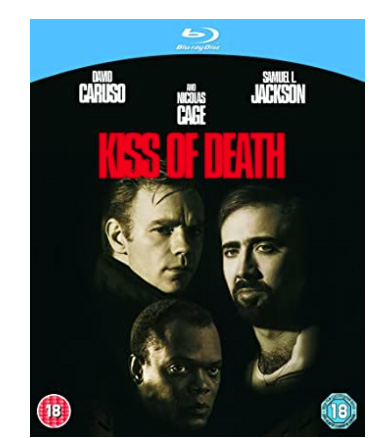
Kiss of Death
Synopsis
Jimmy Kilmartin, an ex-convict trying to go straight in Queens, is pressured by his cousin to take part in one last car theft. The job goes wrong, and Jimmy is arrested and sent to prison, refusing to inform on his accomplices. When he learns that his family is in danger, he agrees to cooperate with the authorities in order to nail the dangerous Little Junior Brown. Wearing a wire, Jimmy has to infiltrate Junior's world, where one mistake could cost him everything.
The Making of the Film
Kiss of Death is a remake of the 1947 film noir of the same name directed by Henry Hathaway, in which Richard Widmark made his debut as the psychotic Tommy Udo. The original film was adapted from a story by Eleazar Lipsky, who was a lawyer in the district attorney's office. The new version updated the story to the 1990s, setting it in New York's outer boroughs. Swiss-born director Barbet Schroeder, known for Barfly and Reversal of Fortune, was brought in to direct. The screenplay by Richard Price modernised the characters and the criminal world. The role of Junior Brown was developed for a major star, and Nicolas Cage was cast to bring the character to life. The film was designed as a gritty crime drama with a strong sense of place. It aimed to capture the tension of a man caught between two worlds.
Reviews and reception
Professional critics' summary
Critics gave the film mixed reviews, with most praising Nicolas Cage's outrageous performance as the villain. Many felt that the rest of the film failed to rise to the level of the original and that the script was uneven. David Caruso's performance as the hero was found to be less convincing, and he was often compared to the stronger supporting cast. Samuel L. Jackson and Helen Hunt were noted for solid performances.
Audience reception
The film performed poorly at the box office and failed to recoup its budget. Audiences found it competent but not memorable, particularly in comparison with the classic original. It has gained a small following over time, mainly for Cage's performance. It remains a minor entry in the crime genre.
Filming anecdotes
Director's inspirations
Barbet Schroeder was inspired by the original 1947 film and by the gritty crime dramas of the 1970s. He wanted to evoke the atmosphere of the New York boroughs, where the characters struggle to survive. The use of muted colours and realistic locations was meant to give the film a documentary feel. He also aimed to explore the psychology of both the criminal and the informant.
Production difficulties
The film was shot on location in New York, including Queens and Brooklyn, which required coordination with local authorities. The production team recreated a variety of settings, from prisons to nightclubs. Casting David Caruso, who had left a hit television series to pursue a film career, drew a lot of attention. The film's mixed reception was a blow for his transition to cinema.
Anecdote about a particular scene
Cage's scenes as Junior are the best-known in the film. His explosive energy and unpredictable manner made each of his appearances a highlight. Another memorable moment is the tense wire-wearing sequence, where Jimmy must hide his secret from Junior.
Originally planned casting
David Caruso was cast as Jimmy Kilmartin, after leaving the television series NYPD Blue. Nicolas Cage took on the role of Little Junior Brown, and he reportedly gained weight and built muscle for the part. Samuel L. Jackson played Calvin Hart, a detective, and Helen Hunt was Bev, Jimmy's wife. Stanley Tucci also appeared in a supporting role.
Themes explored
The film explores loyalty and betrayal, as Jimmy must choose between the code of the street and the safety of his family. It asks what a person owes to friends and what they owe to their loved ones. Another theme is redemption, since Jimmy wants to go straight but is pulled back into crime. The story shows the power of fear and violence in a closed community. It also looks at the ethics of informing and the risks that informants take. The film touches on family, as Jimmy's wife and children are the reason he agrees to cooperate. It portrays the corruption of the justice system and the moral grey areas. Ultimately, it is a drama about survival and sacrifice.
Ending explained
As the investigation reaches its climax, Jimmy continues to gather evidence against Junior while his cover is in danger. Junior suspects that Jimmy is an informer, leading to a violent confrontation. In the final scenes, Jimmy and the police set a trap for Junior, and Jimmy has to face him directly. The villain's downfall comes after a tense standoff, which removes the threat to Jimmy's family. The film ends with Jimmy reunited with his wife and children, who are finally safe. It suggests that, although he has paid a high price, he has regained his freedom. The conclusion offers a measure of justice but leaves the audience aware of the cost.
Meaning of the title
The title Kiss of Death refers to a gesture that seals someone's fate, as in the practice of some criminal organisations. It evokes the idea of betrayal, as when a friend delivers a deadly sign of affection. In the film, it suggests that Jimmy's loyalty to his cousin and the criminal code is what leads to his downfall. The title also implies that the past will always come back to haunt him. It is used as a symbol of the violent world in which the characters live. The phrase has a dramatic and ominous ring that suits a crime film. It was also the title of the original 1947 film.
Similar Films
Kiss of Death from 1947 is the original film that inspired this remake. Donnie Brasco and Goodfellas also deal with infiltration and loyalty in the criminal world. Heat and Carlito's Way offer more successful crime dramas from the same period. The Departed and Infernal Affairs are other stories of undercover agents.