

 Français
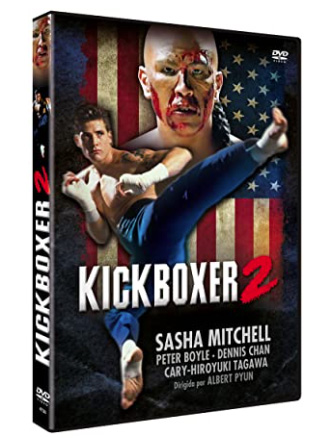
Kickboxer 2: The Backroads
Synopsis
David Sloan, the younger brother of martial arts champions Kurt and Eric Sloan, struggles to keep his late brothers' Los Angeles training gym afloat. When he refuses to participate in illegal, high-stakes underground kickboxing matches organized by a ruthless promoter named Sangha, his gym is burned down. Seeking revenge and desperate to save his students, David is lured into a brutal tournament against the vicious undefeated champion N'Guyen. Pushed to his absolute physical limits, David must master ancient fighting techniques to survive the ultimate martial arts showdown.
The Making of the Film
- Following the unexpected commercial success of the 1989 martial arts cult classic Kickboxer starring Jean-Claude Van Damme, producers sought to turn the property into an ongoing franchise. Director Albert Pyun was brought on board to steer the sequel in a darker, more gritty B-movie action direction focusing on underground fighting circuits. Inspiration was drawn from classic revenge dramas and traditional martial arts tournament tropes. The studio financed the production as a direct-to-video action feature designed for martial arts enthusiasts.
Critical Reception
Professional critics gave the film mixed-to-negative reviews, noting its predictable plot and uneven pacing compared to the original Van Damme classic. However, many reviews praised the film's martial arts choreography and Sasha Mitchell's physical dedication to filling the lead role. Reviewers pointed out that while the narrative was simple, it delivered the brutal, bone-crunching action expected by fans of the genre. Overall, it was received as a competent and gritty martial arts sequel.
Public reception was generally favorable among dedicated martial arts and action movie fans who appreciated the nostalgic continuation of the Sloan family saga. Audiences enjoyed the gritty underground tournament atmosphere and the impressive physical transformations of the cast. Word of mouth helped the film achieve strong rental and home video sales during the early 1990s. Spectators frequently cited the brutal final showdown as an entertaining highlight.
The film earned a dedicated cult following within the home video and action movie community for its uncompromised martial arts action and gritty aesthetic. It successfully established Sasha Mitchell as a capable action lead, leading to multiple sequels in the franchise. The stunt choreography remains celebrated by fans of retro 90s B-movie action.
Filming Anecdotes
The director drew inspiration from classic underground fighting tournaments, traditional martial arts epics, and gritty urban crime dramas. He wanted the visual style to emphasize harsh, realistic training environments and sweat-soaked fighting rings rather than glossy cinematic lighting. Cinematic influences ranged from classic samurai revenge tales to gritty boxing movies. These artistic choices helped establish a raw, visceral atmosphere suitable for a low-budget martial arts sequel.
Production presented intense physical demands for the lead actors, who underwent rigorous kickboxing and weight training regimens prior to filming. Sasha Mitchell performed many of his own martial arts combat sequences, showcasing his real-life background in kickboxing. Cary-Hiroyuki Tagawa brought a commanding, chilling presence to the villainous promoter role, elevating the dramatic tension of the fights. Crew members often recalled the grueling shooting schedule inside hot, unventilated Los Angeles warehouses as a physical challenge for everyone involved.
One particularly memorable sequence involved David Sloan undergoing brutal traditional training in the backroads using heavy wooden posts and resistance ropes to condition his body. This sequence required intense physical exertion and careful stunt choreography to make the training look authentic and painful. Sasha Mitchell pushed his physical limits to convey the exhaustion and determination required for vengeance. Crew members frequently noted that this montage set the motivational tone for the entire second half of the movie.
The initial casting process sought athletic actors with strong martial arts backgrounds who could step into the shoes of the established Sloan family legacy. Sasha Mitchell was chosen to star as David Sloan, bringing a towering physique and genuine martial arts skill to the role. Veteran action actors like Peter Boyle and Cary-Hiroyuki Tagawa were brought in to anchor the dramatic rivalry between the promoters and fighters. This ensemble provided the necessary grit to drive the tournament narrative forward.
Themes Explored
- Family legacy, honor, and avenging fallen loved ones.
- Resilience, discipline, and overcoming physical and mental trauma through martial arts.
- Corruption and greed within underground athletic promotions.
- Redemption through supreme sacrifice and perseverance.
Ending Explained
The climax features David Sloan facing off against the undefeated champion N'Guyen in a brutal, no-holds-barred underground championship match. After taking severe punishment in the early rounds, David digs deep into his training memories to execute a devastating series of kicks that incapacitates his opponent. With the corrupt promoter defeated and his honor restored, David walks away from the underground fighting circuit to rebuild his life and legacy. The film concludes on a triumphant note of personal redemption and peace.
Title Significance
The title connects the film to its predecessor while adding the subtitle "The Backroads" to signify the gritty, underground nature of the illicit fighting circuits and training regimens explored in the narrative.
Similar Films
- Kickboxer (1989)
- Bloodsport (1988)
- Best of the Best (1989)
- Lionheart (1990)
- American Kickboxer (1991)