

 Français
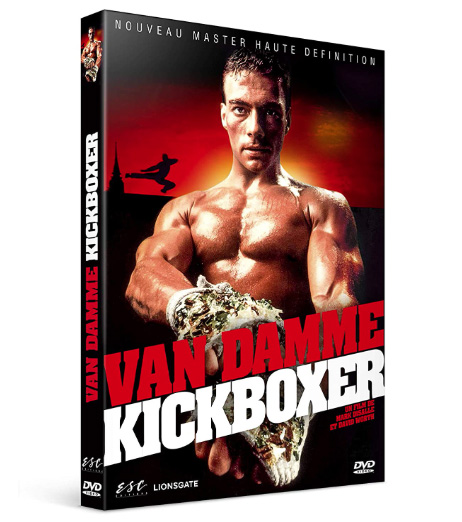
Kickboxer
Synopsis
Kurt Sloane travels to Thailand with his brother Eric, a highly skilled kickboxer who hopes to prove himself against the country's strongest fighters. Eric challenges the brutal champion Tong Po but suffers a devastating defeat that leaves him paralysed. Determined to avenge his brother, Kurt seeks the help of a traditional martial arts teacher named Xian. Through demanding training, he learns techniques and discipline that go beyond physical strength. His final confrontation with Tong Po becomes a test of courage, endurance and personal honour.
The Making of the Film
Kickboxer was directed by Mark DiSalle and David Worth and developed as a martial arts action film designed to showcase the physical abilities of Jean-Claude Van Damme. The project builds on the popularity of martial arts cinema and the growing international interest in kickboxing during the 1980s. Its central premise uses a familiar revenge structure, but places the action within the distinctive setting of Thailand. The screenplay creates a clear emotional motivation for Kurt Sloane by making his brother's defeat the turning point of the story. Van Damme's background in martial arts made him particularly suited to a role requiring demanding fight choreography and physical training sequences. The production also sought to contrast modern competitive fighting with traditional forms of martial arts instruction. Michel Qissi, who had previously worked with Van Damme, was cast as the intimidating Tong Po. The filmmakers combined training montages, dramatic confrontations and elaborate fight sequences to build towards the final tournament. The film helped strengthen Van Damme's position as one of the most recognisable martial arts action stars of the period.
Critical Reception
Professional critical response: Kickboxer received mixed reviews from professional critics. Some reviewers criticised its predictable revenge storyline and conventional character development. Others appreciated the physical commitment of Jean-Claude Van Damme and the energy of its fight sequences. The training scenes and final confrontation were frequently recognised as the film's strongest elements. Although it was not generally regarded as a major dramatic achievement, it became an influential entry in the martial arts action genre.
Audience reception: The film found a strong audience among fans of martial arts and action cinema. Its straightforward revenge story, memorable villain and spectacular fighting sequences made it accessible to viewers seeking physical entertainment. Jean-Claude Van Damme's athletic performance helped establish the film as one of his best-known early roles. It also became popular through home video, where it reached audiences beyond the theatrical market. Over time, its training scenes and fight choreography acquired a nostalgic status among action-film enthusiasts.
Awards and recognition: Kickboxer did not receive a major international awards record comparable to more prestigious dramatic productions. Its recognition came primarily through its commercial success and its lasting popularity within martial arts cinema. The film helped consolidate Jean-Claude Van Damme's reputation as an action star capable of combining athleticism with screen presence. Its influence can also be seen in the numerous martial arts films and direct-to-video productions that followed. Its legacy is based more on genre popularity than on formal awards.
Behind-the-Scenes Stories
Director's inspirations: The filmmakers drew on the revenge structure familiar from martial arts cinema and combined it with the atmosphere of a foreign training journey. The story contrasts the commercial spectacle of competitive fighting with the discipline associated with traditional martial arts. Thailand provides a distinctive setting for Kurt's transformation and introduces the audience to a different fighting culture. The film also reflects the popularity of martial arts stars whose physical skills were central to their screen identities.
Production challenges: The fight sequences required extensive preparation and coordination between performers, stunt personnel and the camera crew. Jean-Claude Van Damme's martial arts background allowed him to perform many physically demanding movements himself. The production also had to create convincing training environments and a credible contrast between the fighters' different styles. Maintaining safety while filming fast and forceful choreography was an important practical challenge.
A memorable scene: Kurt's training sequence with Xian is one of the film's most recognisable passages. It shows the protagonist gradually moving beyond anger and learning to control his body and reactions. The training includes physical endurance, balance and techniques designed to prepare him for the final fight. The sequence gives the revenge story a sense of progression and allows the audience to witness Kurt's transformation.
Originally considered casting: Jean-Claude Van Damme was the central choice for Kurt Sloane, and his martial arts skills were a major reason for his casting. Michel Qissi played Tong Po, creating a memorable physical opponent for the hero. Dennis Alexio appeared as Eric Sloane, while Dennis Chan portrayed the teacher Xian. The casting placed particular importance on performers capable of contributing convincingly to the film's fight choreography.
Themes Explored
Kickboxer explores revenge, brotherhood, discipline and the relationship between physical strength and inner control. Kurt initially seeks revenge because he is overwhelmed by anger and grief after his brother's defeat. His training gradually teaches him that strength requires patience, concentration and respect for the discipline of martial arts. The film also contrasts exploitation and brutality with the values of mentorship and self-control. Its central journey suggests that personal growth comes not simply from defeating an opponent but from overcoming fear and mastering oneself.
Explaining the Ending
Kurt finally faces Tong Po in a brutal confrontation after completing his training. The fight represents more than a personal attempt at revenge, because Kurt must demonstrate that he has learned to control his emotions and use his abilities effectively. Tong Po initially appears physically superior and attempts to dominate the contest through intimidation and cruelty. Kurt gradually adapts to the challenge and uses the techniques he has learned from Xian. His victory restores a measure of justice after the suffering inflicted on his brother. The conclusion follows the traditional structure of a martial arts revenge story, in which discipline and determination overcome arrogance and brutality. It also completes Kurt's transformation from an inexperienced fighter into someone capable of facing extreme adversity.
The Meaning of the Title
The title Kickboxer refers to the combat sport at the centre of the story. It identifies the film's physical world and immediately communicates its emphasis on martial arts competition. The word also represents the protagonist's transformation, as Kurt must become a skilled fighter before he can confront Tong Po. Beyond the sporting meaning, the title evokes the discipline, endurance and determination required to master a demanding fighting style.
The soundtrack uses energetic electronic and orchestral action music to accompany the training sequences and fights. Its purpose is to reinforce the film's physical intensity and the progression of Kurt's transformation. While the music is closely associated with the atmosphere of 1980s martial arts cinema, it is not generally regarded as a landmark soundtrack in the same way as certain major film scores.
Similar films include Bloodsport, directed by Newt Arnold and starring Jean-Claude Van Damme; No Retreat, No Surrender, directed by Corey Yuen, which also centres on martial arts training and revenge; Best of the Best, directed by Robert Radler, which explores competitive fighting and teamwork; and The Karate Kid, directed by John G. Avildsen, which follows a young fighter learning discipline from a mentor.