

 Français
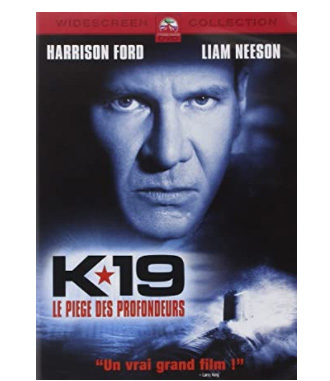
K-19: The Widowmaker
Synopsis
Set in 1961 during the height of the Cold War, the Soviet Union launches its first nuclear-armed ballistic missile submarine, the K-19, commanded by Captain Alexei Vostrikov. Due to intense political pressure from Moscow to prove Soviet technological supremacy, the submarine is rushed into service with untested safety systems. During a patrol in the North Atlantic, a catastrophic reactor cooling system failure threatens to cause a nuclear meltdown that could trigger World War III. Captain Vostrikov and his fiercely loyal executive officer Mikhail Polenin must lead their crew in a desperate, highly radioactive race against time to jury-rig repairs. The sailors make the ultimate sacrifice to save humanity from nuclear annihilation.
The Making of the Film
Director Kathryn Bigelow developed the historical drama based on the tragic true-life 1961 accident aboard the Soviet submarine K-19. The filmmaker wanted to honor the incredible bravery of the Soviet sailors without resorting to simplistic Cold War villainy, focusing instead on human heroism amidst technological disaster. National Geographic and Harrison Ford championed the project, helping secure financing. The production utilized authentic submarine replicas and historical naval advisors to ensure meticulous accuracy.
Critical Reception
Professional reviews were mixed to positive, with critics praising Harrison Ford and Liam Neeson for their stellar lead performances, claustrophobic submarine atmosphere, and respectful handling of historical tragedy. However, some reviewers felt the dramatic pacing lagged and took creative liberties with Soviet historical facts. Public reception was disappointing at the box office, failing to recover its massive production budget. Word-of-mouth remained respectable among historical drama fans. Awards recognition included niche technical nominations, though it was largely overlooked during major awards seasons.
Shooting anecdotes
Director Kathryn Bigelow drew inspiration from classic naval disaster films and historical accounts of early nuclear submarine accidents. Production encountered intense physical challenges filming inside cramped, replica submarine soundstages in Toronto and Halifax. During radiation exposure sequences, actors underwent rigorous physical staging. Initial casting brought together Harrison Ford and Liam Neeson, who brought gravitas to the naval commanders.
Themes explored
The film explores nuclear disaster, military duty, sacrifice, Cold War tension, and leadership under pressure. It examines how ordinary men rise to extraordinary dangers. It also highlights technological hubris.
Explanation of the ending
The harrowing climax resolves with the crew successfully stabilizing the reactor at the cost of severe radiation poisoning for the repair teams, averting a nuclear blast and returning safely to port. It closes on a memorial tribute to the sailors who died.
Meaning of the title
The title references the official hull designation of the ill-fated Soviet submarine, widely nicknamed 'The Widowmaker' by its crew due to its troubled construction history.
Remote Control Productions and Klaus Badelt composed a sweeping, mournful orchestral score that received critical praise for amplifying the submarine's claustrophobic dread.
Crimson Tide, The Hunt for Red October, Titanic, Master and Commander