

 Français
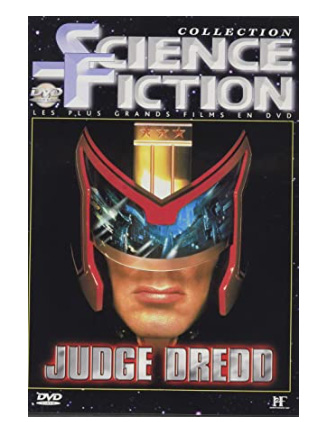
Judge Dredd
Synopsis
In the distant future, much of humanity lives in enormous, overcrowded cities where crime and violence have reached catastrophic levels. In Mega-City One, the Judges serve as police officers, judges, and executioners, exercising extraordinary authority to maintain order. Judge Dredd is one of the most feared and respected members of this system. When he is framed for murder by a corrupt colleague, he is sentenced to prison and stripped of his authority. Forced to survive outside the law, Dredd discovers that his enemies are involved in a conspiracy threatening the entire city. With the help of a former criminal, he must uncover the truth and confront the people responsible for his downfall.
The Film's Origins
Judge Dredd is based on the British comic-book character created by writer John Wagner and artist Carlos Ezquerra. The character first appeared in 2000 AD magazine in 1977 and became one of the most recognizable figures in British science-fiction comics. The stories presented a dystopian future in which authoritarian law enforcement controlled enormous urban populations. Hollywood producers became interested in adapting the character for a major science-fiction action film. The project was developed as a large-scale production featuring Sylvester Stallone as Judge Dredd. Screenwriters William Wisher Jr. and Steven E. de Souza worked on the screenplay, combining elements of the original comics with a more conventional action narrative. Director Danny Cannon was selected to bring the futuristic world of Mega-City One to the screen. The production involved elaborate sets, costumes, vehicles, and visual effects designed to recreate the comic's exaggerated urban environment. Released in 1995, the film became a notable example of mid-1990s science-fiction action cinema.
Critical Reception
Professional Reviews: Judge Dredd received predominantly negative reviews from critics when it was released. Many reviewers criticized its screenplay, which was considered less sophisticated than the original comic-book stories. Some fans also objected to the decision to remove Dredd's helmet for extended portions of the film, since the character is traditionally defined by his anonymity. Nevertheless, the production design, costumes, and futuristic vehicles received some positive attention. Sylvester Stallone's performance divided audiences and critics. The film's action sequences were generally considered entertaining, but its storytelling was widely regarded as a weakness.
Audience Reception: The film achieved moderate commercial success but failed to become the major franchise launch that its producers had hoped for. Audiences were divided between those attracted by its futuristic action and longtime readers disappointed by its interpretation of the source material. Its visual style and large-scale sets nevertheless attracted interest among science-fiction fans. Over time, the film developed a certain nostalgic following among viewers familiar with 1990s action cinema. Its reputation has also benefited from comparisons with the more faithful 2012 adaptation, Dredd.
Awards and Recognition: Judge Dredd did not receive major Academy Award recognition. Its production design, costumes, and visual effects attracted attention within the science-fiction and action-film communities. The film was also recognized through several nominations and genre-related awards during its release period. Its principal legacy is connected to the cinematic adaptation of an influential British comic-book character. The 2012 film Dredd later renewed international interest in the original comic-book universe.
Behind-the-Scenes Stories
Director's Inspirations: Danny Cannon wanted to create a futuristic world that reflected the exaggerated architecture and oppressive atmosphere of the original 2000 AD comics. He was interested in the relationship between law, authority, and individual freedom. The director also wanted the action sequences to feel large and spectacular, using the scale of Mega-City One as an important part of the visual experience. The project combined science-fiction imagery with elements of traditional police and prison dramas. Its approach emphasized spectacle and futuristic technology.
Production Challenges: The production required extensive sets, costumes, vehicles, and special effects to recreate Mega-City One. The Judges' armor was particularly complicated because it needed to look impressive while allowing the actors to move during action scenes. The futuristic vehicles also required detailed construction and coordination with stunt performers. The production involved numerous visual effects to create the enormous urban environment. Maintaining a coherent visual style across practical sets and computer-generated elements was a significant challenge.
Memorable Scene: The sequence in which Dredd is sentenced and stripped of his position is one of the film's most important moments. It reverses the character's established identity by transforming the most powerful law officer in the city into a prisoner. The scene also exposes the vulnerability of a system in which authority can be manipulated by corrupt individuals. His subsequent escape and confrontation with the forces pursuing him establish the film's central action conflict. The futuristic prison and urban environments also provide some of its most recognizable visual imagery.
Originally Considered Casting: Sylvester Stallone was selected to play Judge Dredd, bringing considerable international action-star recognition to the project. Armand Assante portrayed the antagonist Rico, while Diane Lane played Judge Hershey. Rob Schneider was cast as Fergie, providing comic relief alongside Stallone. Max von Sydow appeared as Chief Justice Fargo. The production assembled a cast combining established dramatic actors and performers known for action and comedy. There is no sufficiently documented complete list of alternative actors seriously considered for all the leading roles.
Themes Explored
Judge Dredd explores authoritarianism, justice, corruption, personal responsibility, and the dangers of absolute power. Mega-City One represents a society in which fear and violence have led citizens to accept extreme law-enforcement measures. The Judges embody a system that combines policing, judicial authority, and punishment in the hands of a single institution. Dredd initially believes strongly in the system but gradually discovers that its institutions can be manipulated by corrupt individuals. His experience forces him to reconsider the difference between following rules and defending justice. The film also examines identity and the consequences of genetic manipulation through the relationship between Dredd and Rico. Their connection raises questions about nature, responsibility, and free will. Ultimately, the story suggests that justice requires moral integrity rather than blind obedience to authority.
Ending Explained
Dredd eventually uncovers the truth about Rico and the conspiracy involving the cloning program. He discovers that his former partner is genetically connected to him and that their shared origins have been exploited to create a powerful criminal weapon. Rico attempts to use his influence and the cloning technology to take control of the city. Dredd confronts him and manages to defeat the man responsible for framing him. The conspiracy is exposed, allowing the authorities to restore confidence in the judicial system. Dredd is offered the opportunity to assume a higher position within the organization, but he refuses. He chooses to remain an ordinary Judge, believing that his duty is to protect the citizens rather than pursue political authority. His decision demonstrates that he has learned the importance of personal integrity. The ending reinforces the idea that justice depends on the character of those who enforce it, not simply on the power of the institution.
Meaning of the Title
The title Judge Dredd refers directly to the central character, a law-enforcement officer who possesses the authority to arrest, judge, and sentence criminals. The word Judge reflects his extraordinary position within the judicial system of Mega-City One. Dredd is also his surname, which has become synonymous with uncompromising discipline and severe punishment. The title emphasizes the character's identity as both an individual and the embodiment of a controversial legal institution. It also reflects the central question of the story: whether a person who represents the law can remain just when the system itself becomes corrupt.
Original Soundtrack
Alan Silvestri composed the original score, creating a powerful orchestral soundtrack suited to the film's futuristic action setting. The music combines heroic themes with darker passages that reinforce the oppressive atmosphere of Mega-City One. Its energetic compositions accompany the major action sequences and emphasize Dredd's determination. The score also supports the more dramatic moments involving corruption and personal identity. Silvestri's work contributes to the film's recognizable 1990s science-fiction atmosphere.
Similar Movies
Science-fiction films with comparable themes include RoboCop, which explores authoritarian policing, corporate corruption, and the relationship between law and personal identity. Demolition Man presents another futuristic society governed by strict rules and an unusual justice system. Total Recall examines identity, political power, and the manipulation of individuals by authoritarian institutions. The Fifth Element combines futuristic urban environments with action and exaggerated characters. Dredd, released in 2012, offers a darker and more faithful adaptation of the original comic-book universe. These films share Judge Dredd's interest in dystopian societies, futuristic technology, and the limits of institutional power.