

 Français
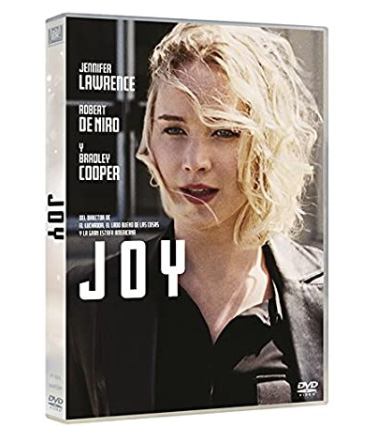
Joy
Synopsis
Joy Mangano is a struggling single mother who juggles a dysfunctional family, a failing marriage and a dead-end job. Although she has big dreams, she is held back by the people around her, who rely on her for everything. One day, inspired by a spill on her kitchen floor, she invents a self-wringing mop. With little money and no experience, she fights to bring her invention to the market and to make a place for herself in the world of business.
The Making of the Film
Joy is loosely based on the true story of Joy Mangano, the inventor of the Miracle Mop and a successful entrepreneur who became a star of the shopping channel QVC. Director David O. Russell, who had worked with Jennifer Lawrence and Bradley Cooper on Silver Linings Playbook and American Hustle, wanted to make a film about a woman who builds an empire from nothing. He wrote the screenplay with input from Annie Mumolo, who had developed the original story. The film mixes real events with fictional elements, and it portrays the struggles of Joy's family and the sexism of the business world. Russell wanted to explore a different kind of American dream, one in which a woman fights for her independence. Lawrence was cast as Joy, even though she was much younger than the real inventor at the time of her success. The project was a chance to bring together the same team for a third film. It was designed as a comedy-drama about resilience and creativity.
Reviews and reception
Professional critics' summary
Critics gave the film mixed reviews, praising Jennifer Lawrence's performance but finding the story uneven. Many felt that the film lacked the sharpness and energy of Russell's earlier works. Others admired its portrayal of a woman fighting for her place and its offbeat tone. The supporting cast, including Robert De Niro and Isabella Rossellini, was also noted for strong performances.
Audience reception
The film earned about 100 million dollars worldwide, a solid but not spectacular result. Audiences who connected with Joy's story appreciated its message of perseverance. It was particularly popular among viewers who enjoy stories of entrepreneurship and family conflict. Over time, it has found a following on streaming services.
Awards
Jennifer Lawrence received an Academy Award nomination for Best Actress for her role. She also won the Golden Globe for Best Actress in a Musical or Comedy. The film was recognised for its performances, particularly among the lead cast. It did not receive other major nominations.
Filming anecdotes
Director's inspirations
David O. Russell wanted to make a film about the courage and resilience of women who build businesses from nothing. He drew on the stories of real inventors and entrepreneurs, as well as on family dramas. The film's style mixes realism with moments of fantasy, such as scenes inspired by a fictional soap opera. Russell also wanted to explore the theme of family as both a source of support and an obstacle.
Production difficulties
The film was shot in Boston and the surrounding area, where period details of the 1980s and 1990s had to be recreated. The production team built sets that evoked a home shopping channel, with all its bright lights and gadgets. Lawrence and Cooper had to adapt to Russell's improvisational style, which led to long and intense shooting days. The script went through several revisions during production.
Anecdote about a particular scene
One of the most talked-about scenes shows Joy on live television, selling her mop to a vast audience. The scene combines tension, comedy and drama as she must convince viewers on camera. Another memorable moment is Joy's confrontation with a ruthless manufacturer who has cheated her. The soap opera scenes that play on the family's television also add a surreal touch.
Originally planned casting
Jennifer Lawrence was cast in the lead, bringing the warmth and strength needed for the role. Robert De Niro played her father Rudy, with Isabella Rossellini as Trudy and Virginia Madsen as Joy's mother. Bradley Cooper appeared as Neil Walker, the QVC executive who gives her a chance. Edgar Ramirez and Diane Ladd completed the cast.
Themes explored
The film is about female empowerment and the fight to be taken seriously in a male-dominated business world. It looks at the tension between family loyalty and personal ambition. Another theme is creativity, shown through Joy's inventiveness and determination. The film also explores the American dream and its darker side, including exploitation and betrayal. It reflects on resilience, as Joy faces repeated setbacks. Money and trust are central, since she must learn to protect herself from those who would take advantage. The story highlights the importance of self-belief and independence. Ultimately, it celebrates the idea that success comes from persistence.
Ending explained
After being cheated by a manufacturer, Joy decides to fight back and travels to Texas to confront the man who has stolen her designs. She convinces him to give up the patents and learns the lessons of business at a high cost. Armed with this experience, she returns to her family and builds her company with greater confidence. She also establishes boundaries with her relatives, who have used her in the past. The film closes with Joy as a successful businesswoman, in charge of her own empire. She even supports others who, like her, are trying to make their mark. The ending shows a woman who has found her independence and her strength.
Meaning of the title
The title Joy is the first name of the heroine, Joy Mangano, which makes the film a portrait of one person. The word also has a meaning of happiness, which contrasts with the difficulties she faces. It suggests that the film is about finding joy through work and independence. The irony is that Joy's life is full of obligations and sorrows at the start. The title becomes a goal, as she learns to claim her own happiness. It is a simple name that fits the personal nature of the story. It has an optimistic tone that reflects the film's message.
Similar Films
Silver Linings Playbook and American Hustle are David O. Russell's other collaborations with the same actors. Erin Brockovich and The Pursuit of Happyness tell stories of ordinary people who fight for success. The Founder and Joy share an interest in the business behind famous products. Hidden Figures and Julie and Julia also feature determined women.