

 Français
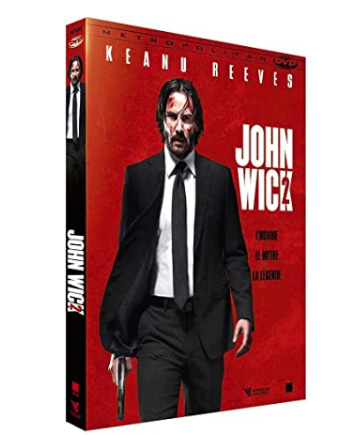
John Wick: Chapter 2
Synopsis
Just days after avenging his dog and his stolen car, John Wick hopes to retire for good. But Santino D'Antonio, a powerful crime lord, reminds him of an old blood oath and forces him to take a deadly assignment in Rome. Wick accepts, only to discover that he has been betrayed and that a million-dollar contract has been put on his head. Hunted by assassins from all over the world, he must fight his way through the underworld to survive.
The Making of the Film
The first John Wick was a surprise hit, which led the filmmakers to expand the world they had created. Director Chad Stahelski and writer Derek Kolstad wanted to explore the secret society of assassins that had only been hinted at in the original. The sequel develops the rules of the underworld, with its coins, its markers and its hotels. The story takes John Wick to Rome, which gave the film a grand and operatic backdrop. Stahelski, a former stuntman, wanted to push the action even further with more complex choreography. Keanu Reeves trained intensively in gun fighting, judo and driving. The film also reunites him with Laurence Fishburne, his co-star in The Matrix. The result is a sequel that is bigger, more stylish and more mythical than the original.
Reviews and reception
Professional critics' summary
Critics praised the film as a worthy and often better sequel, with stunning action and bold visual design. Many noted that Keanu Reeves was in top form and that the fight choreography was extraordinary. Reviewers also admired the cinematography, which gave scenes a graphic, painterly quality. Some felt that the story was thin and that the violence was excessive, but they agreed that the film delivered what fans wanted.
Audience reception
The film was a commercial success, earning more than 170 million dollars worldwide. Fans loved the expansion of the world and the memorable fight sequences. It strengthened the franchise's cult following and led to a third film. Many viewers consider it one of the best action sequels of the decade.
Awards
The film earned a number of nominations for action and stunt awards. It was praised for its choreography, cinematography and sound design. Keanu Reeves received appreciation from fans and critics for his physical performance. It did not win major prizes, but it was well regarded by the industry.
Filming anecdotes
Director's inspirations
Chad Stahelski was inspired by Japanese samurai films, Hong Kong action cinema and Westerns. He wanted each fight to tell a story and to feel like a ballet of violence. The use of neon lighting and reflective surfaces was influenced by film noir and pop art. He also drew on his experience as a stuntman to design fight scenes that could be filmed in long takes.
Production difficulties
The production shot in New York, Rome and other European cities, which required complex logistics. Reeves and his co-stars trained for months to perform the intricate gun-fu sequences. The catacomb shootout and the car chases were particularly demanding, with many takes needed. The film also had to fit in a larger story that would set up a third chapter.
Anecdote about a particular scene
The hall of mirrors sequence, in which Wick fights in a room filled with reflections, is one of the most striking in the film. The scene in the Roman catacombs, where he fights dozens of enemies, is another highlight. Wick's fight with Cassian in the subway is also widely admired. The film includes a long opening sequence in which Wick retrieves his car from a gang.
Originally planned casting
Keanu Reeves returned as John Wick, joined by Ian McShane as Winston and Lance Reddick as Charon. Laurence Fishburne joined the cast as the Bowery King, a mysterious underworld figure. Common played Cassian, a rival assassin, and Ruby Rose portrayed the mute assassin Ares. Riccardo Scamarcio played the villain Santino D'Antonio.
Themes explored
The film is about the impossibility of leaving a violent past behind. John Wick tries to retire but is dragged back by a debt of honour. It explores the idea of codes and rules in a criminal world, where even killers follow strict traditions. Another theme is loyalty and betrayal, as Wick's allies become enemies. It also looks at the cost of revenge, which leaves the hero isolated and exhausted. The story touches on grief, as Wick still mourns his wife and his dog. It portrays an underworld that is both glamorous and brutal. In the end, it suggests that violence always has consequences.
Ending explained
After killing Santino in the Continental Hotel, Wick breaks the sacred rule of the hotel, which forbids violence on its grounds. Winston, the hotel manager, declares him excommunicado, meaning that all services and protection are withdrawn. Wick is given a one-hour head start before the contract on his head becomes active. He meets the Bowery King, who gives him a final favour. The film ends with Wick walking through New York, with a world of assassins closing in. The ending sets the stage for a third chapter in which Wick fights for his survival. It leaves the audience with a sense of tension and anticipation.
Meaning of the title
The title John Wick: Chapter 2 identifies the film as the second episode in the story of the assassin. The word chapter suggests a larger saga, as if the film were part of a novel. This choice marked the series with a literary tone, which the later films continued. The name John Wick, repeated in every title, shows that the story is about one man and his legend. The number 2 also reflects the expansion of his world. It is a simple title that promises more action and mythology.
Original Soundtrack
Tyler Bates and Joel J. Richard composed the score, which mixes electronic music with rock and industrial sounds. The music gives the film a driving, modern feel, perfectly matching the neon-lit visuals. The soundtrack has become one of the signature elements of the franchise.
News
The series continued with Chapter 3, Chapter 4 and the spin-off Ballerina. The franchise has also expanded to a television series called The Continental. Keanu Reeves remains closely associated with the character.
Similar Films
John Wick and John Wick: Chapter 3 - Parabellum are the other films in the series. The Raid and The Raid 2 offer relentless martial arts action. Kill Bill and Nobody share a similar mix of style and violence. Atomic Blonde and Mad Max: Fury Road are other modern action films.