

 Français
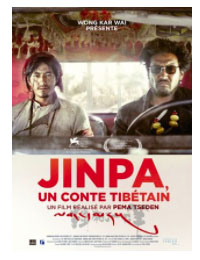
Jinpa
Synopsis
Jinpa follows a Tibetan truck driver named Jinpa who is driving across the vast, desolate, wind-swept highlands of the Tibetan plateau when he accidentally runs over a stray sheep on the lonely road. Burdened by Buddhist karmic guilt, he picks up a hitchhiker who is also named Jinpa, an angry young man carrying a silver dagger who is on a dangerous quest to track down and murder the man who killed his father years ago. As the two men share the cabin of the rumbling truck across the majestic landscape, their fates intertwine in a philosophical meditation on karma, revenge, and forgiveness.
The Making of the Film
Directed by acclaimed Tibetan filmmaker Pema Tseden and produced by visionary auteur Wong Kar-wai, the film was adapted from Tsering Dondrup's short story The Sacred Arrow and Pema Tseden's own novella A Sheep Named Jinpa. The inspiration stemmed from exploring Tibetan Buddhist concepts of fate, karma, and individual identity on the high plateau. The production utilized breathtaking 4:3 Academy ratio framing, harsh Tibetan highland locations, and striking visual minimalism.
Critical Reception
Critics universally lauded Jinpa as a masterwork of world art-house cinema, praising its stunning widescreen-in-box cinematography, hypnotic pacing, and profound philosophical depth. Reviewers highlighted Pema Tseden's masterful directorial control, blending existential mystery with Buddhist karmic reflection. It achieved widespread international festival acclaim.
Audiences appreciative of meditative, slow-burn arthouse cinema embraced the film for its striking visual beauty.
The film earned major international awards, including the Orizzonti Award for Best Screenplay at the Venice International Film Festival.
Behind-the-Scenes Stories
Pema Tseden drew heavy inspiration from Tibetan Buddhist philosophy, traditional nomadic literature, and Wong Kar-wai's cinematic styling.
Shooting across extreme high-altitude locations on the Tibetan plateau required specialized camera equipment and physical endurance from the crew.
During production, director Pema Tseden utilized striking 4:3 framing to emphasize the isolation of the characters against the vast landscape.
Casting non-professional Tibetan actors brought absolute cultural authenticity and stoic realism to the philosophical drama.
Themes Explored
The film explores Tibetan Buddhism, karma, revenge, fate, forgiveness, identity, and existential isolation on the high plateau.
Ending Explained
The profound open-ended conclusion shows the hitchhiker returning without having committed murder, having broken the cycle of revenge through karmic reflection.
Meaning of the Title
Reference to the shared name (Jinpa) possessed by both the truck driver and the vengeful hitchhiker, symbolizing interconnected souls.
Original Soundtrack
The original musical score features haunting traditional Tibetan long-horn instruments and ambient wind drones that evoke the majestic isolation of the plateau.
Similar films include Tharlo, Balloon, Dead Man, and Certified Copy.