

 Français
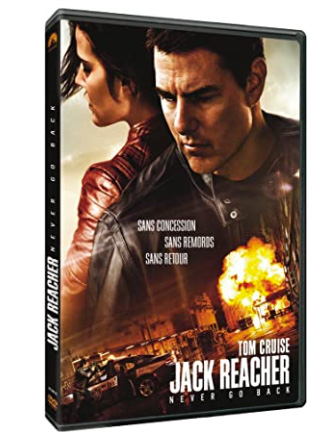
Jack Reacher: Never Go Back
Synopsis
Former U.S. Army military police investigator Jack Reacher returns to his old military headquarters in Virginia to take Major Susan Turner out for dinner. Upon arrival, he discovers that Turner has been falsely arrested on fabricated espionage charges and that he himself is framed for a murder committed years ago. Realizing they are targets of a massive military-corporate conspiracy, Reacher breaks Turner out of custody to prove their innocence. Together, they embark on a cross-country manhunt to expose the real corrupt officials behind the framed conspiracy.
The Making of the Film
- The film was adapted from Lee Child's 2013 bestselling thriller novel "Never Go Back," serving as a direct sequel to the 2012 film adaptation starring Tom Cruise. Paramount Pictures and director Edward Zwick sought to capture the gritty, independent wanderer spirit of the literary character while raising the emotional stakes. Inspiration was drawn from classic fugitive thrillers and hard-boiled detective stories where the protagonist must rely entirely on tactical instincts. Tom Cruise remained heavily invested in the project to ensure faithful adherence to Reacher's uncompromising pursuit of justice.
Critical Reception
Professional critics gave the film mixed reviews, praising its straightforward action choreography and the strong chemistry between Tom Cruise and Cobie Smulders. Many reviews noted that while it delivered standard genre thrills, it lacked the distinct neo-noir tension and atmospheric mystery of the first movie. Reviewers found the plot involving military conspiracies to be somewhat formulaic and predictable. Overall, it was received as a competent and fast-paced action thriller.
Public reception was moderately favorable among action movie fans who enjoyed Tom Cruise's signature physical stunt work and relentless pacing. Audiences appreciated the addition of Cobie Smulders as a capable military counterpart who could hold her own in combat. Word of mouth helped sustain a respectable international box office run for the franchise sequel. Spectators frequently cited the hand-to-hand fight sequences and tense cat-and-mouse chases as entertaining highlights.
The film earned recognition within stunt performance award circles for its grounded, hard-hitting choreography without excessive CGI enhancements. Tom Cruise received praise from action coordinators for performing demanding physical sequences himself. The production's commitment to practical martial arts realism was widely commended by industry peers.
Filming Anecdotes
The director drew inspiration from classic 1970s fugitive thrillers, gritty military dramas, and classic westerns featuring wandering drifters. He wanted the visual style to emphasize harsh, realistic environments ranging from dusty southern roads to nocturnal urban hideouts. Cinematic influences included classic manhunt stories where the hero operates completely outside institutional protection. These artistic choices helped maintain the rugged, independent identity of the literary protagonist.
Production required extensive physical conditioning and tactical training for the lead actors to ensure the combat scenes looked brutally efficient and authentic. Tom Cruise performed complex hand-to-hand combat sequences and driving stunts without relying on stunt doubles. Cobie Smulders underwent rigorous military tactical training to credibly portray an elite Army major. Crew members often recalled the demanding shooting schedule across various Louisiana locations as physically exhausting but creatively fulfilling.
One particularly memorable sequence involved a tense foot chase through the crowded streets of New Orleans during a festive Halloween parade. This sequence required intricate crowd coordination and hidden camera setups to capture authentic public reactions around the actors. Tom Cruise and Cobie Smulders had to navigate dense crowds of extras while maintaining high-stakes dramatic tension. Crew members frequently noted that this specific day of shooting presented unique logistical challenges due to the live celebratory environment.
Themes Explored
- Justice versus institutional corruption within military ranks.
- Independence, nomadism, and the rejection of traditional societal roots.
- Trust, partnership, and emotional vulnerability under extreme duress.
- Protecting the vulnerable against powerful, unchecked corporate-military conspiracies.
Ending Explained
The climax takes place during a tense rooftop confrontation in New Orleans, where Reacher and Turner face off against the primary corrupt contractor villains and their assassins. Reacher manages to outsmart the lead mercenary through tactical resourcefulness, neutralizing the threat and saving Turner from execution. In the aftermath, the military conspiracy is fully exposed, clearing Turner's name and reinstating her to active service. Reacher bids farewell to his companions, returning to his solitary life as a wandering drifter hitchhiking across America.
Title Significance
The title directly references Lee Child's source novel name, serving as both a thematic statement about the protagonist's refusal to revisit his old military past and a literal command during the fugitive plot. It emphasizes his uncompromising independence.
Original Soundtrack
- The soundtrack features a pulsing, action-oriented orchestral score composed by Henry Jackman, blending heavy percussion with suspenseful synth undertones. The music successfully heightened the tension during covert investigations and brutal hand-to-hand combat sequences. Critics noted that the score provided a driving momentum that matched the protagonist's relentless pursuit of the truth.
Similar Films
- Jack Reacher (2012)
- The Fugitive (1993)
- Mission: Impossible - Fallout (2018)
- Collateral (2004)
- The Equalizer (2014)