

 Français
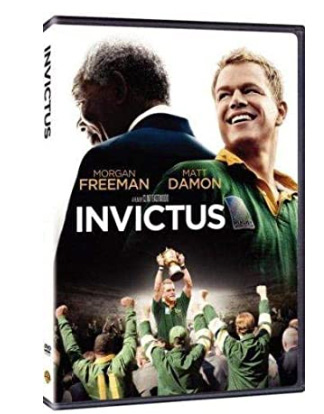
Invictus
Synopsis
Invictus tells the story of Nelson Mandela during the early years of his presidency in South Africa. Following the end of apartheid, the country remains deeply divided by racial tensions, historical injustice and political mistrust. Mandela recognizes that the 1995 Rugby World Cup could become an opportunity to bring together a population that has spent decades separated by discrimination. He reaches out to national rugby captain François Pienaar and encourages him to help transform the Springboks into a symbol of national unity. As the team prepares for the tournament, the film follows the personal and political challenges surrounding an extraordinary sporting event. Through determination, leadership and mutual respect, Mandela hopes to inspire an entire nation to imagine a shared future.
The film's origins
Invictus is based on the book Playing the Enemy: Nelson Mandela and the Game That Made a Nation, written by journalist John Carlin and published in 2008. The book examines how Mandela used the 1995 Rugby World Cup as an opportunity to encourage reconciliation in a country emerging from apartheid. The story attracted the attention of filmmakers because it combined an important historical moment with the universal appeal of sport. Screenwriter Anthony Peckham adapted Carlin's work into a screenplay that focused on the relationship between Mandela and rugby captain François Pienaar. Clint Eastwood became interested in directing the project because of its themes of leadership, forgiveness and national unity. Morgan Freeman, who had long been associated with the idea of portraying Mandela, was selected for the leading role. Matt Damon was cast as Pienaar, providing a second central character through whom the story could explore the influence of Mandela's vision. The film was not simply conceived as a sports drama, but as a historical account of how a sporting competition could become a symbol of political and social transformation. Its title comes from the Latin word meaning unconquered and also refers to a famous poem that plays an important role in the story.
Reviews and reception
Professional critical reviews:
Invictus received generally favorable reviews from professional critics. Morgan Freeman was widely praised for his portrayal of Nelson Mandela, particularly for capturing the former president's calm authority and commitment to reconciliation. Matt Damon also received positive attention for his performance as François Pienaar and for his physical preparation for the rugby sequences. Clint Eastwood's direction was recognized for combining historical drama with the excitement of a major sporting competition. Some critics considered the film somewhat idealized in its representation of the political complexities surrounding the 1995 World Cup. Nevertheless, its performances and central message of reconciliation were widely appreciated.
Audience reception:
The film attracted a broad international audience, including viewers interested in Nelson Mandela, South African history and sporting dramas. Its rugby sequences provided an accessible narrative framework for discussing the much larger question of national reconciliation. Audiences responded particularly strongly to the relationship between Mandela and Pienaar and to the emotional significance of the World Cup final. The film also benefited from the international recognition of Morgan Freeman and Clint Eastwood. Its message about overcoming historical divisions gave it appeal beyond traditional sports-film audiences.
Awards and recognition:
Invictus received several important nominations during the 2009–2010 awards season. Morgan Freeman was nominated for the Academy Award for Best Actor, while Matt Damon received an Academy Award nomination for Best Supporting Actor. Freeman also received a Golden Globe nomination for his performance. The film was recognized by several critics' organizations and professional associations for its performances and production. Although it did not win major Academy Awards, its nominations confirmed the strength of its acting and historical presentation.
Behind-the-scenes stories
Director's inspirations:
Clint Eastwood was particularly interested in the relationship between sport and political reconciliation. The story offered an opportunity to explore how a leader could use a widely followed sporting event to encourage people from different communities to develop a shared national identity. Eastwood also wanted to avoid presenting Mandela as a conventional political hero without personal complexity. Instead, he emphasized his patience, strategic intelligence and willingness to approach former opponents with dignity. The director used the relationship between Mandela and Pienaar to show how leadership can influence people through example rather than force.
Production challenges:
The production faced the considerable challenge of recreating the atmosphere of South Africa in 1995, including the political environment and the appearance of major sporting venues. Filming took place in South Africa in the spring of 2009. The production also needed to recreate rugby matches convincingly, requiring careful coordination of actors, professional players, stunt performers and large groups of extras. Matt Damon prepared physically for his role as François Pienaar, studying rugby techniques and the captain's mannerisms. One particularly important detail was the recreation of Ellis Park Stadium, where the 1995 Rugby World Cup final had actually taken place.
A memorable scene:
The Rugby World Cup final between South Africa and New Zealand is the film's central sporting sequence. The match carries significance far beyond the result because it represents the possibility of a shared national identity. As the Springboks face the powerful New Zealand team, the audience witnesses the emotional investment of people from different communities. The final moments of the match transform a sporting victory into a symbolic expression of reconciliation. The scene is particularly powerful because the filmmakers connect the players' determination with Mandela's wider political vision.
Originally considered casting:
Morgan Freeman was strongly associated with the role of Nelson Mandela before the production was completed. His physical resemblance, vocal qualities and personal interest in the former president made him a natural choice for the part. Matt Damon was ultimately selected to portray François Pienaar, whose physical transformation required considerable preparation. Reliable production documentation does not establish a definitive list of alternative actors initially considered for all the principal roles.
Themes explored
Reconciliation and forgiveness: Mandela's leadership demonstrates the importance of moving beyond historical resentment to build a shared future.
National unity: The Rugby World Cup becomes an opportunity for South Africans from different communities to identify with the same national achievement.
Leadership and inspiration: Mandela and Pienaar illustrate how personal example and determination can influence an entire population.
Racial equality: The film explores the difficult transition from apartheid toward a society based on equal dignity and shared citizenship.
Sport and solidarity: Rugby becomes a symbolic language through which people with different backgrounds can develop a sense of belonging.
Perseverance and courage: The team's preparation reflects the importance of collective effort, confidence and determination.
Hope and transformation: The story emphasizes that profound social change can begin with gestures of trust and cooperation.
Ending explained
The final match of the 1995 Rugby World Cup brings the film's historical and emotional narratives together. South Africa faces New Zealand in a highly anticipated final that carries enormous symbolic importance for the country. The Springboks eventually win the match, creating a moment of collective celebration that transcends racial and political divisions. Mandela's decision to wear the Springboks jersey during the celebrations is particularly meaningful because the team had previously been associated primarily with white South Africans. By embracing the national team, he demonstrates that reconciliation requires people to share symbols and identities that were once used to divide them. François Pienaar also recognizes that the victory represents something much greater than sporting achievement. The ending does not suggest that all the country's social problems have disappeared, but it demonstrates that a shared experience can create the foundations for a different future. The final celebration therefore becomes a powerful symbol of unity, forgiveness and the possibility of national renewal.
Meaning of the title
The title Invictus comes from a Latin word meaning unconquered or undefeated. It also refers to the famous nineteenth-century poem written by William Ernest Henley, which is recited in the film. The poem expresses resilience, personal courage and the determination to remain spiritually strong in the face of adversity. These ideas are closely connected to Nelson Mandela's experience of imprisonment and his commitment to reconciliation after his release. The title also reflects the determination of the South African rugby team as it competes in the World Cup. More broadly, it represents the ability of individuals and entire communities to overcome difficult circumstances without surrendering their dignity or hope.
Original soundtrack
The original score was composed by Kyle Eastwood and Michael Stevens. Their music provides an emotional foundation for the film while supporting the historical atmosphere and sporting tension. The compositions gradually build anticipation during the rugby sequences and reinforce the more reflective moments involving Mandela and Pienaar. The soundtrack also incorporates music connected to South African culture, helping establish the identity of the setting. Its restrained orchestral approach complements the film's central themes of perseverance, reconciliation and national unity.
Similar films
Remember the Titans (2000): A sports drama about racial integration, leadership and the power of teamwork.
42 (2013): A historical sports film exploring racial discrimination and the importance of breaking social barriers.
The Blind Side (2009): A drama examining opportunity, personal support and the transformative influence of human relationships.
The King's Speech (2010): A historical portrait of leadership and the personal challenges faced by an important public figure.
The Power of One (1992): A drama set in South Africa exploring racial injustice, personal courage and the struggle against discrimination.
The Great Debaters (2007): A historical drama about education, determination and the fight against racial inequality.