

 Français
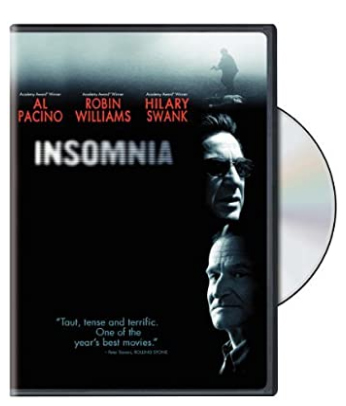
Insomnia
Synopsis
Sent to a remote Alaskan fishing town during the endless summer daylight to investigate the brutal murder of a teenage girl, a veteran Los Angeles detective accidentally shoots his own partner in the foggy woods. Tormented by overwhelming guilt and completely unable to sleep due to the perpetual twenty-four-hour sunlight, the detective becomes entangled in a dangerous psychological game of cat-and-mouse with a cunning local novelist who witnessed the tragic accident. As sleep deprivation destroys his mental acuity, the line between justice and corruption blurs.
The Making of the Film
Director Christopher Nolan chose to helm the psychological thriller as his follow-up to the breakthrough indie hit Memento, marking his first major Hollywood studio film. The production served as an American remake of Erik Skjoldbjærg's critically acclaimed 1997 Norwegian thriller of the same name. Producers sought out the stunning, eerie landscapes of Stewart, British Columbia, to convincingly emulate the disorienting perpetual daylight of Alaska. Nolan worked closely with cinematographer Wally Pfister to capture the blinding, oppressive glare of the midnight sun. The project featured an A-list cast led by Al Pacino and Robin Williams.
Critical Reception
Critics showered the film with widespread critical acclaim, praising Christopher Nolan's assured direction, atmospheric tension, and the phenomenal lead performances of Al Pacino and Robin Williams. Reviewers lauded the film for subverting expectations by casting Williams against type as a chilling intellectual antagonist. Audiences embraced the sophisticated psychological puzzle box, driving it to strong commercial success at the box office. It stands as a masterclass in atmospheric neo-noir filmmaking and a stellar studio remake.
Behind-the-Scenes Stories
Christopher Nolan drew visual inspiration from classic noir thrillers and psychological dramas, utilizing bleached color grading to emphasize exhausting insomnia. Al Pacino spent time speaking with real homicide detectives to understand the psychological strain of high-profile murder investigations. During filming in remote Canada, the crew utilized specialized lighting rigs to simulate perpetual blinding daylight around the clock. Robin Williams intentionally avoided traditional comedic mannerisms to project quiet menace.
Themes Explored
The narrative explores guilt, moral corruption, sleep deprivation, psychological disintegration, and professional ethics. It examines how sleeplessness strips away a lawman's judgment and exposes hidden vulnerabilities. Furthermore, it highlights the burden of conscience.
Ending Explained
Will Dormer mortally wounds Walter Finch in a final shootout while confessing his cover-up of his partner's shooting, dying just as Ellie Burr decides to protect his legacy by discarding the incriminating bullet casing. The final cinematic shots show Will closing his eyes in peaceful eternal rest as the endless sunlight fades. A powerful, tragic sense of moral absolution closes the thriller.
Meaning of the Title
The title refers to the chronic medical condition of sleeplessness that plagues the protagonist, serving as both a plot device and a psychological prison.
Other atmospheric psychological thrillers such as Memento, Se7en, and The Pledge.