

 Français
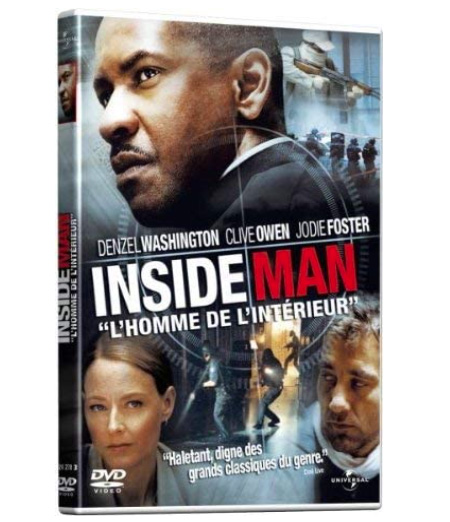
Inside Man
Synopsis
When a group of armed criminals takes control of a Manhattan bank, Detective Keith Frazier is assigned to negotiate with their mysterious leader, Dalton Russell. The robbers appear to be following a carefully prepared plan, but their true objective remains unclear. As the police attempt to understand what is happening inside the building, a powerful bank owner becomes increasingly concerned about the contents of a private safe. The arrival of a specialised negotiator adds another layer of complexity to a situation in which nobody seems to be telling the whole truth.
The Making of the Film
Inside Man was directed by Spike Lee from a screenplay by Russell Gewirtz. The project began with Gewirtz's original idea for a sophisticated bank robbery story built around a carefully concealed motive. The screenplay attracted attention because it combined the tension of a hostage situation with the structure of a mystery. Spike Lee saw an opportunity to work within the thriller genre while incorporating his interest in social divisions, institutional power and New York life. Denzel Washington was cast as Detective Keith Frazier, bringing intelligence and humour to the central role. Clive Owen played the controlled and enigmatic Dalton Russell, while Jodie Foster portrayed a powerful negotiator with her own agenda. The production used New York locations to give the story an authentic urban atmosphere. The film was designed to keep the audience uncertain about the robbers' real intentions until the final stages. Its structure alternates between police negotiations, events inside the bank and interviews conducted after the robbery.
Critical Reception
Professional critical response: Inside Man received generally favourable reviews for its intelligent screenplay and strong performances. Critics praised the chemistry between Denzel Washington and Clive Owen, as well as the film's ability to maintain suspense without relying exclusively on action. Spike Lee was also recognised for bringing social commentary and a distinctive New York atmosphere to a mainstream thriller. Some reviewers considered the plot overly complicated, but many appreciated its carefully constructed surprises.
Audience reception: The film performed successfully at the international box office and attracted viewers who enjoy crime mysteries and intelligent thrillers. Audiences responded positively to its central puzzle and the gradual revelation of the robbers' plan. The performances and dialogue helped maintain interest during scenes that take place largely inside a bank. Its ending generated discussion because it reinterprets much of what the audience has previously seen. The film remains a popular example of a modern bank robbery thriller.
Awards and recognition: Inside Man received several award nominations and professional recognitions, particularly for its performances and screenplay. It was recognised by organisations celebrating African-American achievement and received attention from critics' groups. Although it did not become a major awards-season winner, its commercial success and positive critical response established it as one of Spike Lee's most accessible mainstream films. Its reputation has remained strong among fans of intelligent crime cinema.
Behind-the-Scenes Stories
Director's inspirations: Spike Lee approached the story as more than a conventional bank robbery thriller. He was interested in the different forms of power represented by the police, financial institutions and wealthy individuals. The New York setting allowed him to incorporate the social diversity and everyday energy that frequently appear in his films. He also appreciated the screenplay's ability to challenge the audience's assumptions about criminals and respectable authority figures.
Production challenges: The bank setting required careful planning to maintain spatial continuity and suspense. The filmmakers had to coordinate the movements of the robbers, hostages, police officers and negotiators across several interconnected areas. The story also contains scenes set at different points in time, requiring precise editing to preserve the mystery. The production relied on convincing performances to make lengthy negotiations as engaging as the more physical sequences.
A memorable scene: The early stages of the robbery establish an unusual relationship between the criminals and their hostages. The robbers use clothing and instructions to make it difficult for the police to distinguish between victims and perpetrators. This simple idea becomes an important part of the film's central mystery. The scene also demonstrates how the criminals control the situation through psychological manipulation rather than constant violence.
Originally considered casting: Denzel Washington, Clive Owen and Jodie Foster ultimately formed the central trio. Their contrasting personalities helped give the negotiations their dramatic energy. Willem Dafoe also appeared as a senior police officer, while Christopher Plummer played the bank's influential owner. The ensemble combines established performers with supporting actors who contribute to the film's realistic New York atmosphere.
Themes Explored
Inside Man explores power, greed, institutional secrecy and the difference between public reputation and private responsibility. The robbery becomes a way of exposing hidden truths about the bank and the people who control it. The film also examines the moral compromises made by individuals who believe they are protecting their interests. Detective Frazier must balance professional ambition with his desire to understand the truth, while the criminals manipulate the expectations of the police and the public. Beneath the mechanics of the heist, the story questions who has the authority to define justice and who benefits from keeping certain secrets hidden.
Explaining the Ending
The final revelation shows that Dalton Russell and his accomplices did not simply intend to steal money and escape. Their plan was designed to expose and retrieve evidence connected to a hidden secret in the bank's safe deposit system. Russell has remained inside the building in a concealed space, allowing him to leave after the police believe the operation has ended. Detective Frazier gradually understands the true objective and discovers that the robbery was connected to a much older injustice. The bank owner's concern about the safe is therefore more important than the apparent value of the stolen money. The ending reveals that the criminals have manipulated the police investigation from the beginning. It also leaves the audience considering the difference between legal authority and genuine justice. Frazier's discovery provides a personal resolution to the mystery while suggesting that powerful people can remain protected by institutions for many years.
The Meaning of the Title
The title Inside Man has several meanings. It refers to the idea that a criminal operation may involve someone already positioned within the institution being targeted. It also evokes the central mystery of a person hidden inside the bank while the police believe the building has been secured. More broadly, the title suggests that the truth is located beneath the visible surface of events. The film continually encourages viewers to look beyond appearances and question who really controls the situation.
The film uses a score composed by Terence Blanchard, a frequent collaborator of Spike Lee. The music combines suspenseful orchestral writing with contemporary rhythmic elements, reinforcing the tension of the negotiations and the urban setting. Its restrained approach allows the dialogue and sound design to carry much of the suspense. The score supports the film without overwhelming its carefully constructed mystery.
Similar films include The Taking of Pelham One Two Three, directed by Joseph Sargent, which centres on a New York hostage situation; Dog Day Afternoon, directed by Sidney Lumet, which examines a bank robbery and its human consequences; The Usual Suspects, directed by Bryan Singer, which builds its mystery around unreliable information; and Heat, directed by Michael Mann, which explores the relationship between criminals and investigators.