

 Français
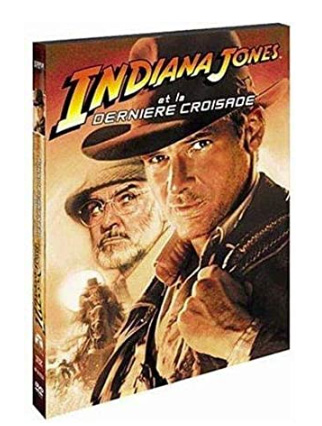
Indiana Jones and the Last Crusade
Synopsis
In 1938, archaeologist Indiana Jones discovers that his father, Henry Jones Sr., has disappeared while searching for the Holy Grail. Determined to find him, Indiana travels across Europe and the Middle East, following clues left behind by the missing scholar. His journey brings him into conflict with Nazi forces who are also searching for the legendary cup believed to have belonged to Jesus Christ. Along the way, Indiana must work with his father, whose academic obsession and eccentric personality create additional complications. Their difficult relationship gradually becomes central to the adventure. Together, they face deadly traps, historical mysteries, and dangerous enemies in a race to reach the Grail before it falls into the wrong hands.
The Film's Origins
Indiana Jones and the Last Crusade was developed as the third installment in the Indiana Jones series created by George Lucas and Steven Spielberg. After the darker tone of Indiana Jones and the Temple of Doom, the filmmakers wanted to return to the adventurous spirit of Raiders of the Lost Ark. George Lucas proposed making the Holy Grail the central object of the new adventure. The idea also offered an opportunity to explore Indiana Jones's relationship with his father, a character who had not previously appeared in the series. Screenwriter Jeffrey Boam developed the screenplay from Lucas's story, combining historical legends, family conflict, and traditional adventure elements. Sean Connery was selected to portray Henry Jones Sr., creating a particularly appealing contrast with Harrison Ford. River Phoenix was cast as the young Indiana in the opening sequence. Steven Spielberg directed the film, which was released in 1989. The production combined elaborate international locations, practical stunts, historical references, and the series' familiar sense of humor. It became one of the most celebrated entries in the original Indiana Jones trilogy.
Critical Reception
Professional Reviews: Indiana Jones and the Last Crusade received widespread critical acclaim. Reviewers particularly praised the chemistry between Harrison Ford and Sean Connery, whose performances brought humor and emotional depth to the adventure. Steven Spielberg's direction was admired for combining spectacular action with a more personal father-and-son story. The screenplay was also appreciated for its energetic dialogue and accessible treatment of historical legends. Some critics considered the plot familiar after the previous films, but most regarded it as a highly entertaining return to the series' adventurous roots. Its balance of comedy, suspense, and action became one of its defining strengths.
Audience Reception: The film was a major international box-office success and was warmly received by audiences. Viewers particularly enjoyed the relationship between Indiana and his father, which added a new emotional dimension to the franchise. The opening sequence featuring young Indiana also became memorable for its explanations of several elements of the character's identity. The film's action scenes, humor, and historical mysteries helped attract viewers of different generations. It remains one of the most popular Indiana Jones adventures.
Awards and Recognition: Indiana Jones and the Last Crusade won the Academy Award for Best Sound Effects Editing. It also received nominations for Best Original Score and Best Sound. The film earned additional recognition from several international awards organizations. Its technical achievements and musical contributions were particularly appreciated. Its commercial and critical success reinforced the Indiana Jones series as one of the most influential adventure franchises in cinema history.
Behind-the-Scenes Stories
Director's Inspirations: Steven Spielberg wanted to combine the adventure elements of the earlier Indiana Jones films with a more personal story about family relationships. The Holy Grail provided an opportunity to explore the intersection between archaeology, religious legends, and historical mythology. The director was particularly interested in the contrast between Indiana's impulsive personality and his father's intellectual obsession. Sean Connery's casting also allowed Spielberg to create a humorous relationship between two characters with very different temperaments. The film deliberately returns to a lighter and more playful atmosphere than its predecessor.
Production Challenges: The production involved extensive international filming and several complicated action sequences. The filmmakers worked in locations including Spain, Italy, the United Kingdom, and the United States. The opening train sequence required elaborate stunt coordination and the construction of complex moving sets. The climactic scenes involving the Grail temple demanded careful visual design and practical effects. Working with large numbers of extras and coordinating the different locations also required considerable logistical preparation.
Memorable Scene: The sequence in which Indiana and his father attempt to escape from a German airship is particularly memorable. Henry Jones Sr. uses an umbrella to frighten a group of birds, causing them to strike the pursuing aircraft. The moment combines humor, improvisation, and classic adventure spectacle. Another important sequence involves Indiana solving the Grail temple's three challenges, where historical knowledge and faith become essential to survival. These scenes demonstrate the film's ability to combine intellectual puzzles with physical action.
Originally Considered Casting: Harrison Ford returned as Indiana Jones, while Sean Connery was selected to portray his father, Henry Jones Sr. George Lucas and Steven Spielberg considered several possibilities for the role before Connery became their preferred choice. River Phoenix was cast as young Indiana after his performance attracted the filmmakers' attention. Alison Doody played Elsa Schneider, while John Rhys-Davies returned as Sallah. Denholm Elliott also reprised his role as Marcus Brody. Connery's casting became one of the most successful decisions of the production.
Themes Explored
Indiana Jones and the Last Crusade explores family relationships, courage, faith, knowledge, humility, and the dangers of obsession. The relationship between Indiana and his father provides the emotional foundation of the adventure. Both men are fascinated by history, but their different personalities create constant misunderstandings. The search for the Holy Grail also raises questions about the limits of human ambition and the difference between intellectual curiosity and spiritual wisdom. The Nazis represent the corruption of historical and religious symbols for political power. Indiana gradually discovers that success requires more than physical courage and academic knowledge. His father's influence helps him understand the importance of trust and humility. The film also examines the meaning of sacrifice and the value of choosing human relationships over material discoveries. Ultimately, it presents family bonds as more valuable than the legendary treasures being pursued.
Ending Explained
Indiana eventually reaches the chamber containing the Holy Grail, where he must choose the correct cup from several possibilities. The Grail Knight explains that the true cup is not necessarily the most beautiful or valuable-looking object. Indiana realizes that the simplest cup is the one associated with Jesus Christ. Elsa, however, ignores the warnings and attempts to take the Grail beyond the permitted boundary. Her greed causes her to fall into the abyss, while Indiana narrowly avoids the same fate. When Indiana also loses his grip, his father encourages him to let go and save himself. This moment becomes more important than the discovery itself because it confirms the strength of their relationship. Indiana finally abandons his obsession with possessing the Grail. The surviving characters leave the temple, understanding that the greatest reward of the adventure was not the artifact but the reconciliation between father and son. The ending also reinforces the idea that some things are more valuable than historical treasures.
Meaning of the Title
The title Indiana Jones and the Last Crusade refers to the legendary quest for the Holy Grail, traditionally associated with the final journey of the Crusaders. The word last suggests both the extraordinary importance of this particular expedition and the idea of a final spiritual test. It also reflects the historical and religious mythology surrounding the Grail. The title connects Indiana Jones's archaeological adventure with a broader tradition of sacred quests and medieval legends. It emphasizes that the film is not simply about discovering an ancient object but about understanding the values associated with its history.
Original Soundtrack
John Williams composed the original score, continuing his celebrated collaboration with Steven Spielberg and George Lucas. The soundtrack features the familiar Indiana Jones theme alongside new compositions that emphasize the emotional relationship between Indiana and his father. Its orchestral arrangements combine adventure, suspense, humor, and moments of reflection. The musical themes associated with the Holy Grail give the story a more spiritual dimension. Williams's score became one of the most recognizable elements of the franchise and received an Academy Award nomination. Its ability to combine heroic excitement with emotional warmth is particularly important to the film's identity.
Similar Movies
Adventure films with comparable themes include Raiders of the Lost Ark, the first Indiana Jones adventure, which combines archaeology, historical mysteries, and spectacular action. Indiana Jones and the Temple of Doom offers another journey involving ancient legends and dangerous environments. The Mummy combines archaeological discoveries with supernatural adventure. National Treasure explores historical clues and the search for legendary treasures. King Solomon's Mines also follows adventurers pursuing an ancient treasure through dangerous locations. These films share Indiana Jones and the Last Crusade's interest in historical mysteries, exploration, and thrilling adventures.