

 Français
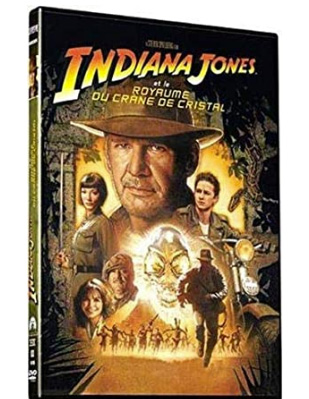
Indiana Jones and the Kingdom of the Crystal Skull
Synopsis
In 1957, during the height of the Cold War, aging archaeologist Indiana Jones is captured by ruthless Soviet agents led by the cold-hearted Colonel Dr. Irina Spalko. The Soviets force Indy to help them locate a mysterious crystal skull with psychic powers hidden deep within Peru, believing it will grant them communist global domination. Joined by a rebellious young greaser named Mutt Williams whose mentor has gone missing, Indy embarks on a perilous adventure through South American jungles. Facing killer ants, quicksand, and Soviet operatives, Indy must unravel the extraterrestrial secret of the crystal skull before it falls into the wrong hands.
The Making of the Film
Developed over nearly two decades by Steven Spielberg, George Lucas, and Harrison Ford, the fourth installment in the legendary franchise finally reunited the creative team in 2008. Lucas and Spielberg wanted to shift the cinematic adventure from 1930s Nazi pulp tropes to 1950s B-movie sci-fi tropes involving alien archeology and Cold War paranoia. Screenwriter David Koepp crafted a script that honored Ford's advancing age while introducing a successor character. The production relied heavily on practical stunts combined with digital visual effects.
Critical Reception
Critical reception for the film was generally positive, with reviewers praising its nostalgic charm, exciting action set pieces, and the undeniable chemistry between Harrison Ford and Karen Allen. However, some critics and hardcore fans heavily criticized its heavy reliance on CGI, absurd plot points—such as surviving a nuclear blast inside a refrigerator—and alien mythology. Audiences flocked to theaters worldwide, turning the blockbuster into a massive financial success at the global box office. It remains a heavily debated yet commercially triumphant chapter in the franchise.
Behind-the-Scenes Stories
Harrison Ford maintained an intense physical fitness regimen to perform many of his own iconic whip and action stunts at age sixty-five. Karen Allen reprised her iconic role as Marion Ravenwood, bringing heartfelt nostalgia back to the franchise. Shia LaBeouf joined the cast as Mutt Williams, training extensively in switchblade handling and motorcycle riding. Steven Spielberg intentionally avoided excessive digital effects where possible to maintain the traditional tactile feel of the original trilogy.
Themes Explored
The film explores aging, legacy, passing the torch to a new generation, and Cold War technological paranoia. It highlights archaeology, ancient civilizations, and extraterrestrial mysteries. Family reconciliation and lost romance provide the emotional anchor. It also touches upon patriotism and betrayal.
Ending Explained
Irina Spalko forces the crystal skull back into its interdimensional skeletal alien entity, demanding ultimate knowledge until her brain overloads and she disintegrates into dust. The ancient temple collapses as a massive flying saucer ascends from the subterranean ruins, soaring off into the cosmos. Indy and Marion finally reconcile their romantic history and get married in a joyful ceremony back home, with Mutt accepting Indy as a father figure. The conclusion provides a celebratory, happily-ever-after wrap-up to the adventure.
Meaning of the Title
The title refers to the legendary artifact at the center of the plot: a mysterious crystal skull possessing supernatural extraterrestrial powers. It highlights the archaeological mystery and sci-fi mythology of the sequel. The phrase sets an adventurous, pulp-archaeology tone.
John Williams composed a magnificent, triumphant orchestral score featuring classic themes alongside new otherworldly motifs for the crystal skull.
Indiana Jones and the Last Crusade, Raiders of the Lost Ark, The Mummy, National Treasure