

 Français
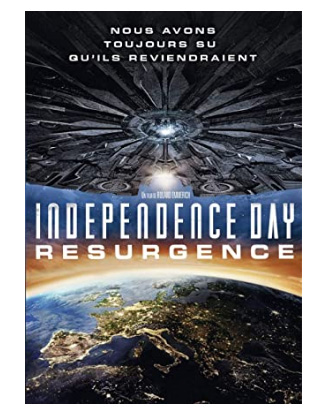
Independence Day: Resurgence
Synopsis
Set twenty years after the devastating alien invasion of 1996, Earth has utilized recovered extraterrestrial technology to build a massive global defense shield known as the Earth Space Defense. When a colossal new alien mothership arrives through a wormhole, threatening to strip-mine the planets core, humanity must unite once again to prevent total extinction. A brave new generation of pilots, alongside returning heroes like David Levinson and former President Whitmore, embark on a desperate counter-offensive. As planetary destruction unfolds on a cataclysmic scale, they fight for the survival of the human race.
The Making of the Film
Director and co-writer Roland Emmerich developed the long-awaited sequel to his 1996 blockbuster hit alongside producers Dean Devlin and James Vanderbilt. 20th Century Fox financed the high-budget science-fiction disaster epic to capitalize on modern digital visual effects technology. Will Smith notably chose not to return for the sequel, prompting a complete script overhaul focusing on a new ensemble cast.
Critical Reception
Critics gave the film overwhelmingly negative reviews, criticizing its convoluted script, lack of character development, and excessive, noisy computer-generated destruction that lacked the charm of the original. Reviewers noted that despite state-of-the-art visual effects, the sequel felt uninspired and repetitive compared to its 1990s predecessor. General audiences also showed muted enthusiasm during its theatrical run.
Public reception was tepid, resulting in a disappointing domestic box-office performance that fell short of studio expectations, though international markets softened the blow. Viewers found the endless wave of CGI spectacle exhausting rather than thrilling. It remains a forgotten sequel to a beloved blockbuster.
The film did not receive any major mainstream award nominations, reflecting its poor critical standing. Its technical visual effects were acknowledged by genre fans, but overall cultural impact remained minimal. Plans for potential further sequels were quietly cancelled by the studio.
Filming Anecdotes
Director Roland Emmerich drew inspiration from modern disaster blockbusters and the enduring legacy of his 1996 original film. He utilized advanced digital visual effects soundstages in New Mexico to render the massive alien spacecraft and global destruction sequences. His direction encouraged returning veterans like Jeff Goldblum and Bill Pullman to anchor the nostalgic elements.
Production faced heavy script rewrites and scheduling adjustments following Will Smiths departure, requiring screenwriters to pivot the narrative toward a younger ensemble cast. Liam Hemsworth underwent physical training to portray the brash fighter pilot lead. Jeff Goldblum brought his signature eccentric intellect back to his scientist role.
A memorable sequence involves a city-sized alien mothership hovering over the Atlantic Ocean, causing massive gravitational pull and lifting skyscrapers into the atmosphere. The scene showcases the apocalyptic scale of digital destruction. The visual effects team spent months rendering the crumbling cities.
The casting process brought back original stars Jeff Goldblum, Bill Pullman, and Judd Hirsch to maintain continuity, while casting rising stars like Liam Hemsworth and Jessie T. Usher to lead the new generation. Will Smith declined to participate due to scheduling conflicts with Suicide Squad.
Themes Explored
The film explores global unity, technological advancement, planetary defense, survival against overwhelming odds, and generational legacy. It highlights how humanity must cooperate across borders to face cosmic threats. Courage triumphs over alien tyranny.
NULL
Title Significance
The title directly references the original 1996 blockbuster hit while adding Resurgence to signal humanity fighting back against a renewed extraterrestrial invasion. It highlights the triumphant comeback of Earth defenders.
NULL
NULL
Similar Films
Other similar films include Pacific Rim, The Day After Tomorrow, and Battleship.