

 Français
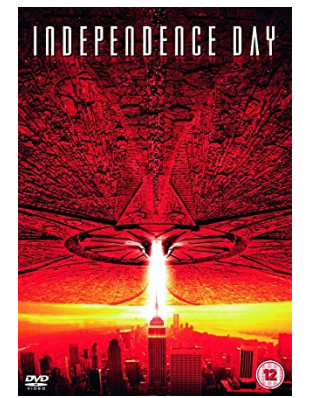
Independence Day
Synopsis
On July 2, enormous alien spacecraft appear over the world's major cities and begin preparing for a devastating attack. A small group of people, including the US President, a cable-TV technician, a fighter pilot and a drunken crop-duster, find themselves at the center of the fight for survival. As the invaders destroy landmarks and millions of lives, humanity's only hope is a daring counterattack. The film is a spectacular, crowd-pleasing blockbuster about global unity in the face of annihilation.
The Making of the Film
The idea for Independence Day came from director Roland Emmerich and producer-writer Dean Devlin during a European press tour for their film Stargate. Emmerich reportedly wondered aloud what it would be like to wake up one morning and find giant spaceships hovering over every major city. The two filmmakers developed the concept into a modern disaster film, borrowing the spirit of 1950s alien-invasion movies and the scale of 1970s disaster epics. They wrote the script together and pitched it to Twentieth Century Fox. The film was released in the United States in July 1996 and became the biggest hit of the year.
Reviews and Reception
Summary of Professional Reviews
Critics were divided. Many enjoyed the spectacle and the film's infectious energy, and Will Smith was singled out as a rising star. Others criticized the thin characters, the clichéd dialogue and the flag-waving patriotism, though most admitted that it delivered on its promise of big-screen thrills.
Audience Reception
The film was an enormous worldwide success, earning hundreds of millions of dollars and becoming one of the biggest box-office hits of its time. Audiences loved its mix of action, humor and spectacle, and several lines became instantly famous. It remains a beloved summer blockbuster.
Awards Won
Independence Day won the Academy Award for Best Visual Effects, a recognition of the groundbreaking mix of miniatures and digital effects used to destroy landmarks. It also earned several popular awards and nominations, particularly for its effects and sound.
Filming Anecdotes
Director's Inspirations
Roland Emmerich was inspired by classic science-fiction films and by the idea of humanity uniting against a common enemy. He wanted to create a film that combined the wonder and terror of a first-contact story with the energy of an action movie.
Production Difficulties
Creating the destruction of famous landmarks, such as the White House, required a combination of large-scale miniatures and computer effects. The visual-effects team built detailed models that were blown up on set, giving the explosions a visceral reality. The result was a landmark in practical and digital effects work.
Anecdote About a Particular Scene
The moment when the White House is destroyed by an alien beam became one of the most talked-about images in cinema, thanks in part to the marketing campaign. Trailers aired during major television events built enormous anticipation for the film.
Casting initially planned
Emmerich championed Will Smith, whom he had admired in Bad Boys, for the role of Captain Steven Hiller. Smith's charisma made him a major movie star. Jeff Goldblum and Bill Pullman rounded out the lead trio.
Themes Explored
Independence Day is a story about global unity and the courage of ordinary people in the face of overwhelming odds. It celebrates teamwork, as soldiers, scientists and civilians must work together to save the planet. The film also explores leadership, particularly through the President, who must inspire a frightened world. Family and sacrifice are woven into the personal stories of the characters, adding emotional stakes to the spectacle. Beneath the explosions lies an optimistic belief that humanity can overcome division when its survival is at stake.
Ending Explained
In the climax, David Levinson and Steven Hiller sneak aboard the alien mothership and upload a computer virus that disables the invaders' shields. Meanwhile, a worldwide counterattack begins, and the pilot Russell Casse makes a heroic sacrifice by flying his plane into the aliens' main weapon. The mothership is destroyed, and the surviving characters are reunited with their loved ones. The ending celebrates victory and unity, with people around the world marking the end of the invasion.
Meaning of the Title
The title refers to the American holiday of July 4, which commemorates the nation's independence. In the film, it takes on a global meaning, as the date becomes the day when all of humanity wins its freedom from the alien threat. The phrase carries a sense of patriotic triumph that perfectly suits the story's climactic final act.
Original Soundtrack
David Arnold's stirring, heroic score gives the film its sense of grandeur and emotion. Its main theme, with its soaring brass and sweeping strings, became one of the most recognizable of the 1990s. The music is an essential part of the film's patriotic, larger-than-life atmosphere.
News
A sequel, Independence Day: Resurgence, was released in 2016, again directed by Roland Emmerich and bringing back several members of the original cast. The sequel was less successful with critics and audiences than the original.
Similar Films
- War of the Worlds (2005): another alien-invasion blockbuster.
- Armageddon: a big-budget disaster film from the same era.
- Mars Attacks!: a comic take on alien invasion.
- Men in Black: another sci-fi hit starring Will Smith.