

 Français
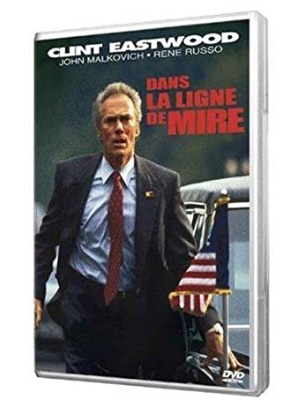
In the Line of Fire
Synopsis
Frank Horrigan is a veteran Secret Service agent who has never forgiven himself for failing to save President Kennedy in Dallas. Now close to retirement, he receives phone calls from a mysterious man who claims to be planning to assassinate the current President. The caller, a former CIA operative named Mitch Leary, taunts Frank, turning the investigation into a personal duel. With the clock ticking, Frank must outwit a brilliant and obsessive adversary before it is too late.
The Making of the Film
In the Line of Fire was directed by Wolfgang Petersen, who had previously made "Das Boot", and written by Jeff Maguire. The screenplay was conceived as a character study of an aging agent haunted by the greatest failure in Secret Service history. Clint Eastwood played Horrigan, with John Malkovich as the cunning assassin and Rene Russo as a fellow agent who becomes his love interest. The production received cooperation from the Secret Service and filmed in Washington and Los Angeles. It was released in the summer of 1993 and became one of the biggest hits of Eastwood's later career.
Reviews and Reception
Summary of Professional Reviews
Critics greatly admired the film, praising its taut suspense and the cat-and-mouse dynamic between Eastwood and Malkovich. Many noted that Eastwood used his age to the film's advantage, giving Horrigan a weary and vulnerable quality. John Malkovich's chilling performance was widely celebrated. The film was seen as one of the best thrillers of its year.
Audience Reception
The film was a major commercial success, earning more than 175 million dollars worldwide. Audiences were gripped by the tension of the telephone conversations and the personal stakes. It has remained a favorite thriller on television and home video. Many viewers still consider it one of Eastwood's best later works.
Awards Received
The film received three Academy Award nominations: Best Supporting Actor for John Malkovich, Best Original Screenplay for Jeff Maguire and Best Film Editing for Anne V. Coates. It also earned nominations at the Golden Globes and the BAFTAs. These nominations recognized both the performances and the craftsmanship of the film.
Themes Explored
The film is about guilt and the chance of redemption. Horrigan carries the burden of a historic failure and is given an opportunity to make amends. The duel between the agent and the assassin explores two men who are equally obsessive and who understand each other better than anyone else. Duty and sacrifice are at the heart of the Secret Service ethos, as agents are trained to put themselves in the line of fire. Aging and obsolescence also play a role, since Horrigan is considered too old for the job. Beneath its thriller surface, it is a portrait of a man trying to forgive himself.
Ending Explained
In the climax, Horrigan confronts Leary in a glass elevator on the outside of a hotel, and Leary falls to his death after a struggle. Horrigan succeeds in protecting the President, finally erasing the shadow of his earlier failure. In the final scene, he reunites with his colleague and lover, suggesting that he can finally move on. The ending offers a sense of peace after a long period of torment.
Meaning of the Title
"In the line of fire" is an expression for being in the path of danger, and it describes the daily role of a Secret Service agent, who must be ready to take a bullet for the President. The phrase carries both a literal and a symbolic meaning. It points to the sacrifice that Horrigan has always been prepared to make.
Soundtrack
The score was composed by Ennio Morricone, the legendary Italian composer known for his Westerns. His music adds a mournful and tense atmosphere to the film and earned praise for its originality. The collaboration with Eastwood, who had been a star of Morricone-scored Westerns, was a pleasing reunion.
Similar Films
- The Day of the Jackal (1973): a classic thriller about an assassination plot.
- Air Force One (1997): a thriller about the protection of the President.
- The Bodyguard (1992): a bodyguard protects a famous client.
- Dirty Harry (1971): another Eastwood classic about a determined lawman.