

 Français
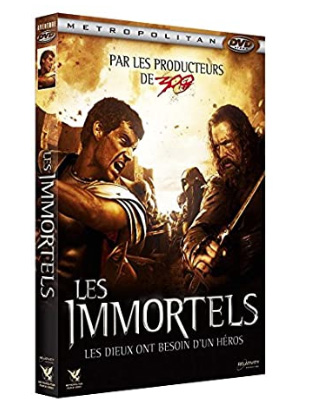
Immortals
Synopsis
In ancient Greece, the ruthless, power-crazed King Hyperion burns villages and massacres populations across the Hellenic world in a brutal quest to locate the mythical Epirus Bow, a divine weapon capable of freeing the imprisoned Titans and destroying the Olympian gods. Believing only a mortal stonecutter named Theseus chosen by the oracle Phaedra can stop the slaughter, Zeus and the gods secretly guide him. When Hyperion slaughters his mother, Theseus vows absolute vengeance, leading a band of loyal warriors into an epic mythical war. This stylized fantasy epic delivers breathtaking visual art and brutal combat.
The Making of the Film
The Making of the Film
Producers Mark Canton and Ryan Kavanaugh conceived the high-concept mythological epic to blend classical Greek legends with the hyper-stylized, painterly visual aesthetics popularized by 300. Director Tarsem Singh was brought on board to helm the project, injecting his signature high-fashion costume design, surreal architecture, and vibrant color palettes into the ancient myth. Screenwriters Charley and Vlad Parlapanides crafted a loose, reimagined take on the Theseus and Minotaur myths. Relativity Media backed the high-budget fantasy production.
Critical Reception
Professional critics gave mixed reviews, praising its stunning visual compositions, exquisite art direction, and ambitious cinematic style while criticizing the paper-thin plot, excessive ultra-violence, and hollow character development. Reviewers noted that Tarsem Singh treated every frame like a high-fashion painting rather than a traditional narrative film. It divided audiences between style and substance.
Public reception was moderate at the box office, finding a dedicated audience among fans of dark fantasy action epics and stylish mythology. Audiences enjoyed the bloody gladiatorial combat and god-tier battle sequences. It carved out a cult following for its distinct visual look.
Awards and recognition were minimal, receiving occasional fantasy genre and art direction nominations. Mickey Rourke's menacing villain performance received praise from genre fans. The film remains a notable visual experiment in fantasy cinema.
Filming Anecdotes
The director drew inspiration from Renaissance art, classical Greek sculpture, and high-fashion editorial photography rather than traditional Hollywood sword-and-sandal movies. Production utilized massive soundstages in Montreal and digital environments to construct the surreal, minimalist sets. Stunt coordinators managed the brutal, slow-motion wire-work fight choreography.
Production challenges included maintaining strict visual symmetry and painterly lighting across every single camera setup under tight studio constraints. Henry Cavill underwent intense physical conditioning to build a superhero physique for his breakout leading role just before being cast as Superman. The costume department designed elaborate, non-traditional golden armor and horned helmets.
A memorable anecdote involves Mickey Rourke bringing terrifying unpredictable energy to his role as King Hyperion, often terrifying younger actors on set with his intense stares. Freida Pinto brought ethereal grace to her role as the prophetic oracle. The crew maintained a strict artistic discipline to achieve Tarsem Singh's exact visual vision.
The casting process secured Henry Cavill to anchor the epic lead role of Theseus, alongside Mickey Rourke, Freida Pinto, Luke Evans, and John Hurt. Luke Evans played the thunderous god Zeus. The ensemble brought striking physical presence to the stylized myth.
Themes Explored
The themes explored include destiny, divine intervention, tyranny, revenge, and mortal courage. The story examines how free will can triumph over prophecies dictated by gods and tyrants. It also highlights the brutal nature of ancient warfare.
Explanation of the Ending
The ending shows Theseus engaging in a ferocious, bloody one-on-one duel with King Hyperion deep inside Mount Tartarus, ultimately slaying the tyrant before dying of his own severe battle wounds and ascending to Mount Olympus to join the gods. Meanwhile, the freed Titans clash in a massive, apocalyptic heaven-and-earth battle against Zeus and the Olympians. In the final striking image, Theseus's young son looks out across the Greek sea, watched over by the divine spirit of his heroic father. The film concludes on an epic, mythical note.
Title Significance
The title 'Immortals' refers directly to both the immortal Olympian gods observing mortal struggles and the legendary mythological Titans seeking eternal freedom. It highlights the divine scale of the mortal conflict. The name sets an epic fantasy tone.
The film is frequently discussed among fans of stylized fantasy action epics and Tarsem Singh's distinct visual art style.
300, Clash of the Titans, Troy, Hercules