

 Français
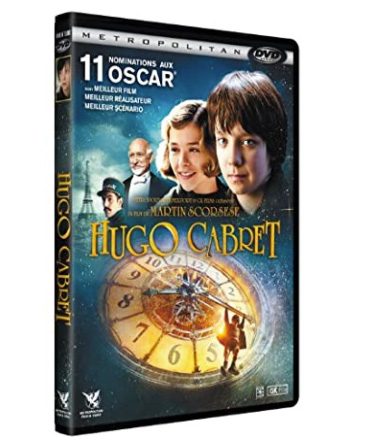
Hugo
Synopsis
Set in 1930s Paris, an observant 12-year-old orphan named Hugo lives secretly inside the walls of a bustling railway station, maintaining its giant clocks. He guards a precious mechanical automaton left behind by his late father, believing it holds a hidden message. When he is caught by an embittered toyshop owner, he embarks on an unexpected quest that introduces him to pioneering silent filmmaker Georges Méliès. The visually breathtaking family adventure is a loving cinematic tribute to the magic of early movie history.
The Making of the Film
Director Martin Scorsese adapted the film from Brian Selznick's acclaimed historical children's novel "The Invention of Hugo Cabret." Scorsese was deeply moved by the book's celebration of early cinema history and wanted to craft his first family-friendly film utilizing stereoscopic 3D. The production team conducted extensive historical research to authentically recreate Georges Méliès' lost studio and vintage film archive. The script was meticulously structured as both an emotional orphan story and a historical homage to cinema preservation.
Critical Reception
Professional critics widely acclaimed the film as a masterwork, praising its astonishing 3D cinematography, art direction, and heartfelt tribute to cinema history. Reviewers lauded Martin Scorsese's passionate direction and the stellar performances by Asa Butterfield, Chloë Grace Moretz, and Ben Kingsley. Critics noted that the film successfully bridged childlike wonder with sophisticated film scholarship. Public reception was enthusiastic, though its box office was modest compared to blockbusters. The film received 11 Academy Award nominations, winning 5 technical categories including cinematography and visual effects.
Behind-the-Scenes Stories
Director Martin Scorsese drew inspiration from early silent cinema pioneers, French poetic realism, and classic optical illusions. Production utilized cutting-edge 3D camera technology to immerse viewers directly into the clockwork mechanisms and bustling station architecture. During the filming of the elaborate clock-tower sequences, the crew utilized a mix of practical miniatures and digital compositing. Scorsese made a passionate personal commitment to film preservation, mirroring the central theme of rescuing Méliès' forgotten legacy.
Themes Explored
The film explores the magic of cinema history, orphanhood, preserving cultural heritage, finding one's purpose, and the healing power of art.
The emotional climax reveals that the automaton has successfully printed a drawing made by Méliès, restoring his historical identity and bringing peace to Hugo's life.
Meaning of the Title
The title refers directly to the young protagonist Hugo Cabret, whose curious spirit drives the mechanical mystery at the heart of the story.
Original Soundtrack
Howard Shore composed an exquisite, nostalgic orchestral score filled with accordion melodies and Parisian flair, capturing the romantic spirit of early cinema.
The film remains a cherished masterpiece among cinephiles and is frequently screened in educational film preservation programs worldwide.
The Artist, Finding Neverland, Bridge to Terabithia