

 Français
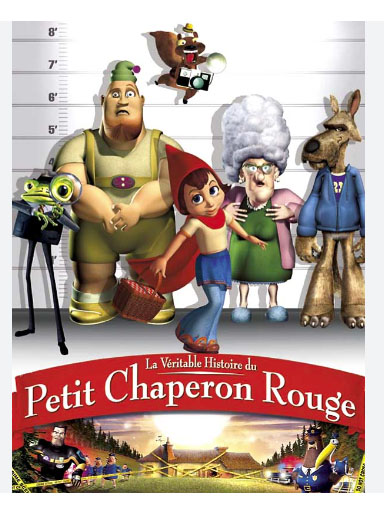
Hoodwinked!
Synopsis
When a seemingly domestic disturbance involving a wolf, a grandmother, a woodsman, and a little girl in a red hood goes awry at Granny's cottage, local animal police swarm the crime scene. Inspector Bill Stork and Grizzled Detective Ted Grizzly interrogate each suspect in turn to uncover what really happened. As Red Riding Hood, the Wolf, Granny, and the Woodsman share their respective versions of events, it becomes clear that nothing is as it appears. A notorious pastry thief known as the Good-Good Bandit is operating in the forest, linking all their stories together.
The Making of the Film
Independently written and directed by Todd Edwards, Cory Edwards, and Tony Leech, this animated comedy was produced on a micro-budget out of a garage in California. Frustrated by traditional Hollywood animation pipelines, the creators utilized independent financing and a nimble software workflow to complete the project. The script was inspired by Akira Kurosawa's Rashomon, utilizing a multi-perspective narrative structure to retell a classic fairy tale. The production relied heavily on voice talent recorded in makeshift home studios before formal distribution deals were secured. The founders funded much of the initial development out of pocket to maintain creative independence.
Critical Reception
Critics praised the film for its clever subversion of classic fairy tales, sharp comedic writing, and innovative use of the Rashomon narrative style in animation. Reviewers highlighted the surprisingly witty dialogue and memorable musical numbers, particularly the yodeling goat song. Despite its modest independent budget, the film was commended for delivering genuine laughs and creative storytelling. Commentators celebrated its refreshing take on stale fairy tale tropes.
Audiences responded warmly to the irreverent humor and fast-paced mystery elements, turning the film into an unexpected cult classic on home video. Families appreciated the cross-generational appeal that entertained adults just as much as children. The quirky character designs and self-aware satire of familiar story tropes became instant fan favorites. Word-of-mouth recommendations propelled its long-term financial success.
While it did not compete in major traditional cinematic award ceremonies due to its independent status, it earned recognition within animation festival circuits. Industry analysts frequently cite it as a pioneering example of successful independent computer animation outside major studio monopolies. Its lasting cultural footprint endures through fan appreciation and meme culture. Reviewers commended its trailblazing production model.
Behind-the-Scenes Stories
Directors Todd and Cory Edwards conceived the story while discussing how traditional fairy tales always presented one single, biased point of view without exploring other perspectives. They wrote the script with rapid-fire comedic dialogue, intentionally packing every scene with visual gags and background jokes. Because of their tight budget, the directors themselves and various crew members stepped into the recording booth to voice minor characters. Storyboards were drawn on cheap paper pads before moving into digital formats.
Production faced extreme financial constraints that forced the animation team to recycle digital assets and streamline character models without sacrificing comedic impact. The independent studio operated out of a modest office space where artists worked around the clock to finish rendering frames. Voice actors like Anne Hathaway and Glenn Close joined the project purely because they loved the witty, unconventional script. Sound designers improvised many environmental effects using household items.
During the recording of the iconic yodeling sequences, voice actor Benjy Gaither performed the vocalizations with such high energy that the studio microphone literally clipped, requiring special audio engineering fixes. The animation team went through dozens of iterations to match the frantic lip-flaps to the rapid-fire comedic delivery. The prop department hid numerous Easter eggs referencing classic detective noir films throughout the background sets. Animators often worked overnight shifts to meet tight festival deadlines.
Casting Anne Hathaway as Red Riding Hood was a major coup for the independent production, bringing instant star power and sweetness to the lead role. Glenn Close brought legendary theatrical gravitas to Granny Puckett, turning a traditional fairy tale grandmother into an extreme sports enthusiast. Patrick Warburton provided his trademark booming deadpan delivery for the Wolf, anchoring the comedic timing of the ensemble. Voice sessions were recorded separately due to scheduling conflicts.
Themes Explored
Subjective truth and multiple perspectives form the primary thematic core, demonstrating how the same event can look entirely different depending on who is telling the story. Deception and hidden identities challenge the audience's preconceived notions about classic fairy tale villains and heroes. Teamwork and uncovering a larger conspiracy reveal how seemingly unrelated individuals are connected by common struggles. Additionally, unconventional heroism proves that ordinary citizens can overcome extraordinary criminal plots. The narrative emphasizes critical thinking and skepticism.
Ending Explained
The final investigation reveals that the Good-Good Bandit is actually the seemingly innocent bunny Boingo, who was using the forest's recipe monopoly to corner the pastry market. All the misunderstandings between Red, the Wolf, Granny, and the Woodsman are cleared up, proving they were working toward the same benevolent goals all along. Boingo's criminal syndicate is dismantled by the newly formed Happy Little Elves police force. The film concludes with the heroes celebrating their victory and realizing that cooperation transcends personal prejudices.
Meaning of the Title
A playful pun combining hood (referencing Red Riding Hood) with the slang term winked, denoting being tricked, fooled, or deceived by false appearances.
Similar Films
Shrek, Chicken Little, The Bad Guys, Megamind, Puss in Boots: The Last Wish.